Two brothers, Richard Okolie and Denis Okolie, were trying to buy shoes for their cousin’s wedding. Richard was in the UK, Denis was in Abuja, and the seller they found was in Lagos.
They found the vendor on Instagram, saw plenty of likes and positive comments, asked a few questions and got quick responses. Everything looked normal. The vendor promised to deliver within seven days. The brothers paid ₦100,000 and received confirmation that the money had arrived.
Then the communication stopped. Eventually, the vendor blocked them. The shoes never came.
For Richard and Denis, the frustrating part was not simply losing ₦100,000. It was realising how little technology existed between “I have paid you” and “you have delivered what I promised.”
As the brothers put it, they could “find a seller and send money in minutes,” but had no dependable way to connect that payment to the seller’s promise to deliver. That experience eventually became Holampay.
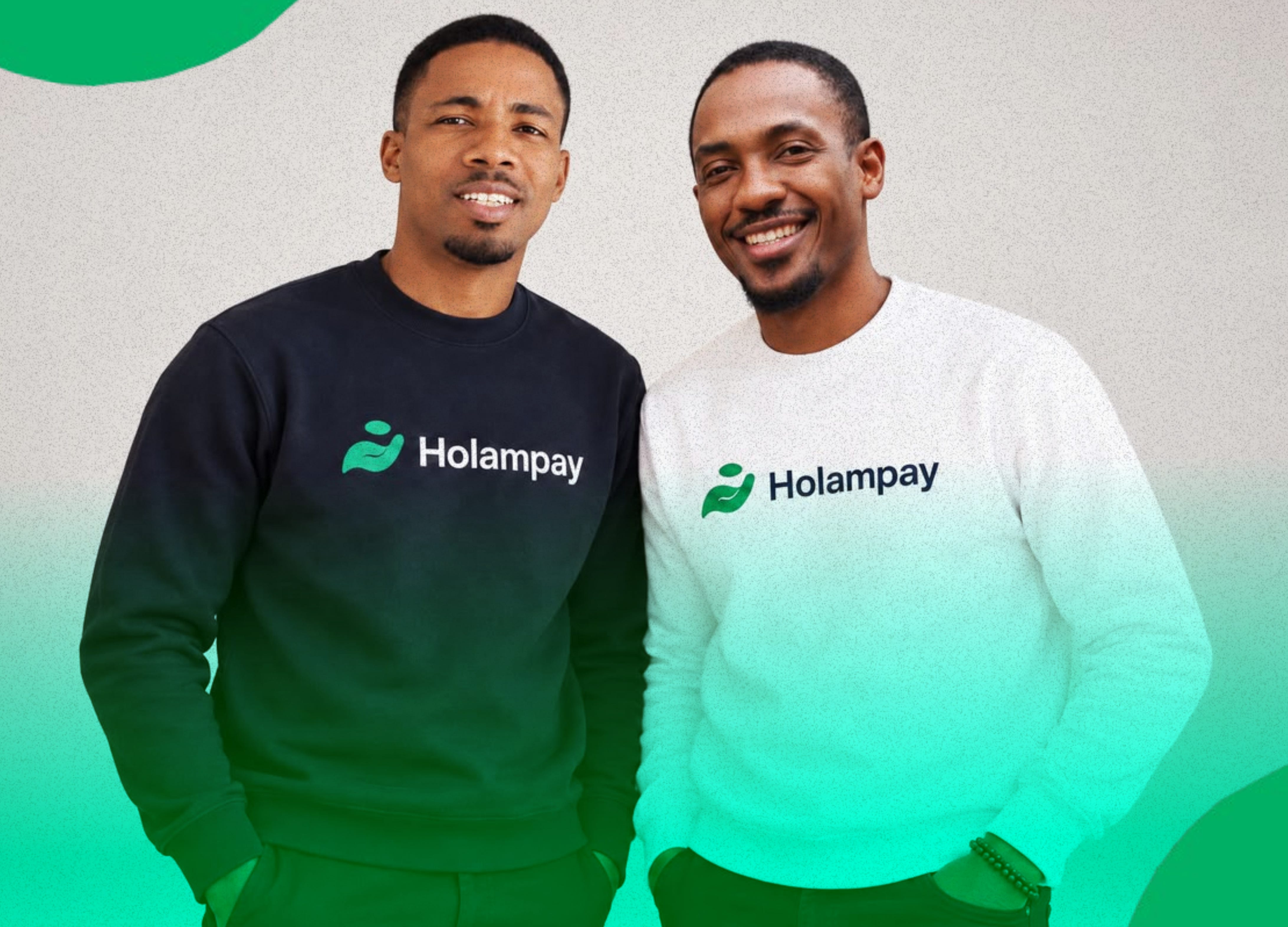
Richard, who is the company’s Co-founder and CEO, and Denis, its Co-founder and CTO, are building what they describe as a programmable trust infrastructure for digital transactions. The idea sounds technical, but the problem is one almost anyone who has bought something online understands.
The internet has become very good at helping people find each other and move money between them. The harder part begins after the transfer.
What happens if the seller does not deliver? What if the product is different from what was agreed? What if a freelancer completes only half of a project? What happens to the money when both sides tell completely different versions of the same story?
Holampay is trying to build technology around that part of the transaction.
The payment is only the beginning
Most payment platforms are designed to answer one basic question: did the money move? Holampay wants the transaction to answer several more.
Before money is committed, the buyer and seller can agree on what is being bought, how much it costs, where it should be delivered, when it should arrive and what other conditions have to be met.
The buyer then commits the agreed funds to the transaction. The seller gets evidence that the buyer has committed the money, while the buyer knows the funds are attached to the agreement rather than simply disappearing into the seller’s account.
If the seller fulfils the agreement and the buyer confirms delivery or completion, the funds are released according to the transaction terms. If something goes wrong, either party can raise a dispute and provide evidence.
That is the part Richard and Denis say they wished they had when they bought the shoes.
“The original agreement and transaction history provide a basis for reviewing the issue and deciding the appropriate outcome,” the founders explained.
It changes the role of the payment from simply moving money to becoming part of a structured transaction.
And that is where the company’s “programmable trust” idea comes in.
Turning an agreement into technology
A payment by itself does not know what the money was supposed to achieve.
If someone sends ₦200,000 to a freelancer, the payment system can confirm that ₦200,000 moved. It does not necessarily know that the freelancer was supposed to deliver a website by Friday, submit three design revisions or complete a particular milestone before getting paid.
Holampay wants those conditions to become part of the transaction itself.
The company describes its system as connecting agreement, payment commitment, fulfilment, release and dispute resolution. Completion could be tied to delivery of a product, acceptance of a service, a specific date or the completion of a project milestone.
That could make the technology useful far beyond buying something from an Instagram vendor.
A business could use it to structure payments to a freelancer around project milestones. A customer could commit money to a service with a defined completion date. Multiple parties could participate in a transaction with each person’s responsibilities recorded in advance.
The underlying idea remains the same: the terms of the deal should not disappear once the money moves.
That matters because digital transactions often break down before the payment even happens.

The price might be clear while the delivery date is buried in a WhatsApp conversation. A product specification might exist in one message and the refund agreement in another. A seller might want payment before starting work, while the buyer wants evidence that the seller is actually committed to delivering.
Holampay wants to bring those pieces into one transaction.
The founders describe the problem in three parts: the agreement, the commitment and what happens when something goes wrong.
It does not want to replace Instagram, banks or marketplaces
One of the more interesting things about Holampay is what it is not trying to build.
It does not want to become another marketplace where sellers have to create profiles and buyers have to start their search all over again.
You could still discover a shoe vendor on Instagram. A freelancer could still find a client on LinkedIn. A business could still find a supplier through its existing network.
Holampay would come in when both parties are ready to transact.
The company calls this a standalone trust network that can work wherever people first connect, including social media.
It also does not want to force users into one bank or wallet.
Its architecture is designed to be provider-agnostic. Holampay handles the transaction layer, including the agreed terms, payment commitment, fulfilment and dispute process, while banking and payment partners handle the regulated movement and safeguarding of funds.
The idea is to allow people and businesses to keep their preferred financial providers while still using the same trust process.
That could eventually make Holampay less of a standalone consumer product and more of a piece of infrastructure that other businesses can plug into.
The bigger bet is infrastructure
Holampay is still early. The company is pre-launch, focused initially on Nigeria, and does not yet have live customer or transaction figures to report. Its financial-provider connections and operational systems are still being prepared for controlled real-world use.
Its initial use cases are expected to include social-commerce purchases and professional services, but the founders are also building for milestone-based work, recurring arrangements, split payments and transactions involving multiple parties.

The planned business model is transaction-based. For its initial pilot, the sender is expected to pay a Holampay transaction fee, while payment-provider charges would be shown separately. The company is also exploring arrangements where businesses and platforms integrate Holampay into their own customer journeys.
That last part may ultimately be the more interesting opportunity.
Instead of asking everyone to come to Holampay, the company wants businesses, marketplaces and digital platforms to be able to bring its trust layer into their own products.
The long-term vision is a network where users can choose their financial provider but still transact around clear terms, with a defined process when something goes wrong.
For Richard and Denis, the idea started with a pair of shoes that never arrived.
But the problem they are attacking is much bigger than one bad Instagram purchase.
Online commerce has made it incredibly easy to discover someone, agree on a price and send money. Holampay is betting that the next piece of the infrastructure needs to answer a different question:
What exactly was that money supposed to achieve? The brothers have already experienced what happens when there is no good answer.
Now they are trying to build the technology that puts one there.