

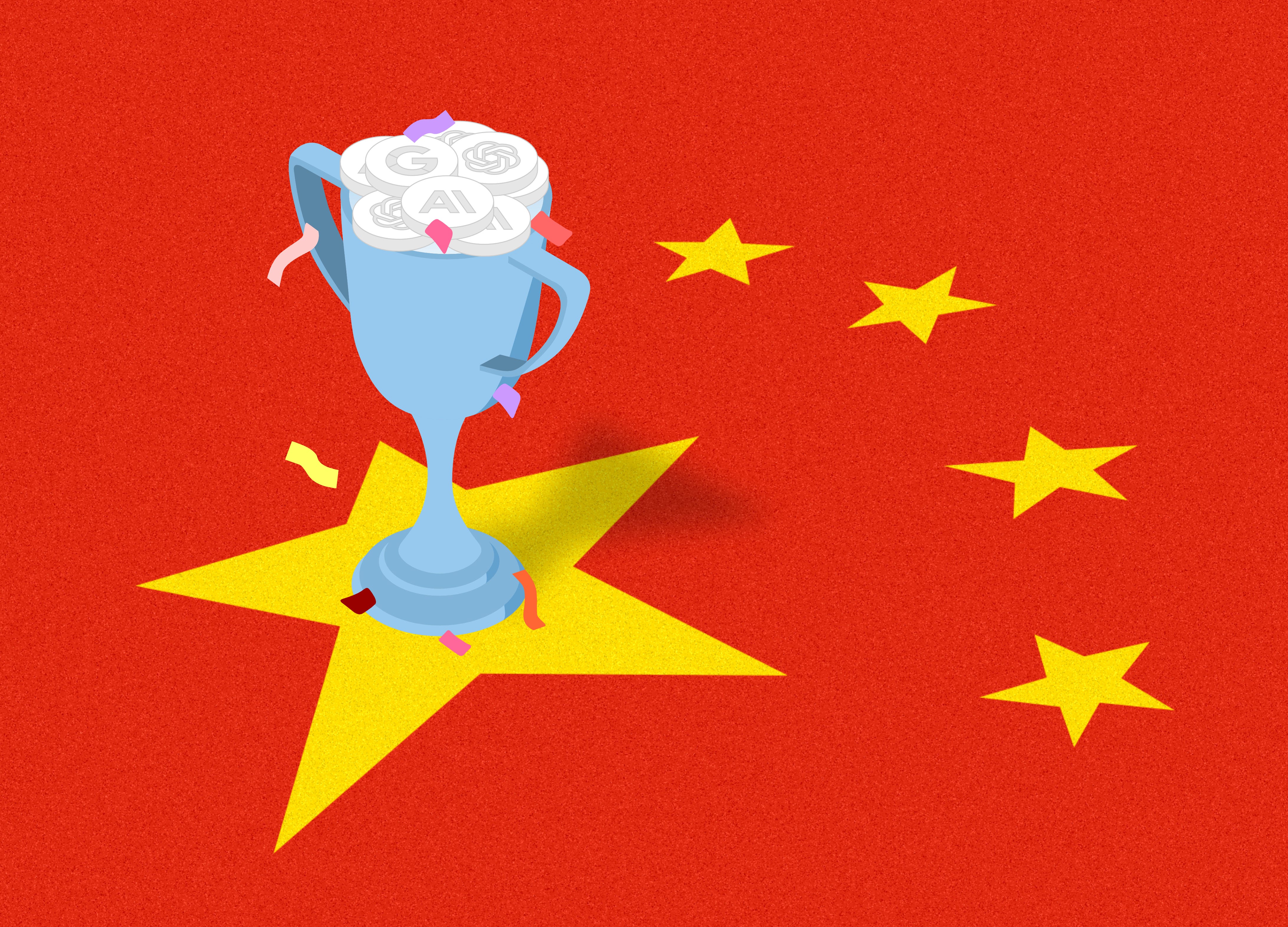
A Week of Frontier Releases
In the space of a few weeks this summer, China’s AI labs delivered a run of releases aimed squarely at the American frontier.
Alibaba’s Qwen3.8-Max landed on August 3, 2026, a 2.4-trillion-parameter, 95-billion-active mixture-of-experts model with a million-token context window, positioned by Alibaba as competitive with Claude Opus 4.8 and GPT-5.6 Sol. It’s the first Max-class Qwen model Alibaba has agreed to open-source, with public weights due the following week; a smaller, locally-runnable 27B checkpoint is going open too. Alibaba is pricing API access at roughly 40% of Claude Opus 5’s input-token rate and 24% of its output-token rate.
Moonshot AI’s Kimi K3, released July 16, went further on scale. It’s a 2.8-trillion-parameter model that Moonshot calls the largest open-weight system ever released, activating only about 1.8% of its parameters per token. By Moonshot’s own benchmarks, K3 trails Claude Fable 5 and GPT-5.6 Sol overall but tops several coding and agentic leaderboards, including a first-place finish on Arena’s Frontend Code ranking.
The open-weight field was already crowded before either of those launches. Z.ai‘s GLM-5.2, released in mid-June, climbed to #2 on Arena.ai‘s Frontend Code leaderboard, behind only Fable 5 and roughly 29 points ahead of Claude Opus 4.7 (Thinking), putting it well clear of fellow open models Kimi K2.6 and MiniMax M3 at the time. It runs a 744-billion-parameter mixture-of-experts architecture with only about 40 billion active, ships under an MIT license, and by several accounts undercuts GPT-5.5 on cost per coding task by roughly six times. DeepSeek has kept iterating too, with its V4 Pro and lighter V4 Flash checkpoints both shipping under MIT license this year. K3’s July arrival didn’t erase any of that. It just moved the open-weight ceiling again, overtaking GLM-5.2 for the top Frontend Code Arena spot outright, ahead of even Fable 5 on that specific board.
The real pattern here isn’t just Chinese labs catching up to the American frontier. It’s Chinese labs leapfrogging each other every few weeks. GLM-5.2 held the open-weight lead for barely a month before Kimi K3 took it. Whatever the ceiling is, it keeps moving, and faster than the six-to-twelve-month gap a lot of people expected.
Beijing’s Framing: “A Symphony, Not a Solo”
The releases are landing alongside a deliberate diplomatic push. At the 2026 World AI Conference in Shanghai on July 17, his first in-person appearance at the event since it launched in 2018, Xi Jinping argued that AI development “should not be a solo performance by a single country, but a symphony of international cooperation.” The speech came a day after 29 countries signed the founding agreement for a new Shanghai-based body, the World AI Cooperation Organization (WAICO), and included a pledge of 5,000 training opportunities for developing countries over the next five years.
Xi also pushed back on U.S. export controls, criticizing what he called the “overstretching” of national-security justifications for restricting technology access. Commentators have drawn the contrast with the U.S. government’s own AI strategy, titled “Winning the Race,” a framing built around a single winner, versus Beijing’s pitch of a shared, open ecosystem where “every country has an instrument.”
The Distillation Fight
The releases have reignited a running argument over distillation (training a new model by learning from another model’s outputs) and who’s doing it to whom.
On July 22, Michael Kratsios, head of the White House Office of Science and Technology Policy, publicly accused Moonshot AI of building Kimi K3 through “large-scale, covert industrial distillation” of Anthropic’s Fable model. He alleged Moonshot built internal infrastructure to extract outputs while evading detection, and used export-restricted Nvidia chips accessed through servers in Thailand. Treasury Secretary Scott Bessent separately said U.S. officials were finding “watermarks” of American models inside Chinese systems.
Moonshot hasn’t responded in detail to the allegation, and independent evidence is thin. The claim traces back to an Anthropic report from earlier in the year documenting over 16 million Claude exchanges the company attributed to distillation campaigns, roughly 3.4 million of them linked to Moonshot. But that report predates K3 itself, and analysts have noted the specific “K3 was built from Fable” claim hasn’t been backed by any disclosed access logs or training data. One piece of evidence cited in support, K3’s relatively weak score on a cybersecurity benchmark, taken as a sign it inherited Anthropic’s safety filtering, is undercut by the fact that GLM-5.2, a model with no distillation allegations attached, scored even lower on the same test. This is a live dispute, not a settled fact, and it echoes a nearly identical accusation leveled at DeepSeek back in early 2025.
It’s also worth separating this from a different story that keeps getting folded into the same narrative. Anthropic’s $1.5 billion settlement, approved by a federal judge in July 2026, was a copyright case over Anthropic downloading pirated books from sites like Library Genesis to train Claude, not a penalty related to model distillation. These are two different disputes about two different kinds of alleged IP extraction, and conflating them overstates what either case actually established. As for the broader claim that everyone has distilled from everyone: U.S. labs have faced their own unresolved copyright and training-data lawsuits (OpenAI’s ongoing dispute with the New York Times, for one), but those remain separate legal questions from the distillation-of-model-outputs allegations aimed at Chinese labs. Neither should be read as proof of the other.
The Case for Open Source: An AOL Argument
There’s also a pro-open-source argument being made from inside Silicon Valley itself, separate from the China angle entirely. On the All-In podcast, Chamath Palihapitiya has framed it as a rerun of the early internet, pointing to the walled-garden dial-up services AOL and CompuServe as the cautionary precedent. If the internet had stayed behind paywalled portals the way those services worked, he argues, it never would have produced the open economic boom that followed once it didn’t.
His argument is that open-weight AI heads off exactly the concentration-of-wealth critique that figures like Bernie Sanders and Elizabeth Warren have raised about the industry, not by regulating the handful of frontier labs, but by making their advantage harder to hold onto. If powerful models are freely available rather than gated behind two or three companies, the reasoning goes, value spreads across a much wider base of AI-integrated businesses instead of concentrating with a small number of shareholders. Open-source AI, in his framing, keeps the technology’s economic value from being held captive by a small handful of gatekeepers.
It’s a useful counterpoint to the security-and-theft framing running through the distillation dispute above. The same openness that fuels U.S. anxiety about Chinese labs copying American models is also the thing proponents credit with keeping AI’s gains from concentrating in a handful of hands, American or otherwise.
Why the Policy Fight Is Bigger Than Any One Model
The practical stakes go beyond bragging rights on a leaderboard. If distillation from U.S. models is real and ongoing, an outright ban on Chinese open-weight models in the U.S. wouldn’t stop it. Developers elsewhere would keep using them anyway, and that’s the argument made by figures including Nvidia’s Jensen Huang and Elon Musk: walling off American developers from competitive open models would mostly just hurt American developers.
That’s the tension defining this moment. Washington is weighing tighter restrictions on Chinese open-weight AI just as those models are becoming genuinely competitive and dramatically cheaper. Beijing is positioning openness and international cooperation as the contrast to what it frames as an exclusionary U.S. strategy. And voices within U.S. tech itself are making a parallel case that openness is what keeps AI’s gains broadly distributed rather than concentrated. Whichever argument wins out in policy terms, the underlying fact driving all of it is simple: the capability gap between the two AI ecosystems is now measured in weeks and benchmark points, not years.