


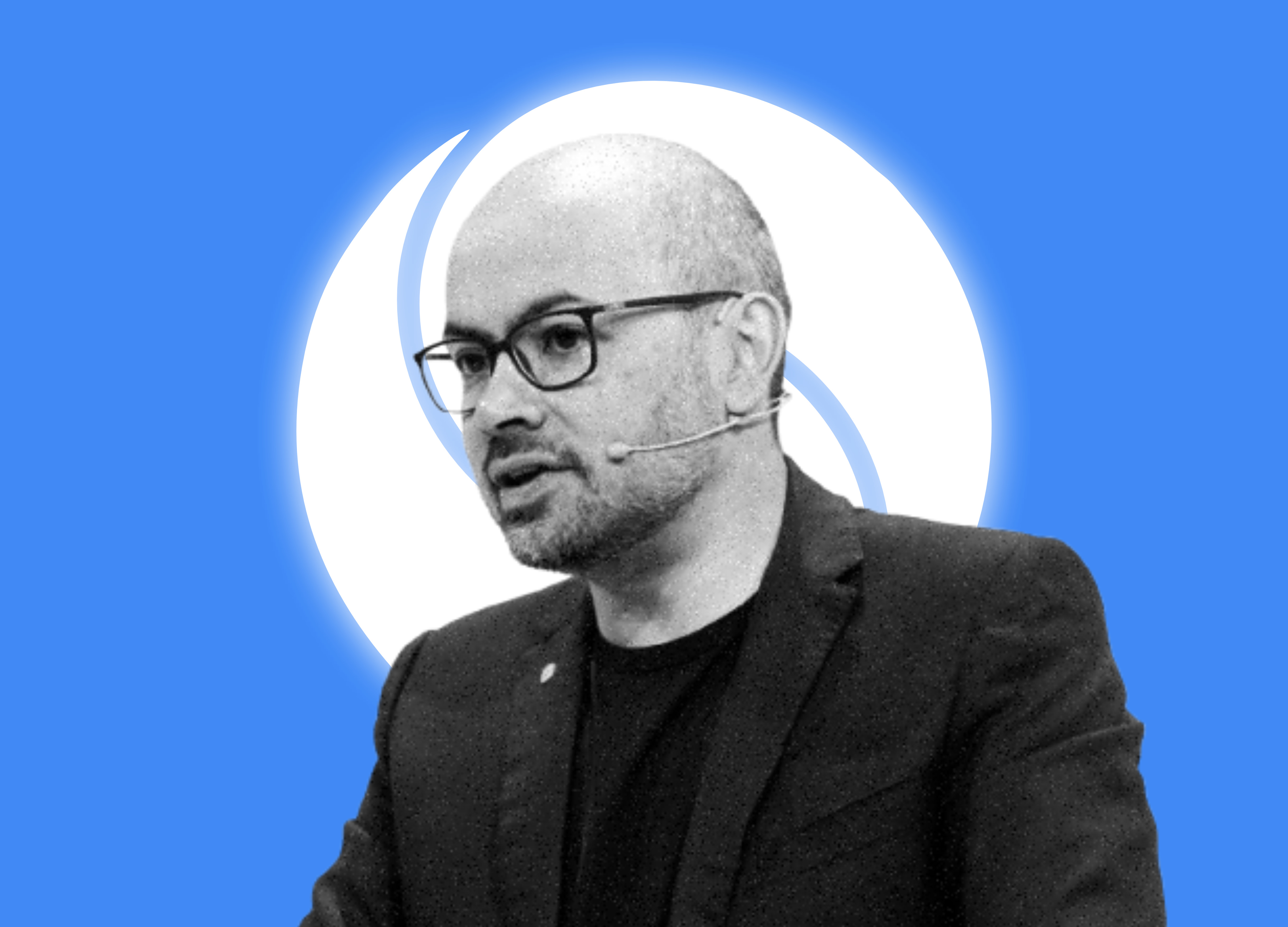
Google just had a massive shakeup in its AI leadership, and if you care about where this industry is heading, you need to understand what just happened.
Jeff Dean, one of the most famous computer scientists alive, the guy who helped build much of Google’s core infrastructure and literally Google’s 22nd employee, is leaving to start his own company. At the same time, Demis Hassabis, co-founder and CEO of Google DeepMind, is stepping down as CEO.
Let’s talk about why this matters.
A quick history lesson
Google DeepMind has been one of the most influential labs of the past fifteen years. AlphaGo. AlphaFold, the protein-folding breakthrough that fundamentally changed how we approach biology. All of it happened under Demis Hassabis, who co-founded DeepMind back in 2010 with Shane Legg and Mustafa Suleyman (yes, the same Mustafa Suleyman who now runs Microsoft AI). Google bought the company just four years later, in 2014, for something in the neighborhood of $650 million.
Since then it’s been a wild ride: competition from people like Elon Musk, pressure from Meta, and eventually the merger of DeepMind with Google Brain (which Jeff Dean co-founded in 2011) into the unified “Google DeepMind” we know today, with Hassabis as CEO and Dean as chief scientist.
And Hassabis hasn’t just been running a lab, he actually won a Nobel Prize. In 2024 he shared the Nobel Prize in Chemistry for his work on AlphaFold, the system that predicts protein structures. So the question people are asking is: is this move a demotion, or a promotion?
Honestly? It’s neither. It’s a reprioritization.
What Demis actually said
Hassabis is moving into a newly created role as chairman of Google DeepMind and chief scientist of Alphabet. He’ll also keep leading Isomorphic Labs, Alphabet’s AI-driven drug discovery spinout.
Here’s the key line from his note to staff: he said he wants the time and space to focus on the big picture and help shape what comes next. He’s also said publicly that he believes AGI is close at hand.
Running Google DeepMind day-to-day means being beholden to quarterly earnings, product ship dates, shareholder pressure. Hassabis doesn’t want to manage that anymore. He wants to sit at the frontier, pushing AGI research and curing disease through Isomorphic, rather than steering a business unit through Google’s current turbulence.
Then there’s Jeff Dean
Dean didn’t just step down. He’s leaving Google entirely, after 27 years, making him one of the most senior technical departures in the company’s history. Along with him: fellow Google veterans Sanjay Ghemawat, Oriol Vinyals, and Quoc Le.
Here’s how I’d read this: Jeff was watching companies like Anthropic and OpenAI move fast and build the future, and he didn’t feel he could do that from inside Google anymore. Think about how much leverage a person like Jeff Dean has at a company like Google: unlimited budget, unlimited compute, pick of any team, essentially zero oversight. And even with all of that, he still didn’t think he could build what he wanted to build inside those walls. That tells you something about the current state of Google’s culture.
So he’s out, launching a new venture called Discovery Loop, a public benefit corporation aimed at automating scientific and engineering discovery. Google is actually a founding investor and will supply cloud compute, so this isn’t an acrimonious split, more of a “go build it your way, we’ll back you” arrangement.
And just to hammer home how absurd it is that Jeff Dean needs anyone’s permission to build anything: this is someone whose fingerprints are on Google Search, Google Ads, Gmail, News, Translate, Gemini, Cloud TPUs, and MapReduce (the distributed systems architecture that lets Google serve billions of people in milliseconds). Add AlphaStar and AlphaFold to that list too. An absurd résumé. Reportedly, his new team still went through the exercise of building an investor pitch deck for a company backed by people who clearly didn’t need to be pitched. Kind of funny, and honestly says a lot about how grounded the guy is.
Why this is happening now
This isn’t happening in a vacuum. Google’s AI division has reportedly been dealing with model delays (Gemini 3.5 Pro has been behind schedule) and low morale following a string of high-profile researcher exits to rival labs. The market didn’t love the news either: Alphabet’s stock dropped several percentage points on the announcement. Koray Kavukcuoglu, DeepMind’s former CTO, is stepping in as SVP of Google DeepMind to run day-to-day operations and report directly to Sundar Pichai, with oversight of the still-unreleased Gemini 4.
So yes, there’s a strategic, philosophical story here about long-term thinking versus quarterly pressure. But there’s also a more grounded story: a company under real competitive stress, trying to hold onto its best people while it retools.
Where I think this leaves Google
If I were advising Google right now, I wouldn’t keep pretending they’re neck-and-neck with the absolute frontier labs. They’re not right now, and that’s an okay thing to admit. Instead, I’d lean hard into open source. Build the best open-weight models on the planet, get the entire ecosystem building on top of your architecture, and iterate from that position of ubiquity.
We’re already watching this strategy work for AI labs coming out of China. And realistically, there are only two U.S. companies with the balance sheet to run a serious open-source play: Nvidia, which is already pouring billions into open models through its Nemotron family, and Google, which already has the Gemma family, though those are currently tuned more for small, on-device use cases than frontier capability.
If Google went all-in on open weights while continuing to sell the hardware that runs those models best, the TPU, they arguably win regardless of who “wins” the frontier race. Everyone building on open models still needs silicon to serve them at scale, and Google already has a real edge there.
The bottom line
Two of the most important technical minds in Google’s history just made moves that say the same thing in different ways: the next phase of AI isn’t going to be won by whoever manages the tightest quarterly roadmap. It’s going to be won by whoever can operate at the actual frontier: long time horizons, deep science, real compute, without getting dragged down by the short-term incentives of running a public company’s business unit.
Hassabis is betting he can do that from inside Alphabet, freed from day-to-day management. Dean is betting he can only do it from outside. Both bets are worth watching closely over the next year, especially as Gemini 4 ships and Discovery Loop reveals what it’s actually building.
I’m not counting Google out. But this is the clearest signal yet that even the people who built the place don’t think its current structure is built for where AI is going next.