


There is something Harrison Obi said early in our conversation that I keep coming back to.
He was talking about his time in radio, his first job, ₦25,000 a month, learning how to hold people’s attention through a speaker, and he said: “Marketing later taught me how to turn that attention into action. Web3 brought those two capabilities together.”

Communication and measurable distribution. That combination, refined over a career spent working on global brands like Pepsi, Meta, Google, HP, Kellogg’s and AB InBev, is exactly what most of Nigeria’s Web3 ecosystem was missing when Harrison showed up. And it is exactly what SuperteamNG became, not just a community, but a distribution machine for African blockchain talent.
Before any of that, though, there was a restless, intensely curious kid who could not just participate in things. He had to understand how they worked. Why certain ideas gained traction and others disappeared. What influenced people’s decisions.
He did not have the language for it yet, nobody hands a teenager the vocabulary of community building, but the instinct was already there, running quietly underneath everything.
“I was intensely competitive,” he told in60. “I never wanted merely to participate in something. I wanted to understand how it worked and how it could be improved.”
That trait followed him from broadcasting into marketing, then from marketing into technology, and eventually into Web3, where he found a space that rewarded exactly the combination of skills he had spent years building without realizing they were building toward anything specific.
The moment Harrison understood that community building was not just a career path but a vocation was not a single event. It was a pattern he could no longer ignore.
Technically impressive products kept failing because they had no distribution. No trust. No network of people willing to champion them.
In Africa especially, he kept watching founders build genuinely good things and then watch those things disappear because nobody had built the ecosystem around them that would keep them alive.
“Products win when they are embedded in communities that understand them, trust them and can extend their reach,” he said.

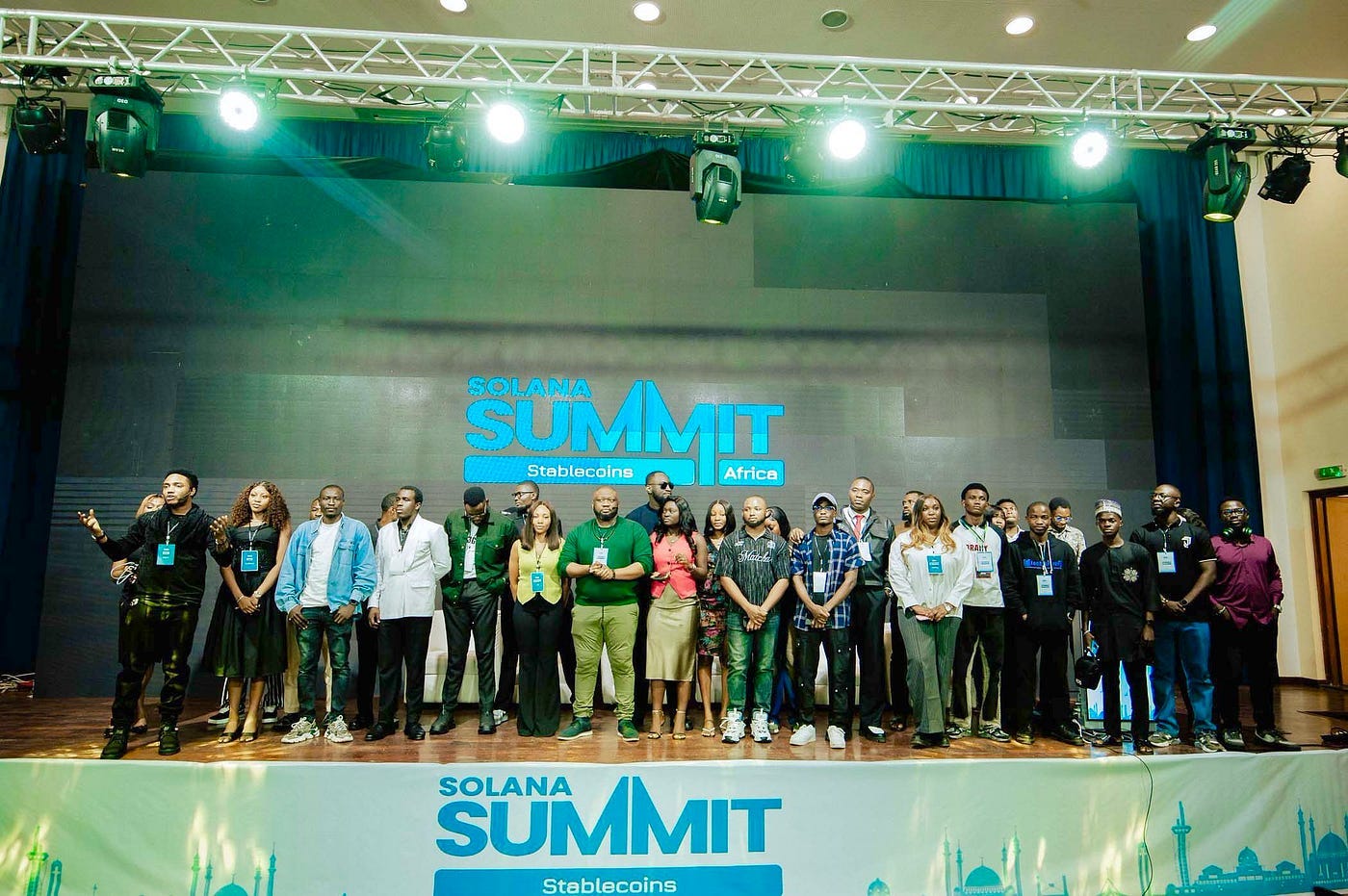
When SuperteamNG started, their first physical gathering had about 20 people in a room. Three years later, Solana Summit Nigeria 2026 brought more than 1,000 builders, founders, users, investors and industry stakeholders together in one place.
The number is impressive. What happened between those two events is the real story.
People found jobs. Won grants. Won hackathons. Launched companies. Integrated Solana into existing products. Built solutions serving real customers. At one point, earnings generated by Superteam Nigeria members, through grants, bounties, hackathons and job placements, crossed $1 million.
“That changed the meaning of community for me,” Harrison said. “This was no longer a collection of people in a group chat. It had become economic infrastructure.”
Think about that for a second. A community that generates $1 million in member earnings is not a Discord server. It is an institution. And Harrison treats it like one, with operational structure, capital allocation, talent development, accountability systems, storytelling and distribution.
The full stack of what it takes to build something that outlasts any individual.
Nigeria contributes approximately 4% of the world’s Web3 developers, the largest share on the continent.
The Web3 developer population in Nigeria grew by 36% in 2025 alone. And yet, as Harrison points out with the kind of clarity that only comes from being deep inside the problem, Nigeria has a talent-conversion problem, not a talent problem.
“Too many founders begin with the technology and then search for a use case,” he said. “Technical knowledge is increasingly accessible, but proximity to people who have built, scaled and funded companies remains unevenly distributed.”
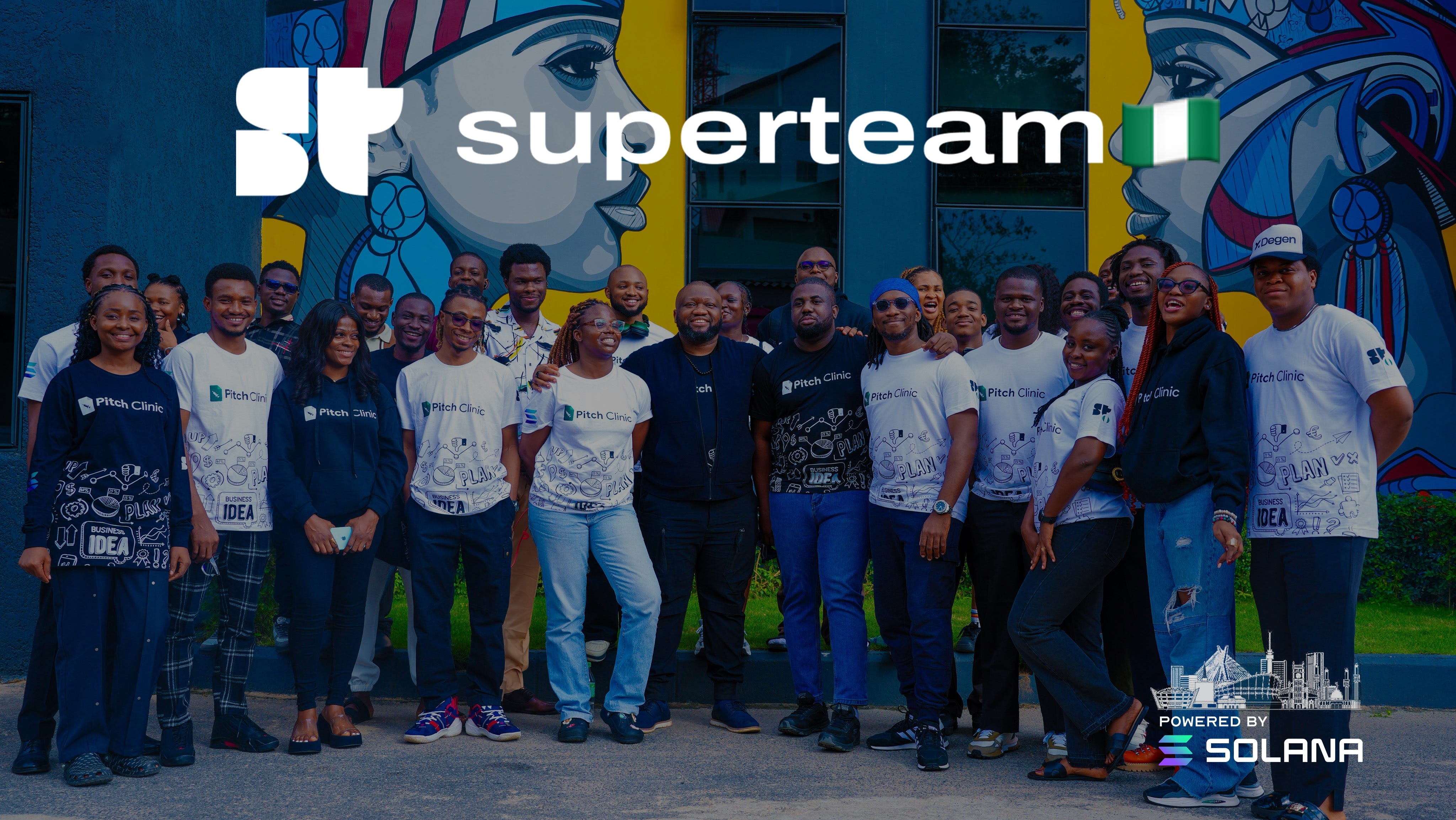
That proximity gap is what SuperteamNG is specifically designed to close. And it is deliberately distributed, present across roughly 30 Nigerian states, because Harrison made a decision early on that is worth naming directly: opportunity should go to where people are, not wait for people to come to where opportunity is.
“Someone should not have to relocate to Lagos before they can access a global career,” he said.
That is a political statement as much as a community strategy. And it is one that most ecosystem builders in Nigeria are still not acting on consistently.
Here is where it gets interesting.
Harrison has an opinion about Web3 that most people in the space would find uncomfortable. He said it without flinching.
“Web3 does not need more people who are excited about Web3. It needs more people who can use Web3 without caring that it is Web3.”
Most people do not care which blockchain processes their transaction, the same way they do not care which cloud provider hosts their banking app. They care that the product is fast, affordable, reliable, and safe.
The Web3 industry has spent enormous energy marketing infrastructure to ordinary consumers instead of just building products that work so well the infrastructure becomes invisible.
He also said something that will upset the ideological corners of the ecosystem: “Decentralization is a spectrum, not a purity test.” A product should be decentralized where decentralization produces a clear benefit, censorship resistance, open access, transparent settlement, composability, user ownership. Adding friction to appear ideologically pure does not serve the user. It serves the ego of the builder.
“The next billion blockchain users will not call themselves Web3 users,” he said. “That will be evidence that the technology has finally matured.”
When someone who has spent years inside an ecosystem says something like that, it lands differently than when a critic says it from the outside. Harrison is not dismissing Web3.
He is describing what it needs to become to be genuinely useful, and he is doing it from a position of having already helped build $43 million in Web3 funding flowing into Nigerian startups in 2025, more than double the year before.
There is a version of Harrison Obi that the public sees. Energetic. Confident. Highly visible. The face at the front of the room.
The version he described to me is quieter.
“I spend a great deal of time questioning whether I am creating lasting value or merely generating activity,” he said. “I am usually the first person to challenge my own success. Even when people say we have won, my instinct is to ask what is still missing, who remains excluded.”
He trains in combat sports. Not for the aesthetics of it but because there is something he finds valuable about entering an environment where his professional reputation means nothing, where he has to confront his own fear, discipline and limitations from scratch.
He is also, he said, more family-oriented than most people realize. Much of the ambition is tied to creating security and opportunity for the people around him. Titles and recognition matter, but they are not the point.
“I want my work to outlive my visibility,” he said. “To help build institutions, companies and pathways that continue creating opportunities long after I am no longer the person on the stage.”

That is a specific kind of ambition. Not the kind that needs a room full of people to feel real. The kind that is most satisfied when the room keeps running after you have left it.
Harrison Obi started on ₦25,000 a month learning how to hold people’s attention on radio. He spent years learning how to turn that attention into action. And then he found Web3, a space that needed exactly those two skills more than almost anything else.
Superteam Nigeria is what happened when all of it came together. Not a community in the casual sense. An institution. Built deliberately, distributed across 30 states, accountable to measurable outcomes, and governed by someone who is still asking himself every day whether the value is real.
That level of self-questioning, in a space that runs largely on hype, might be the most radical thing about him.
Nice 😊
This is good. Well done