


Sulaimon Adewale had been building fintech products for other people for years before he built one for himself.
He never planned to become a founder. He had seen the space closely enough to know that most products in it, while functional, were leaving an enormous number of Nigerians behind.

“The current fintech products we have, they all work fine,” he told me. “But they still don’t cater for the large percentage of Nigerians that are not tech-savvy. A lot of them just know how to call, they know how to WhatsApp. Tell them to download an app, they can’t even do it themselves.”
That gap had been sitting in the back of his mind for a long time, long before Xara existed. There was an earlier attempt, a physical hardware idea aimed at letting market women bank without needing complicated interfaces at all. It never made it past the idea stage.
But the obsession behind it never left him: build something accessible for the people the rest of the industry quietly ignores.
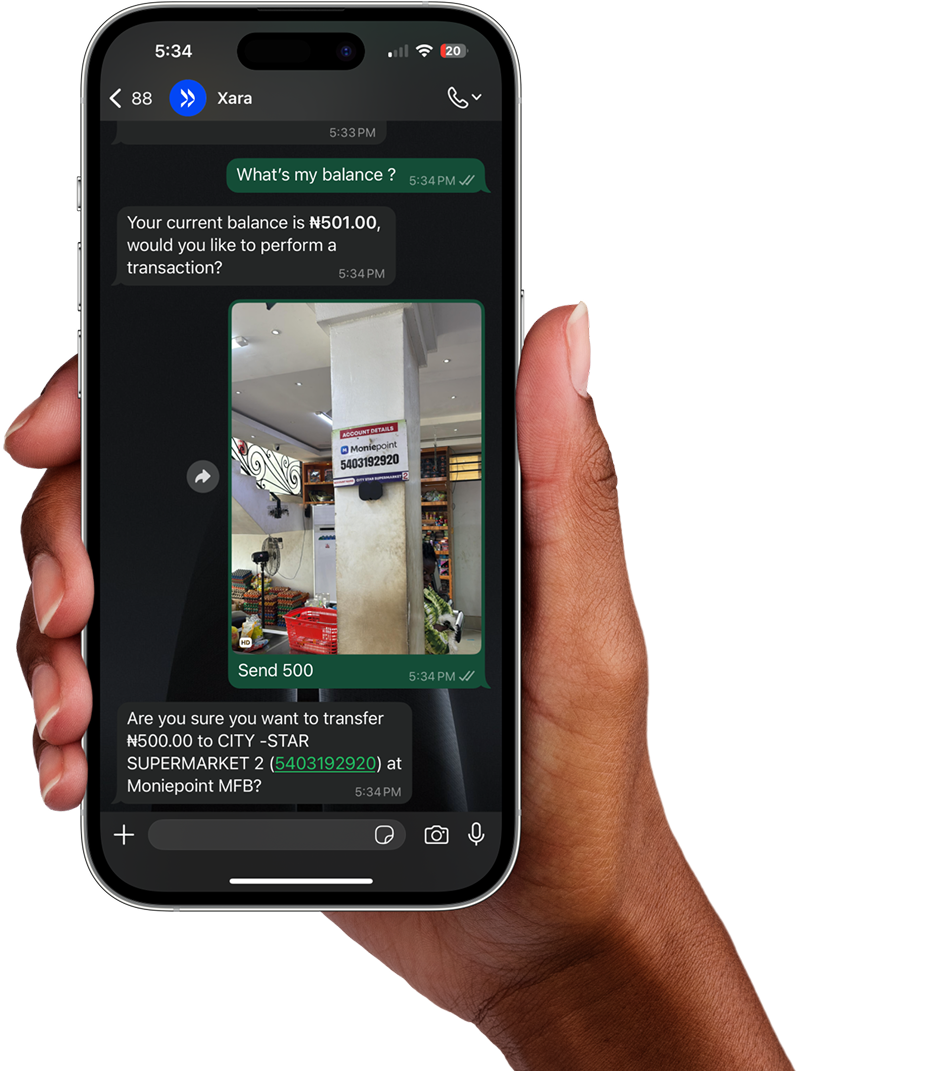
The moment that turned the idea into a product was almost comically small. Adewale walked into a mall one day to make a payment and realized he couldn’t read the account number written on the wall, it was too far for him to see clearly. Frustrated, he left without buying anything.

“Sometimes when I get frustrated for things like this, I just leave,” he said. “Then I started thinking, okay, there should be a way to solve this problem.”
He went home and started building. The first version, a feature that let users simply snap a photo of a bank account number and complete a transaction, took him about two weeks to build.
He posted it on TikTok first, convinced it would go viral. Nobody engaged. He almost doubted himself. Then he posted the same demo on Twitter, where he already had an audience.
“It blew up,” he said. “Everybody wanted it. Everybody was saying, what is this?”
That was the beginning of Xara.
Why WhatsApp, and not a standalone app
For Adewale, the decision to build inside WhatsApp rather than launch yet another app was never really a debate.
“My ideology for product building is taking the technology to people where they already are,” he explained.
“WhatsApp is the only app that the kind of people this product solves problems for are already on.
They already know how to use it. Bringing the technology to them on the app they already use, allowing them to transact in their natural language, it just makes sense.”
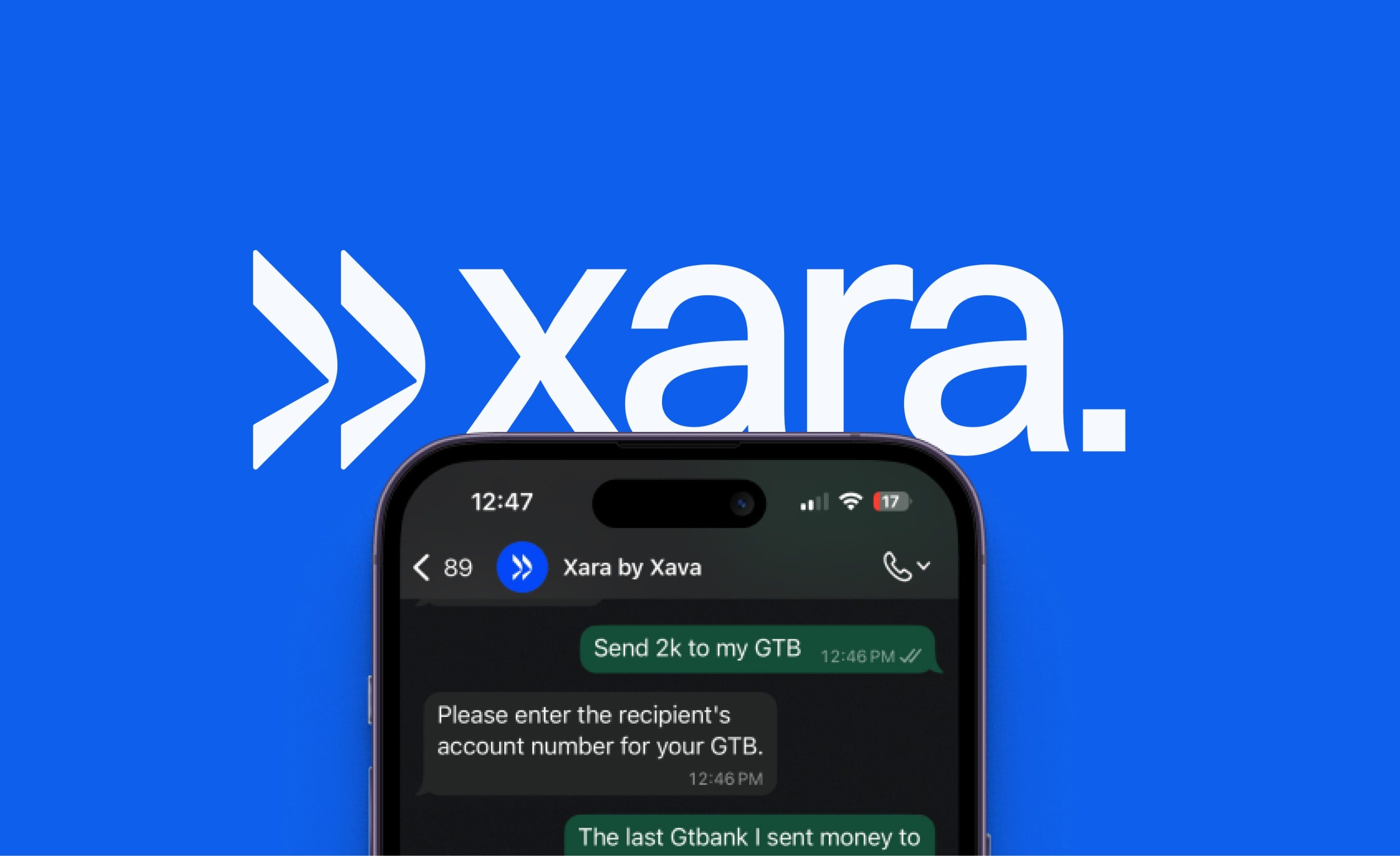
The practical upside has been significant. There is no app to download, no new interface to learn, no onboarding friction. “User acquisition has been so easy,” he said, “because when they hear about it, they say, okay, let me try it.”
The skepticism, and the insults
Building something this unconventional did not come without resistance, some of it aggressive.
“In the early days, someone came to my inbox on Instagram and literally started insulting me,” Adewale recalled. “Calling me a scammer. Saying it’s not possible. That it’s AI, like AI can send money out of WhatsApp.”
Beyond the disbelief, there was real fear. Users worried about WhatsApp accounts being hacked, about losing access to their money, about worst-case scenarios nobody could fully control.
“Someone even said, what if they put a gun to my head and asked me to give them my password? I told them, even with GTB or any other bank, if someone puts a gun to your head, you’re handing over your password regardless.”
That fear kept a lot of early users on the sidelines. They tried Xara, liked it, but held back from putting serious money into it, worried the platform might get hacked or simply disappear.
What most people didn’t see was the security thinking happening behind the scenes. Xara deliberately does not use OTPs for password resets, a decision Adewale defends firmly.
“If someone already has your phone or has already hijacked your WhatsApp, sending an OTP is literally handing them your password on a platter,” he said. Instead, password changes go through a support agent who verifies the user’s identity through security questions before any change is approved.
“I can tell you for a fact, today, you can fact-check me, not a single user of ours has had their account hijacked since we launched Xara, a year ago. Not even a standalone app can brag about that.”
The doubts have steadily cleared as trust has grown. Transaction volumes this year alone have already surpassed all of last year combined. Users who once kept Xara at arm’s length are now comfortable holding millions of naira in their accounts.
The ₦10 billion milestone
When I asked Adewale what crossing ₦10 billion in transactions actually represents, his answer was simple and direct.
“That number represents increased trust in our system. That’s number one.”
He is careful not to overstate where Xara is in its journey. “It’s still day one. We have a long way to go.” But the strategy that got them to ₦10 billion, in his telling, was almost stubbornly basic: consistency.
“We showed up every day. We knew people were watching, and we showed up,” he said. “There’s always a stage in everything you do where people will only watch you. They’re looking at you subconsciously. As long as you pass through that stage, they start taking action.”

Some of Xara’s earliest critics, people who doubted the model publicly, have quietly come back as users, once it became clear the platform wasn’t going anywhere. Partnerships with established banks and fintech players have reinforced that credibility too.
“No bank aligns with products they deem fraudulent,” he pointed out. “That’s one of the ways we’ve earned the trust of our users.”
Who actually uses Xara
Adewale breaks Xara’s user base into three distinct groups.
The first are people who are fundamentally not tech-savvy, including, he says, members of his own family who handle every transaction through voice notes rather than typing, because typing in a PIN or navigating menus is simply too complex for them.
These are the users Xara was built for from day one.
The second group are tech-savvy individuals and students who are drawn to the novelty and convenience of the product, the people most likely to post testimonials online, even though they represent a smaller share of total users than the first group.
The third category is businesses. Xara for Business lets entrepreneurs create invoices, request payments, and track sales, all through WhatsApp.

One feature lets a business owner generate an invoice for ten customers and instantly find out, with a simple question, exactly who has paid in full and who hasn’t. No spreadsheets. No separate accounting software. Just a question, answered conversationally.
“Why are businesses choosing Xara for Business?” he asked rhetorically. “Because we focused on what businesses actually need, not the kind of incentives traditional banks are giving them.”
What’s next for Xara and the team
Adewale was deliberately tight-lipped about specific upcoming partnerships, but confirmed that new collaborations are coming soon, ones he believes will “unlock a lot of things” for the platform, including expansion into other African countries.
His broader vision for the industry is bigger than Xara itself.
“I don’t think the future of financial services is specifically WhatsApp,” he said. “But I would say the future of financial services is conversational. Everything is becoming conversational, and your bank has to adapt. People want to talk to their bank the way they talk to Xara right now. People want to control their bank, rather than the bank controlling them.”
On the broader question of Nigeria’s shift toward a cashless economy, Adewale is unambiguous in his support.
“I think the problem is thinking cash has to be physical,” he said. “If a central bank cannot say for certain how much money exists in a nation because of physical cash floating around, that creates real governance problems. A cashless society promotes transparency and clarity for everybody involved.”

From a man who once walked out of a mall because he couldn’t read a wall, to a platform processing ₦10 billion in transactions through nothing more than a chat window, Sulaimon Adewale’s story is a reminder that the best fintech ideas in Africa rarely come from boardrooms.
They come from frustration, lived daily, by people who decide to fix the thing that frustrated them.
Xara is still, in Adewale’s own words, day one. But day one has never looked this convincing.