


Let me tell you something about AyaHQ that I did not fully appreciate until I sat down and actually talked to Eric Annan.
This is not an accelerator in the traditional sense. It is not a co-working space with good Wi-Fi and a ping pong table. It is not an NGO running workshops and handing out certificates.

AyaHQ is something the African tech ecosystem has been talking around for years without actually building, a physical home where founders can come, live, work, and build in the same space as other founders, away from the noise, away from the pressure, away from the city’s daily chaos.
Pack your bag. Show up. Build something.
That is the entire pitch. And it has attracted over 1,500 builders from across the continent.
The story starts the way a lot of good things do, with a problem that exposed a deeper problem.
Six years ago, Eric and his team built something called AyaGigs. It was a job marketplace. The idea was simple: Africa has enormous talent, and with the internet you do not have to cross a sea or a desert to access opportunity. You can stay on the continent, stay connected to your culture, and still work for global companies.
The first version of AyaHQ was a marketplace for African tech talent.
It made sense. Except for one thing nobody had planned for.
When employers started requesting talent: software engineers, product managers, data scientists, business development professionals, the CVs were there. The degrees were there. But the readiness was not. People had finished school, sometimes postgraduate school, and still were not prepared for what the global job market was actually asking for.
“We didn’t actually have ready-made talent in Africa,” Eric told me plainly. “Yes, we have a young continent. A lot of people are educated. But the reality is they were not ready for the job market.”
That realization forced a choice. Shut AyaGates down and move on, or go deeper into the actual problem.
Eric went deeper.
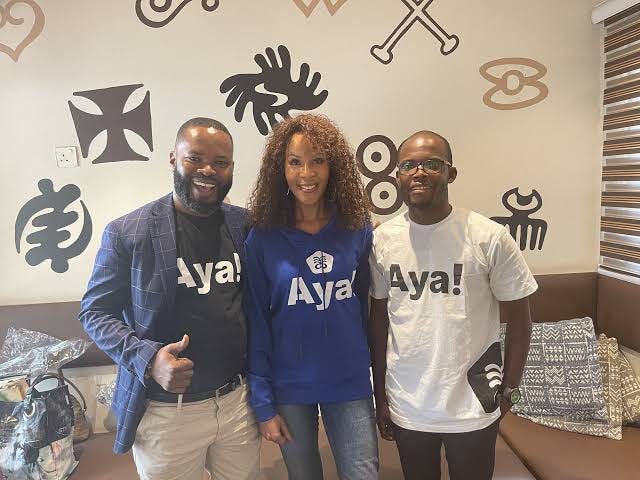
With a grant from Coinbase’s giving programme, AyaHQ launched its first training cohort.
The goal was 300 people. They received over 4,000 applications from 33 countries. They trained 66.
But here is what was different about how they trained. AyaHQ grouped every three trainees into a team: one software developer, one product designer, one product manager, and by the time the training ended, each team had built an actual product. Not a presentation. Not a prototype concept. A working product, built together, using the skills they had just learned.
The framework behind all of it is what Eric calls PACE: Problem-solving, Adaptability, Creativity, and Empathy. Unlike traditional accelerators, AyaHQ trains developers, designers, and product managers in tandem, ensuring every cohort can ideate, build, and launch viable products.
The results were immediate. One of the trainees, a woman named Elorm Ofori who had graduated from Kumasi’s KNUST two years earlier and was still unemployed, went through AyaHQ’s product management track with no prior tech experience. She got a job with Complete Farmer, one of Ghana’s fastest growing agritech companies, almost immediately after finishing.
She later became a senior product manager at Hubtel, one of Ghana’s biggest fintechs. Another trainee, Charity, got a job in the US and is now completing a master’s degree in France. A third became a rising voice in Nigeria’s blockchain space.
“Without AyaHQ, I don’t know where that lady would have been,” Eric said about Elomofori. “She had finished her degree and was hopeless. AyaHQ training changed her destiny.”
But training people was only the beginning of the question, not the answer to it.
After the training, the graduates had skills. They had built products. Now what? Where do they go? Who mentors them next? Who validates the ideas they carry around in their heads? Who tells them, yes, this is worth building, keep going?
Nobody. That was the answer. And that gap is what AyaHQ is now entirely focused on closing.
The organization runs physical builder hubs in Abokobi, Ghana, and Kilifi, Kenya. The Accra hub hosted 765 builders from eight countries in 2025. The Kilifi hub, opened in January 2025, hosted 600 builders from 16 countries.
Both hubs are live-in spaces, you come, you stay, you build. 24/7 internet. Workspace. Community. No noise. Just you and other people who are trying to do the same thing you are.
Eric calls them No-BS Zones. The name is deliberate.
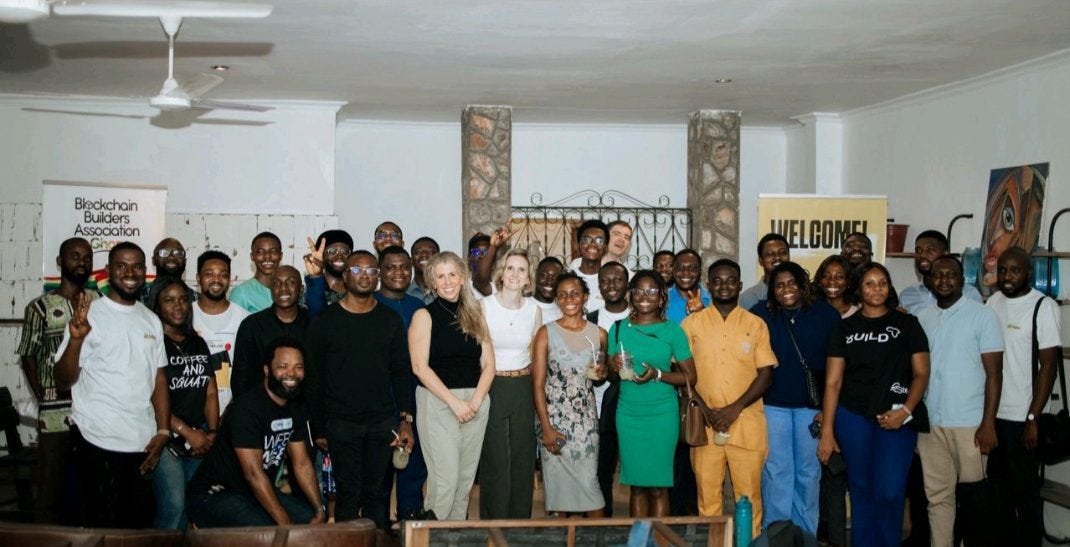
“Innovation actually happens when people can be allowed to step out of the noise,” he told me. He referenced Sweden, where companies have reportedly experimented with paying employees to be bored, because boredom creates space for the kind of creative thinking that constant stimulation kills.
AyaHQ’s physical hubs are built on that same logic. Get out of the city. Get quiet. Let the real thinking happen.
Since 2022, AyaHQ has run five programme cohorts, supported more than 80 startups spanning 34 countries, and deployed over $500,000 in grant and equity funding. The alumni of those programmes have collectively processed more than $5 million in transactions and generated over $200,000 in revenue, a roughly 10x economic multiplier on the capital deployed.
When I asked Eric where he would place his bet on African tech over the next decade, he did not say AI. He did not say fintech. He did not say blockchain.
He said: more of what AyaHQ is building.
“What I would bet on is intentionally creating the necessary infrastructure, structure, and system,” he told me. “Because capital gravitates towards structure and system. When capital believes that risk is priced, money flows to where it is.”
The argument is worth sitting with. Every ecosystem that has produced technology giants at scale, Silicon Valley, Shenzhen, London’s Canary Wharf, did not produce them by accident.
There was intentional infrastructure. Connections between universities, innovation centres, government policy, and capital. Africa keeps producing outlier founders and treating each one as a miracle rather than building the systems that would make outliers the norm.
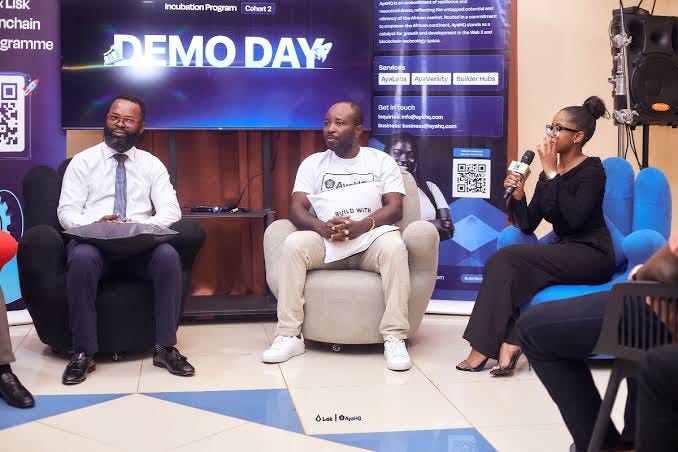
“Since Paystack was acquired in 2020, we have not seen a major acquisition in Africa,” Eric said. “Do we build our tech ecosystem based on luck or based on one stellar founder that is an outlier? Once in a while we find the Shola and Ezras, the GBs, the Yelisand Co. But is that sustainable?”
His answer is AyaHQ. Build the home where more founders are found, trained, validated, and backed before they become the names everyone knows.
AyaHQ has already secured land in Accra to build a much larger tech campus with capacity for over 1,000 innovators.