


A few weeks ago, X went after Raenest.
A user named David posted that his brother had $9,700 sitting in his Raenest account on the morning of June 24. By midnight on June 25, the account was deactivated and the money was inaccessible. Emails. DMs. X replies. Automated responses.
For days. The post went viral. More users came forward, one with ₦5.6 million frozen, another suspended with no explanation. The pile-on was fast, loud, and very Nigerian.
I reached out to CEO Victor Alade directly. His response was measured and honest.
“The user’s account was undergoing a compliance review. There are several compliance-related reasons why an account may be temporarily restricted while these checks are being completed. Keeping our customers secure while staying compliant is important to us.”
He also admitted something important: “At the moment, we are experiencing an increase in our support response times. The team is working hard to ensure faster response times, and we’d like to apologize to our users for the delay.”
The funds were eventually returned. Raenest moved when the post went viral. And then, as quickly as it blew up, the internet moved on.
But there’s a fuller story here that deserves to be told.
What Raenest actually built, and who it built it for
Founded in 2022 as Geegpay before rebranding, Raenest exists because the global payments infrastructure failed Africans for decades. PayPal restricted Nigerian users to “send-only” status since 2004, meaning you could send money but never receive it. Wise suspended USD transfers to Nigeria in November 2022.
Payoneer charged fees that could eat up to 8.5% of your earnings before you ever touched the money. For a freelancer or remote worker in Lagos earning in dollars, receiving your own money was genuinely one of the hardest things you had to do.
Raenest changed that. It gave Nigerian freelancers, remote workers, creators, and small businesses USD, GBP, and EUR accounts, real ones, that actually received money, alongside virtual dollar cards, low-fee local withdrawals, stablecoin support, and integrations with Upwork, Fiverr, and Gusto.
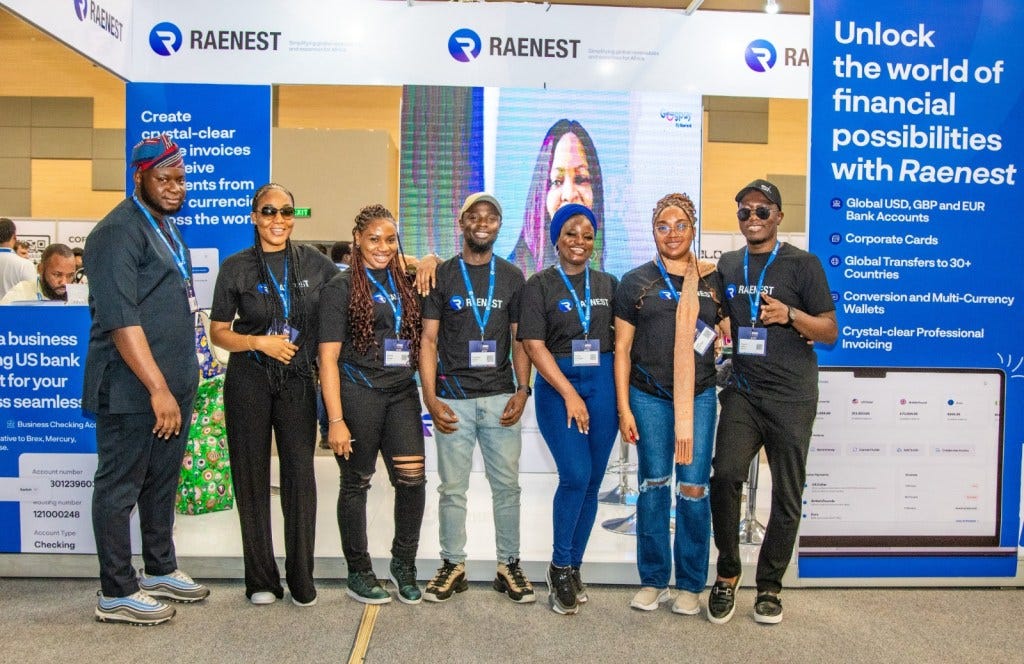
Over one million customers. More than $2 billion in processed transactions. $14.3 million raised from QED Investors, Norrsken22, Ventures Platform and others. Y Combinator Winter 2024 batch. They expanded into Kenya, Ghana, Tanzania, Uganda, and recently the United States.
This is not a fly-by-night app. This is infrastructure that thousands of Africans depend on to receive their livelihoods.
The thing people forget about compliance
Here is what the X discourse completely missed.
Raenest is a regulated financial platform. It holds a FINTRAC MSB licence in Canada and is registered with FinCEN in the US. Operating under those licenses means compliance is not optional. Anti-money laundering checks, know-your-customer reviews, fraud flagging, these are all legal requirements.
When an account triggers a review, it gets restricted while the check runs. That is not unique to Raenest. That is how every regulated payments platform works, including the ones that failed Africans for years before Raenest existed.

The actual problem was not that the account was restricted. The problem was the silence. When your money is frozen and all you get are automated responses for days, that is not a compliance issue, it is a communication failure. And Alade acknowledged it directly.
A platform processing over $2 billion in transactions is going to encounter compliance flags. The question is not whether reviews will happen, they will. The question is whether the platform communicates clearly, resolves quickly, and treats the person on the other side of the review like a customer rather than a suspect.
On that, Raenest fell short in these cases. They admitted it. They fixed it. And they are working on the support infrastructure to handle the volume they are now carrying.
The bigger picture
When PayPal announced it was returning to Nigeria in late 2025, the response on social media was sharp and immediate. “We moved on,” Nigerians said. “Too late.”
That reaction was possible because companies like Raenest, Grey, and Cleva spent years building the alternative. Every freelancer who no longer needs PayPal, every content creator receiving dollars directly into a naira account, every small business invoicing international clients without a $29.95 annual fee eating into their margins, they got there because Nigerian fintechs filled the gap that global platforms left.
Is Raenest perfect? No. A compliance review that locked $9,700 with no human follow-up for days is a serious problem that affected a real person. That cannot be dismissed.
But the instinct to cancel a platform that has processed $2 billion for over a million Africans, over a support failure that has since been resolved, deserves some perspective.
These are hard products to build. Compliance is genuinely complex. Scale creates pressure that startup-era support systems sometimes cannot handle overnight.
The standard we should hold Raenest to is not perfection. It is accountability, fast communication, fast resolution, and honest acknowledgment when things go wrong.
On that, they showed up. Eventually. And they need to keep doing it faster.