

For someone looking for a job, finding a vacancy that matches their skills can feel like progress. But that excitement can fade quickly when the application link leads nowhere, the position is already filled, or the listing has been online for months.
It is a familiar frustration. Job seekers spend hours moving between platforms, comparing vacancies and submitting applications, often without knowing whether the opportunities they find are still available.
Oye Olalekan became interested in this problem after a friend lost his job. During their conversations, his friend described spending hours searching different job boards, repeatedly encountering the same listings and struggling to know whether the jobs he found were still open.

Olalekan, a software engineer with seven years of experience building products in fintech, edtech, and consulting, decided to build something to help.
The first version of JobBloom was a simple tool that searched several job boards at once. His friend eventually found a job, but it was an on-site position he could not take. That experience also shaped how Olalekan approached the product: work arrangements such as remote, hybrid, and on-site should be treated as essential requirements, not optional preferences.
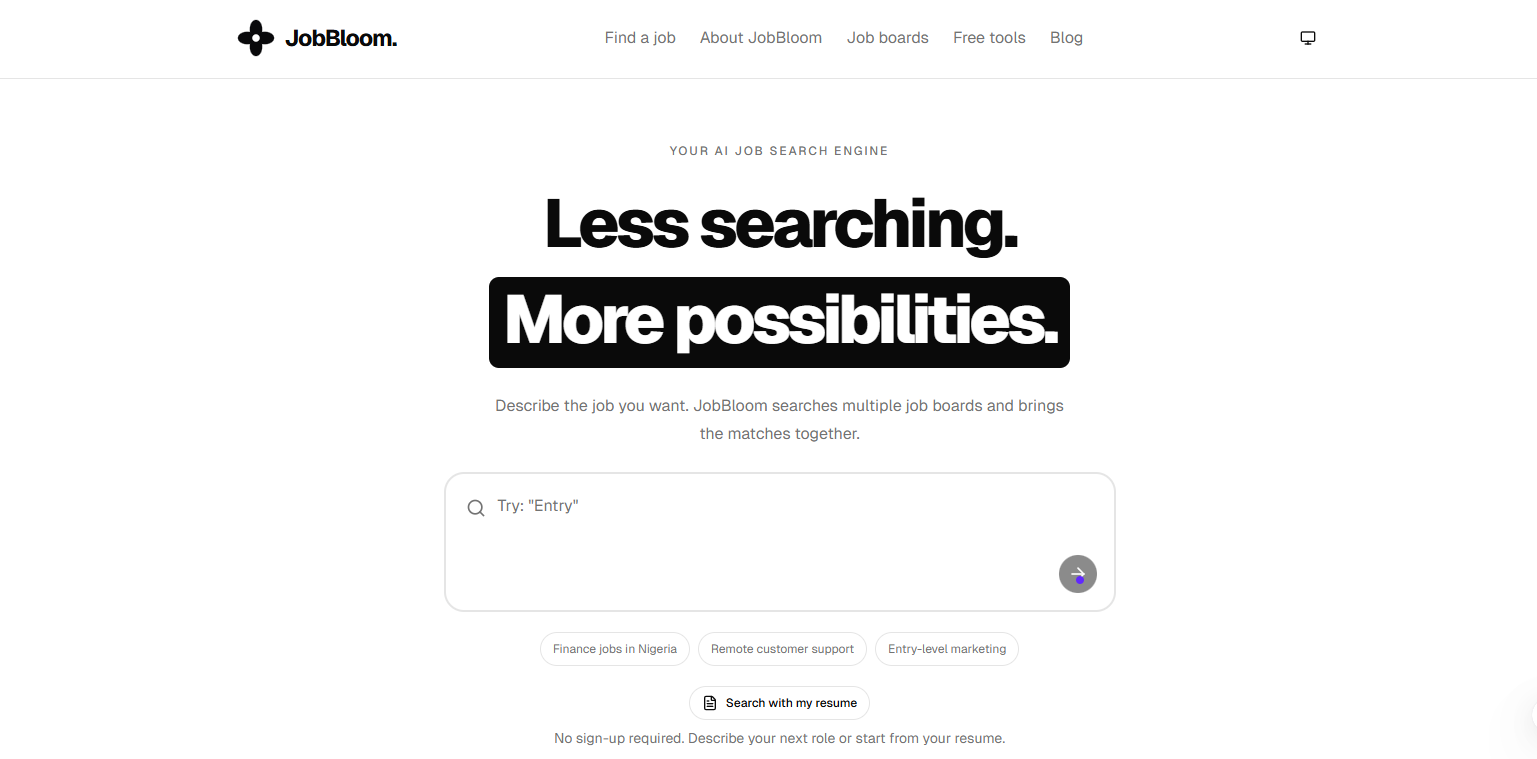
What began as a tool for one person has since become JobBloom, a free job-search platform that finds vacancies directly on company career pages.
The problem goes beyond finding vacancies
Olalekan believes job seekers do not necessarily need more listings. They need better information about the opportunities already available.
He points to two problems with conventional job-search platforms. The first is the volume of applications generated by easy-apply features. When hundreds or thousands of people can apply to a vacancy within a short period, an application can easily get lost in the pile.
The second is the number of outdated vacancies that remain online long after companies have stopped accepting applications.
To understand the scale of the problem, Olalekan revisited job links that JobBloom users had found between March and October 2026. He checked 1,522 unique postings. Of the 1,326 links he could verify, 888, or 67%, no longer led to an open job.
In other words, roughly two out of every three checkable postings were no longer available.
The findings also showed how quickly vacancies could disappear. Of the jobs first discovered between March and June, 77% were no longer available by October. Even among postings found in the previous week, 22% were already dead.
Many of these listings did not clearly announce that applications had closed. Some returned error pages, redirected visitors to general careers pages, or loaded without showing the original vacancy.
The problem, Olalekan explains, is not necessarily that employers deliberately publish fake jobs. When a company closes a vacancy, copies of the listing can remain on other job boards. The employer’s original page may be updated, but the versions circulating elsewhere are not always removed.
There is an important limitation to his findings: about 13% of the links could not be checked because the websites blocked automated visits. Olalekan excluded those links rather than assume they were open or closed. The figures therefore describe JobBloom’s own sample, not every job listing available online.
Still, the exercise convinced him that checking whether a vacancy is active should be part of the search process, rather than another task left to applicants.
Searching where the jobs originate
Olalekan created JobBloom to search company career pages directly, rather than building another typical job board. Many employers use platforms like Greenhouse, Lever, Workday, and Ashby to post job openings, which other job boards often duplicate.
JobBloom aims to minimize duplicate and outdated job listings by accessing these sources.
Currently, it covers 33 hiring platforms. When you search for something like “remote product designer jobs in fintech,” JobBloom identifies key aspects of your request, such as the job role, location, work arrangement, employment type, and necessary skills. It then finds matching job vacancies, ranks them based on job title, location, and posting date, and checks the most relevant listings.
Strict rules apply to some requirements; for example, if you're looking for remote work, you won't see on-site job postings, even if they have similar keywords. If there aren't enough exact matches, JobBloom shows related roles separately to help you differentiate them from your original search.
You can also upload your CV, and JobBloom will generate a search based on your experience and skills, which you can review and edit before running it. Olalekan has clarified that the CV is not stored. JobBloom checks if jobs are still open by looking for signs like expired deadlines, removed postings, or messages stating a position has been filled.

Since different hiring platforms display closed jobs in various ways, JobBloom uses specific checks for each platform as well as general ones. However, this method isn’t perfect; if a company keeps a filled position listed, JobBloom may still show it as open. Additionally, some websites block automated checks, which can lead to missing information. If the system can’t determine a job’s status, it will keep the listing visible to avoid overlooking potentially available positions.
Saved search results are reviewed every six hours, and the overall job directory is monitored regularly. Beyond finding vacancies, JobBloom helps you identify recruiters and employees at companies you're interested in.
It searches for publicly available LinkedIn profiles and guides you to those profiles for independent outreach. Olalekan assures that JobBloom does not gather private information or sell contact details, although public profiles can occasionally be outdated.
Keeping the search free
JobBloom is a no-cost, no-registration platform that aims to assist job seekers during tough times. The founder, Olalekan, believes that people who have recently lost a job shouldn’t have to pay or create another account.
Users can briefly describe the job they want and receive relevant results without hassle. To generate revenue, JobBloom will offer sponsored job listings and products for employers, starting with a job board where companies can post and manage openings. Sponsored positions will be marked and displayed in search results based on user queries.
Since launching on March 31, 2026, JobBloom has achieved 387 searches, generated over 3,000 job results, and tracked user interest in ongoing job opportunities. October was the platform's busiest month, with 178 searches, particularly for engineering roles, followed by operations, marketing, customer success, and data positions.
Olalekan understands that finding a job is just one challenge; knowing if it's still available and who to contact is equally important. He's passionate about expanding the platform’s coverage of companies and job postings, enhancing its matching system, and providing valuable insights into the job market.

Ultimately, Olalekan defines success by the personal stories of people who land jobs through JobBloom. What started as a solution for a friend in need is now about helping many others navigate their job searches more smoothly.