


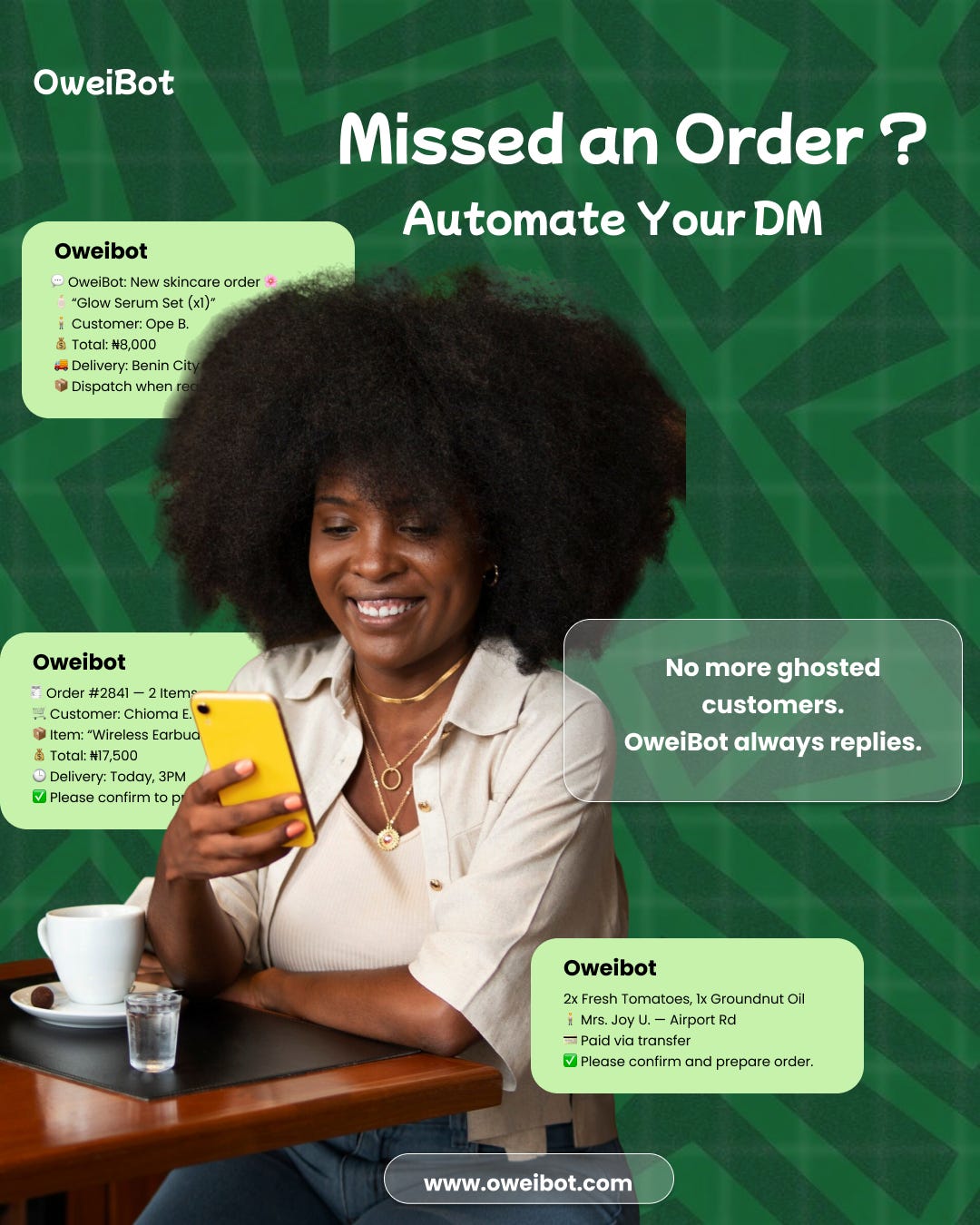
There is a moment every small business owner in Nigeria knows too well. A customer messages on WhatsApp asking for the price of something. Then another customer asks the same question.
Then another. By the time the tenth message comes in, the business owner is overwhelmed, slow to respond, and quietly losing sales they never even saw slip away.
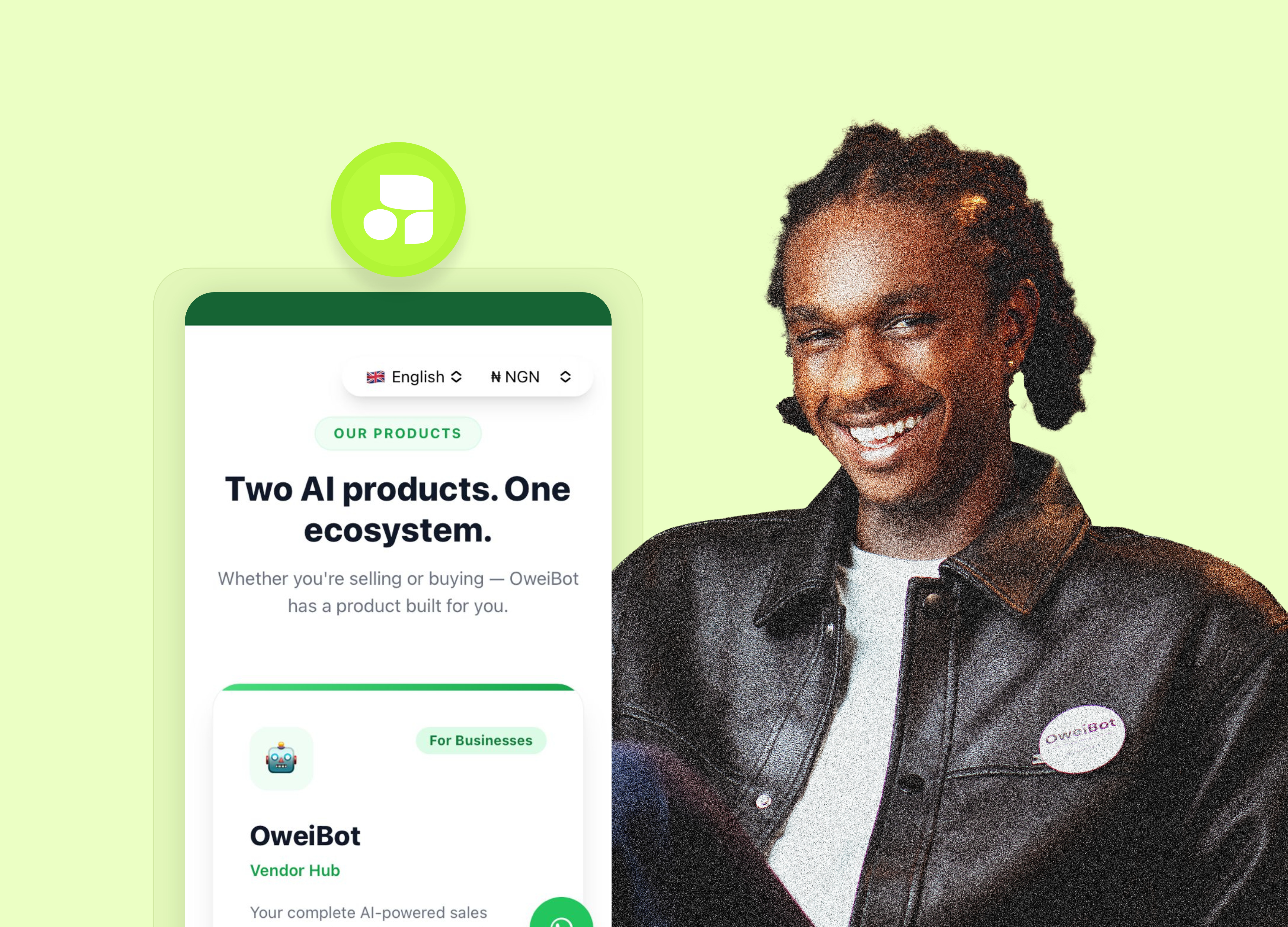
Kelvin Ayabotu noticed this pattern everywhere: food vendors, retailers, service providers, online sellers, all running their entire business through the same chat window, drowning in repetition. And alongside that, an even deeper gap: most of these businesses had no real online presence at all.
A proper website was too expensive, too technical, and never quite a priority when you’re busy actually running the business.
That observation became OweiBot, an AI-powered platform that lets any business owner build a smart online storefront in seconds, while an AI assistant handles the customer conversations, the repeat questions, and the orders that used to eat up an entire day.
The name carries a story
OweiBot is not just a product name. It comes from the Ijaw word “Owei” — meaning king, leader, someone of importance.
“Being Ijaw is a big part of who I am, and it’s something I carry with pride in everything I do,” Kelvin told in60.
“As an Ijaw man building a technology company in Nigeria, I’m conscious of the fact that we don’t yet see many Ijaw names represented among the most visible tech founders and CEOs on the continent.
There is incredible talent in the Niger Delta and across Ijaw communities, but not enough representation in conversations about technology, innovation, and entrepreneurship.”
That representation is not an afterthought for him. It is part of the mission itself. “Building OweiBot is about more than creating a product,” he said.
“It’s about showing that world-class technology can be built by people from every part of Nigeria, including communities that are often underrepresented in the tech ecosystem.”
Why WhatsApp, when everyone else is building apps
The decision to build inside WhatsApp rather than push businesses toward yet another platform came from watching how commerce was already shifting.
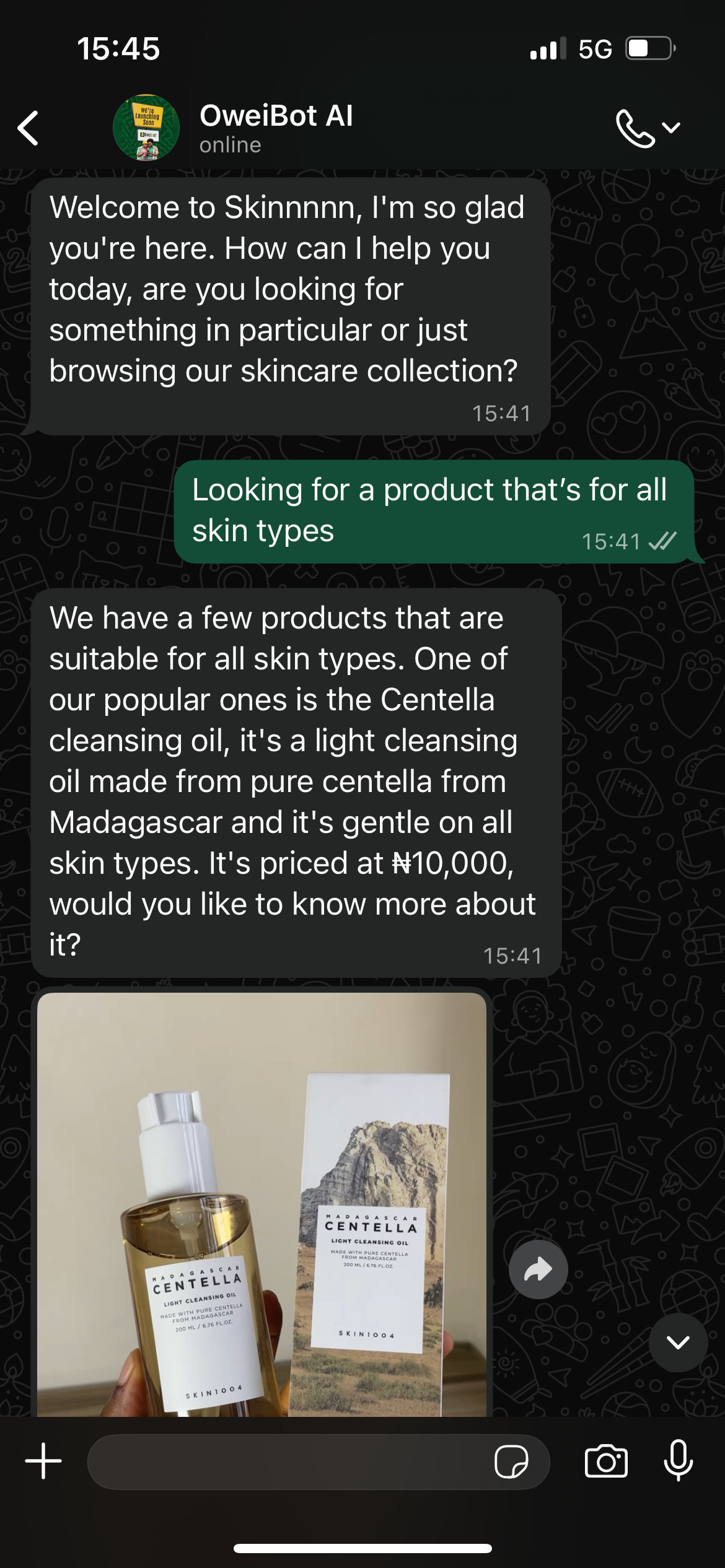
Customers were no longer satisfied browsing static product pages, they wanted to ask questions, get recommendations, and place orders through natural conversation.
“Commerce was changing,” Kelvin explained. “People no longer just want to browse products; they want to ask questions, get recommendations, place orders, and receive support through natural conversations. The line between shopping, communication, and customer support is already disappearing.”
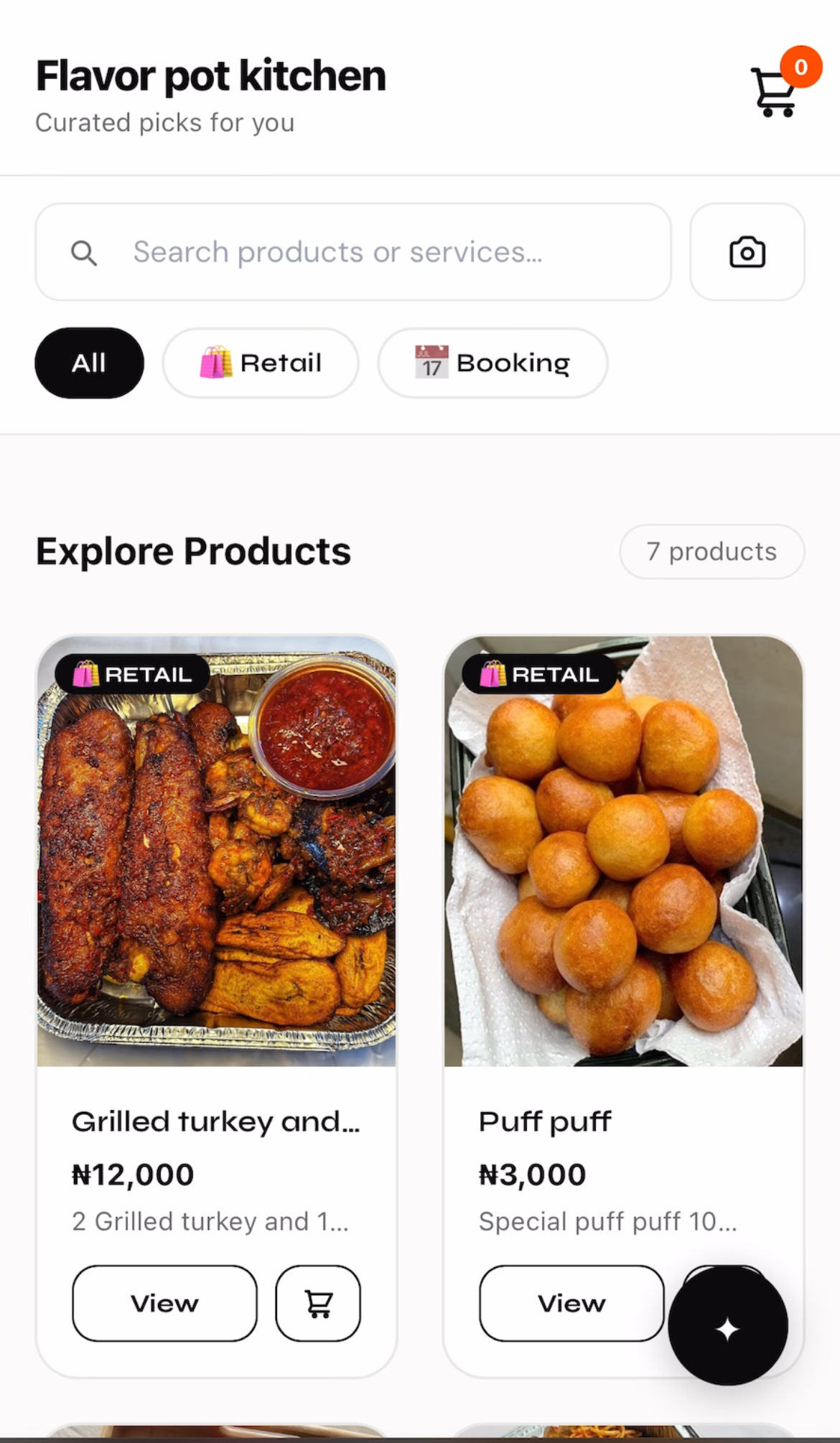
OweiBot sits exactly at that intersection, giving businesses both a digital storefront and an AI assistant that engages customers, processes orders, and frees up the owner’s time to actually grow the business instead of replying to the same five questions all day.
What the early users taught the team
If there is one lesson that has shaped OweiBot more than any other, it is this: simplicity beats sophistication every time.
“Many business owners don’t wake up thinking about AI, automation, or technology,” Kelvin said. “They wake up thinking about sales, customers, and growth. They want tools that work immediately and solve problems without requiring technical knowledge.”
Early users consistently told the team the same thing, they loved how fast they could get online.
No worrying about hosting, no wrestling with website builders, no design headaches. Just upload your products, get a storefront, and start sharing it with customers.
“That feedback reinforced our belief that technology should remove barriers, not create them,” Kelvin said.
The hardest part wasn’t the AI
Building an AI-powered commerce platform sounds like it should be a technical war. For OweiBot, the real battle has been something quieter, getting people to trust something new.
“The hardest part of building OweiBot hasn’t been the technology itself, it’s been customer acquisition and adoption,” Kelvin admitted.
Many business owners are used to running everything manually through WhatsApp, and convincing them to shift that workflow takes patience.
Trust has to be earned before a business owner will hand over their products, customers, and daily operations to a new platform.
Behind the scenes, the technical build has been just as demanding, vendor onboarding, storefront generation, order management, booking systems, AI-powered conversations, payment integrations, all needing to work together seamlessly while staying simple on the surface.
Add in the constant adaptation required by third-party platform policies and verification processes, and the picture becomes clear: building OweiBot has been less about one big technical leap and more about relentless, careful iteration.
“What has tested us the most is gaining adoption in a market where many businesses are only beginning their digital transformation journey,” Kelvin said.
“It’s one thing to build a product; it’s another thing to educate users, earn their trust, and become part of how they run their business every day.”
The bigger vision
OweiBot is not trying to be remembered as a WhatsApp storefront tool. Kelvin is building toward something far larger.
“Five years from now, I want OweiBot to be much more than a storefront builder or a WhatsApp sales assistant,” he said.
“Our vision is to become the digital operating system for African businesses, a platform that helps entrepreneurs launch their businesses online, manage customer relationships, automate sales processes, receive orders, marketing, bookings, payments, and operations.”
The goal, ultimately, is access. “We want to remove the barriers that prevent small businesses from participating fully in the digital economy,” Kelvin said.
“If a business owner has a product to sell, they should be able to launch a storefront, engage customers, receive payments, manage orders, and grow, all from a single platform.”
Behind Kelvin’s public leadership is Faith Daunimigha, OweiBot’s founder and Chief Technology Officer.
While Kelvin steers strategy, growth, and the company’s public voice, Faith is the architect behind the platform itself, leading product development and the technology that makes the entire experience work.
She has chosen, for now, to build quietly, letting the product speak before she does.
Together, they represent something in60 finds genuinely exciting: a founder building world-class AI infrastructure from the Niger Delta, a CTO doing deep technical work without needing the spotlight, and a shared belief that the next generation of African business tools should be simple enough for anyone to use, regardless of where in Nigeria they’re building from.
Learn more about OweiBot and bring your business online:
Interested in partnering, investing, or learning more about OweiBot’s journey? Reach out directly through their team via www.OweiBot.com
X :@OweiBot
Instagram: @oweibotai