

Sometimes, a business idea begins with a problem that refuses to leave your mind. For RovaCruise founder Oluwaseun Omotoso, it was a journey with his family in Lagos.
They were staying on the mainland and had an event around Redemption Camp. Their driver, travelling from the Island to pick them up, became trapped in the December traffic. As the minutes passed, it became increasingly likely that they would miss the event.
Someone suggested ordering a ride through a ride-hailing app. It seemed like the quickest solution. But after requesting rides from three different drivers, the founder encountered another problem: each driver called to negotiate a fare several times higher than the price displayed on the app.
Eventually, one accepted.
What followed was not the convenient alternative the family had hoped for. The car was dirty, the air conditioning was not working, and the driver’s reckless driving made the journey frightening. His wife held on to him throughout the ride.
They had paid considerably more than expected and still ended up with an experience that left them uncomfortable and worried about their safety.
Looking back, the founder wondered what might have happened if they had been involved in an accident. The experience raised a question that would eventually shape RovaCruise: why should paying more for transportation not guarantee a better experience?
“I started thinking about what millions of Nigerians experience every day,” he told in60. “People are paying substantial amounts for transportation but are not necessarily receiving the quality, safety, respect and accountability they deserve.”
That frustration became the starting point for RovaCruise, a mobility startup preparing to launch on December 1, 2026.
Its ambition is to make renting a car in Nigeria feel less like negotiating with a series of operators and more like booking a properly managed service.
Not every journey needs a full day of car rental
Omotoso was already familiar with transportation before RovaCruise. He had worked in transportation and logistics businesses in the United States, gaining experience in fleet management, commercial driving, and transportation operations.
But his experience in Lagos made him look beyond ride-hailing. He began noticing two groups with needs that could potentially complement each other.
On one side were people who needed access to reliable vehicles for business meetings, airport transfers, weddings, family outings, and holidays. On the other were vehicle owners whose cars spent days or even weeks parked without generating income.
RovaCruise wants to connect both sides.
The idea is to let customers book vehicles for hourly or daily use, with professionally managed chauffeur services, while allowing eligible vehicle owners to make money from cars they do not use regularly.
That distinction matters. Ride-hailing services generally help people arrange individual trips, while traditional car-rental businesses often require customers to make calls, negotiate prices, and work through manual booking processes.
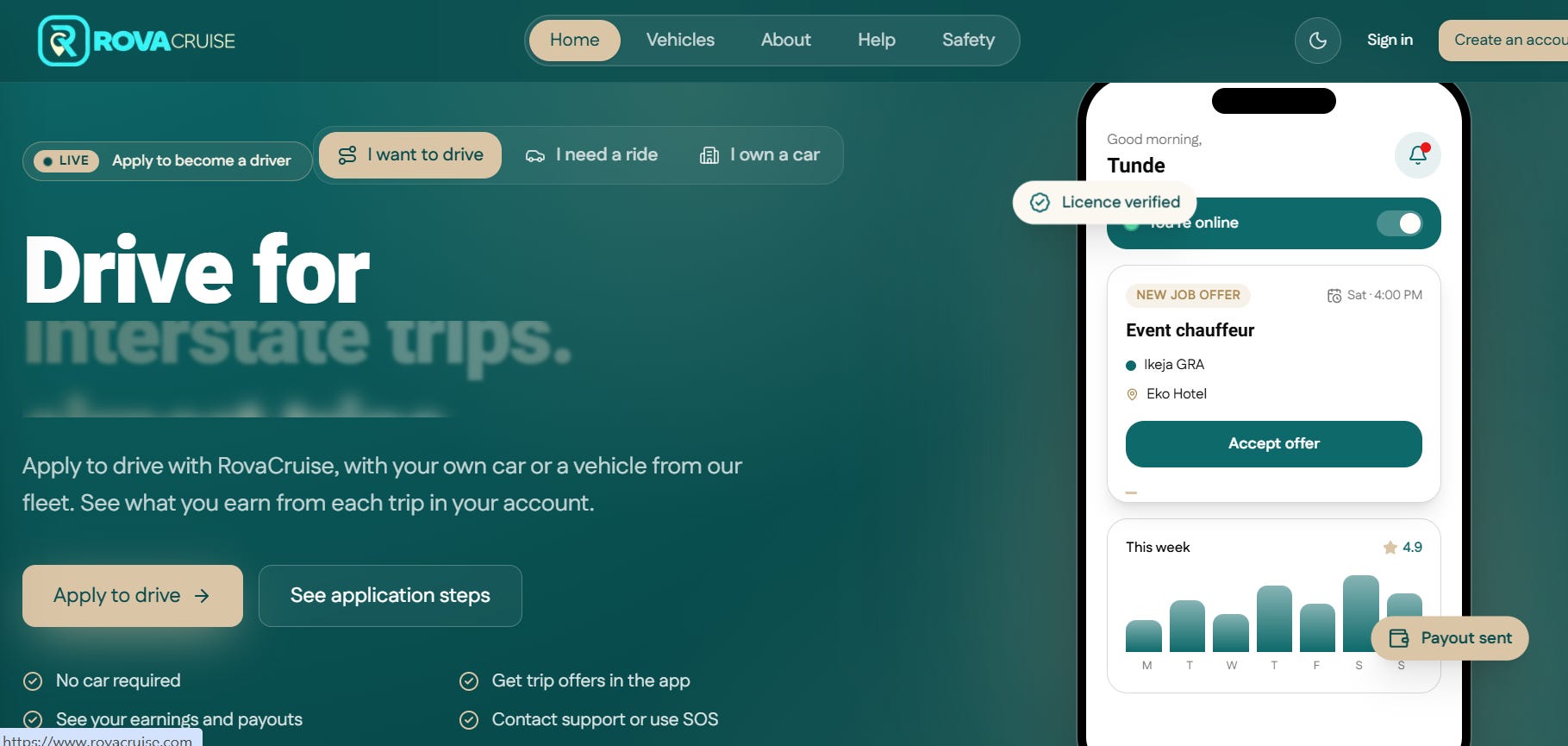
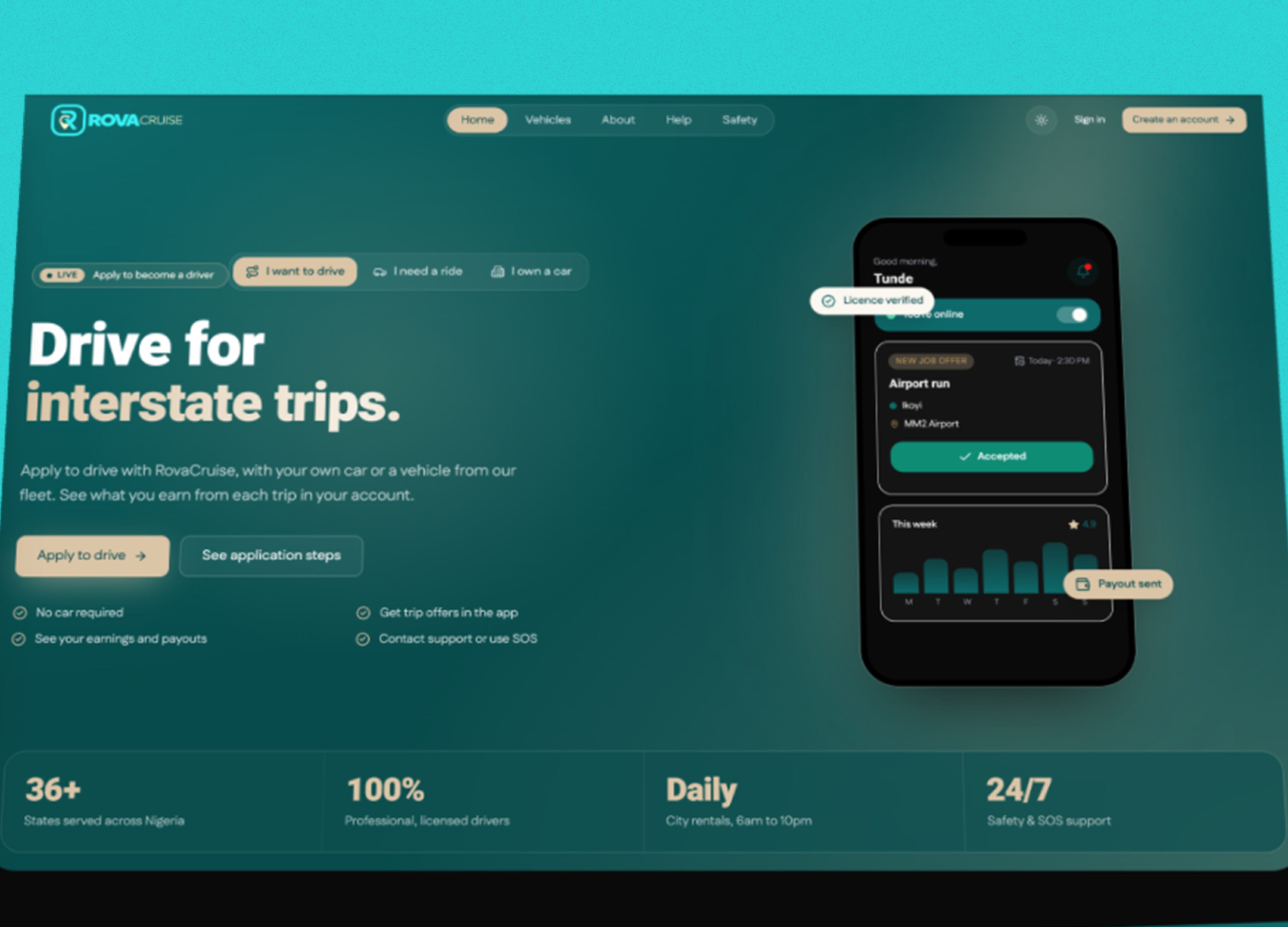
RovaCruise wants to offer something between those models: the flexibility of car rental, the convenience of a technology-enabled booking experience, and the service standards associated with a professional chauffeur company.
A customer attending a three-hour meeting, for instance, may not need to pay for an entire day. Someone attending a wedding might need a vehicle for several hours, while a family visiting Lagos could require one for a weekend.
The startup believes customers should be able to choose a vehicle, understand the rental options, see the applicable price, and select how long they need it without making multiple calls to find a suitable arrangement.
Its intended customers range from business executives and families to tourists, Nigerians in the diaspora, event organisers, and companies arranging transportation for employees or visitors.
The promise, however, goes beyond putting someone behind the wheel of a nice car. Omotoso says it intends to build its service around vehicle inspections, chauffeur screening and training, security monitoring, customer support, and feedback.
Turning parked cars into income-generating assets
Perhaps the more interesting part of RovaCruise is what it wants to do for vehicle owners.
Buying a car is a significant investment, but ownership comes with continuing expenses. Insurance, maintenance, and depreciation do not stop simply because a vehicle spends most of the week in a parking space.
RovaCruise sees an opportunity to make those underused vehicles productive.
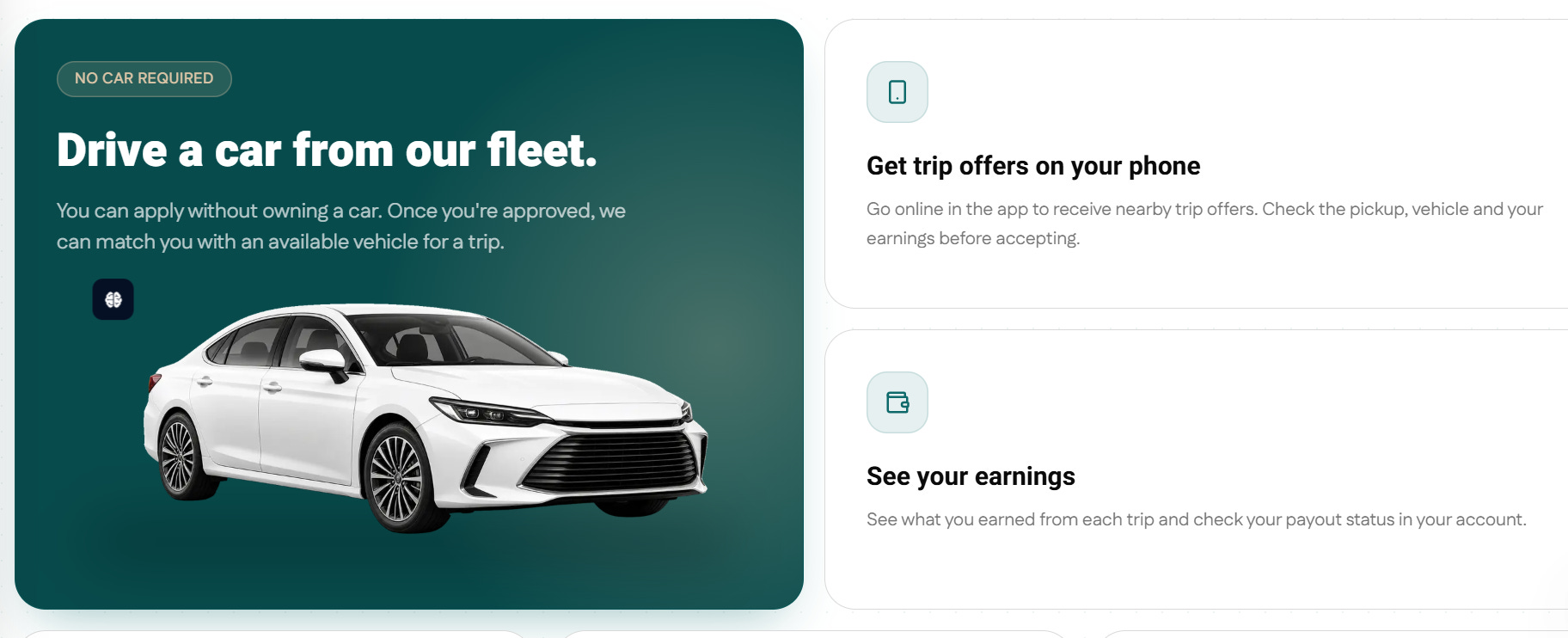
Through a proposed vehicle partnership and leasing arrangement, eligible owners can make their cars available for commercial operations. The company would then manage the process of getting those vehicles to customers, assigning chauffeurs and overseeing their use.
It is not simply a case of handing over a car and hoping for bookings. The startup says its onboarding process will involve vehicle inspections and documentation, alongside measures such as GPS tracking, dash cameras, and operational monitoring.
It also intends to provide vehicle partners with an investor dashboard showing information such as vehicle activity, earnings, maintenance notifications, and monthly financial records.
The business operates on a revenue-sharing model. Money generated from bookings is divided among the vehicle owner, the chauffeur, and RovaCruise according to an agreed percentage.
The owner earns from the use of their vehicle, the chauffeur receives a commission for providing the service, and the company retains a share to cover technology, operations, customer acquisition, and administration.
How much an owner can earn will depend on factors such as the vehicle’s category, condition, demand, booking frequency, and rental duration. A luxury SUV, for example, would not necessarily command the same rate as a standard sedan.
The company has not provided specific revenue-sharing percentages or guaranteed returns in the interview. Those details will matter to owners considering whether to make their vehicles available.
For RovaCruise, the challenge is to make the arrangement attractive to vehicle owners without pricing the service beyond what customers are willing to pay.
Why Lagos comes first (Why not?)
RovaCruise is starting in Lagos, where traffic congestion, long journeys between different parts of the city, and the demand for premium transportation create an obvious market to test its model.
The founder, Omotoso, also sees an opportunity among Nigerians in the diaspora who return during festive periods and want to arrange reliable transportation for themselves or their families before arriving.
He also says the priority is to establish a manageable fleet of properly maintained vehicles and build the operational capacity to support them. Chauffeur recruitment and training, strategic partnerships, and customer acquisition are also part of the launch strategy.
That is a sensible starting point for a business whose reputation will depend heavily on what happens after a customer makes a booking. A polished website or convenient booking process will mean little if the vehicle arrives late, the chauffeur behaves poorly, or the car does not match what the customer booked.
RovaCruise is entering a market where customers already have several ways to arrange transportation. Its real test will be whether it can make reliability and accountability consistent enough for people to choose it over the alternatives.
Omotoso acknowledges that the company is still testing an important assumption: whether enough Nigerians are willing to embrace a more structured rental experience and pay for the convenience, safety, and professional service it promises.
Customer behaviour, vehicle utilisation, preferred rental durations, and demand for different vehicle categories will help determine how the business develops.
More than a car-rental company
For now, RovaCruise is preparing to establish its first operations in Lagos. But the founder sees car rental as an entry point into a wider mobility business.
Its longer-term ambitions include corporate transportation, tourism, airport transfers, intercity mobility, fleet management, and vehicle ownership partnerships. It eventually wants to expand into other Nigerian cities and African markets.
There is also an employment dimension to that ambition. The founder wants to create opportunities for chauffeurs within a more structured organisation, where professionalism, discipline, customer service, and personal development are part of the job.
Still, the immediate task is more straightforward: convince customers that booking a car should not come with uncertainty about the vehicle, the driver, or the final experience.
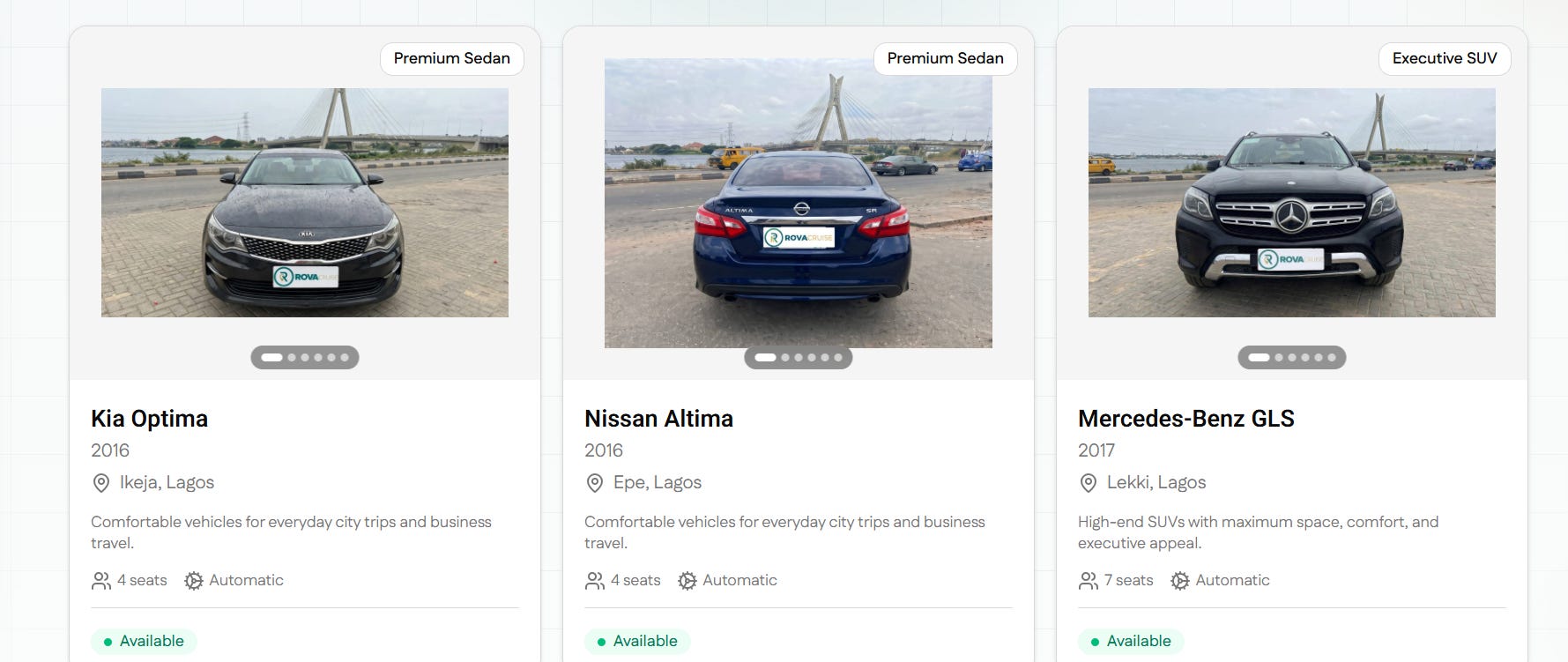
The December 1 launch will be RovaCruise’s first opportunity to put that promise to work. Rather than launch with a large fleet, the company plans to begin with a few luxury vehicles.
Omotoso’s ambition is captured in the company’s tagline, Luxury in Motion. But the bigger opportunity may be less about luxury itself and more about making dependable transportation easier to access.
As he puts it: “We are not just putting people in cars. We are building trust, creating opportunities, and redefining mobility.”