


Here is a problem you probably have not thought about until right now, but once you hear it, you cannot unhear it.
A doctor in Lagos has 4,000 followers on Instagram. Every time she posts about managing diabetes or understanding your blood pressure, the comments fill up.
People tag their parents. People DM her questions. People share her posts to family WhatsApp groups. She has a real audience, genuine trust, and knowledge people are clearly willing to engage with.
But if she wanted to charge those 4,000 people for a live Q&A session? She would need to collect payment on one platform, send a Zoom link on another, manually cross-check who has paid before sharing access, manage the whole thing herself, and then figure out how to receive the money into her account on the other side.
By the time she has done all of that, the energy that made the idea feel exciting has been completely drained by logistics.
This is the problem Briggs Alabo set out to solve with Motion. And it is a bigger problem than most people in the creator economy conversation are actually addressing.
The insight behind Motion is deceptively simple. The internet became extraordinary at helping people build audiences. Social media, podcasts, newsletters, YouTube, TikTok, all of these platforms made it easier than ever for a person with expertise, creativity, or knowledge to find the people who care about what they have to say.
What the internet completely failed to build is the infrastructure for those same people to charge for direct access to themselves.
“The internet had become incredibly good at helping people build audiences, but surprisingly bad at helping them monetize direct access to those audiences,” Briggs told in60.
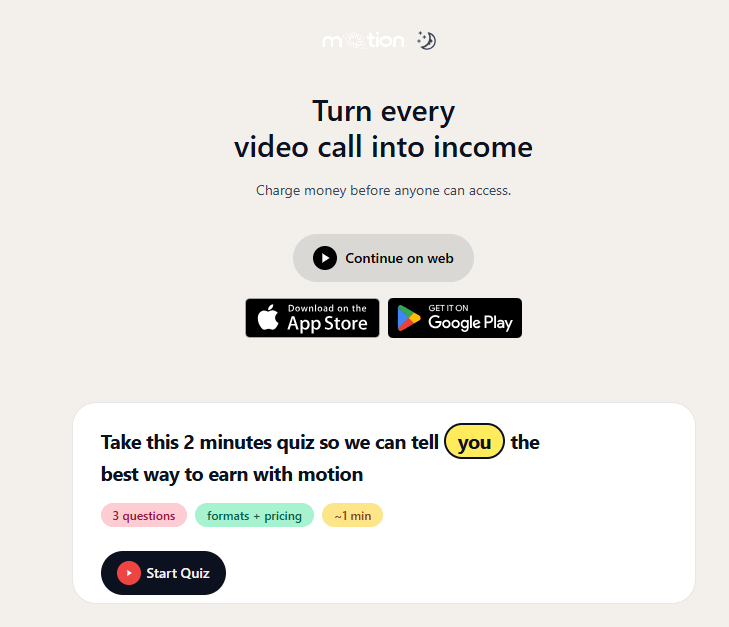
Motion’s answer is straightforward. You create a session, a private call, a livestream, a class, a workshop, a consultation, a Q&A, a listening session, whatever form makes sense for what you do. You set the price. You share one link with your existing audience. People click the link, pay, and get access. That is the entire flow.
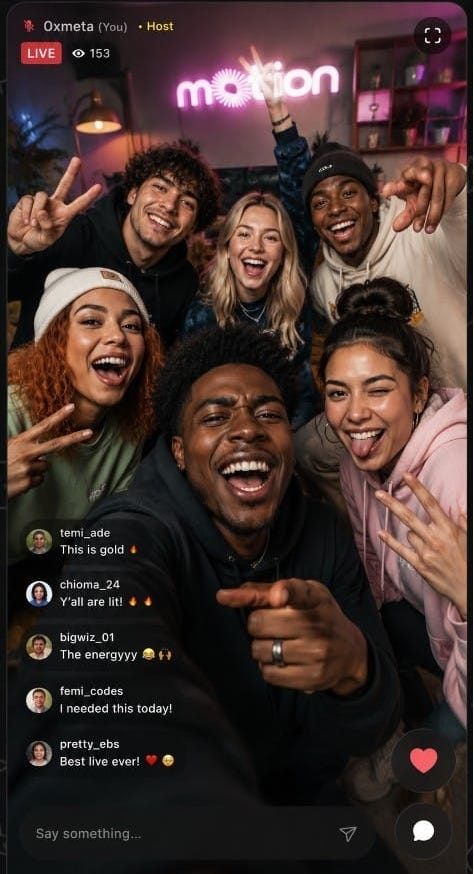
No payment app and Zoom link in the same breath. No manually confirming who has sent money before sharing access. No separate platform for registration, another for video, another for payouts. Just one link that handles all of it.
“What if creating a paid live experience was as easy as creating a Zoom meeting or starting an Instagram Live?” Briggs said. That question is Motion’s entire reason for existing.
One of the most interesting things about what Briggs built is how the product evolved once real people started using it.
The original assumption was that Motion would primarily serve traditional professionals, consultants, teachers, coaches. The people you would naturally expect to charge for their time. But the market told a different story.
Doctors started using it not just for consultations but for paid Q&A sessions with younger doctors. Musicians started hosting exclusive listening parties for their most dedicated fans. Fitness trainers started running weekly paid workout sessions.
Creators started offering private livestreams for the people who actually wanted more than what the free content offered. Businesses started running ticketed workshops and product demonstrations.
“We stopped thinking only about appointments and consultations and started thinking about a much larger category: paid live experiences,” Briggs said.
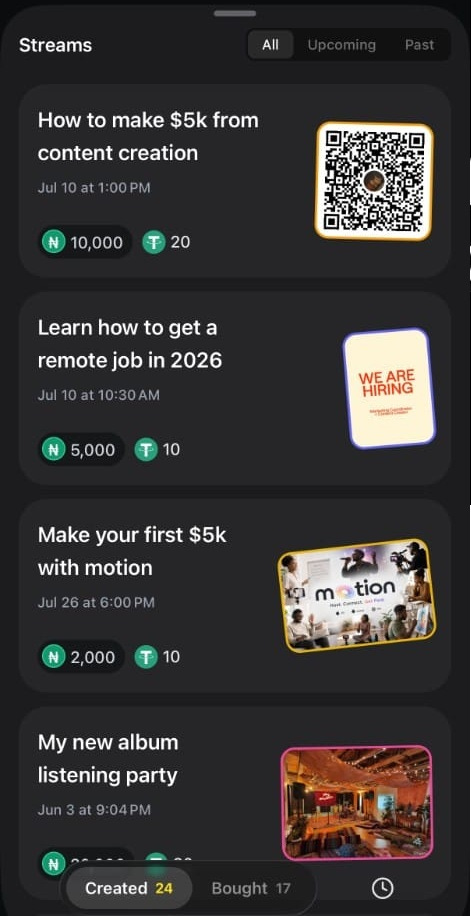
That shift in thinking matters. Motion is not trying to be a booking tool for freelancers or a telehealth platform or a creator monetization app. It is trying to be the infrastructure layer that sits underneath all of those things, the thing you use regardless of what the live experience actually is.
The deliberate choice to think of Motion as infrastructure rather than a marketplace is worth pausing on because it changes everything about how the product works.
Most platforms that want to help creators monetize their audiences try to become the destination. They want you to build your following on their platform, so they can sit between you and your audience permanently. Motion is explicitly not doing that.
“Hosts do not need to build an audience on Motion,” Briggs explained. “They can bring the audience they already have from Instagram, TikTok, WhatsApp, X, email or their existing community. Motion simply gives them the infrastructure to turn that audience into paying participants.”
That distinction, tool versus destination, is the difference between Motion owning your relationship with your audience and Motion simply powering it. For an African creator, educator, or professional who has spent years building trust with a community, the ability to keep that trust while adding a revenue layer on top of it is significant.
The vision behind Motion is not just about individual creators making more money, as real as that outcome is. It is about changing a fundamental assumption that has quietly limited how African professionals, educators, and creators think about what they have built.
“Sometimes 100 people willing to pay for access are more valuable than 100,000 passive followers,” Briggs said.
That sentence deserves to sit with every creator who has been told they need to grow their audience before they can think about monetization. The follower count is not the business. The willingness of a specific group of people to pay for direct access to your knowledge, your time, or your presence, that is the business.
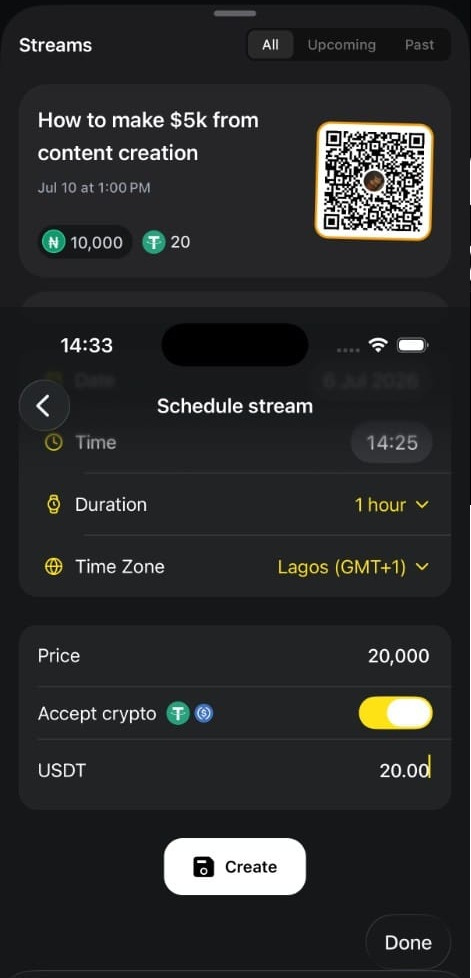
And the smaller that group is, the more Motion’s infrastructure matters, because you do not need a platform with millions of users to make it work. You just need the right tool and the audience you already have.
Motion is live on web, iOS, and Android. The platform already supports paid livestreams, private calls, consultations, workshops, and ticketed virtual events across education, healthcare, consulting, fitness, entertainment, and the creator economy. Live educational experiences with hundreds of simultaneous participants have already been tested on the platform.
The creator economy conversation in Africa tends to focus on platforms, who is paying out the most, which social media app is growing fastest, which streaming service is signing the most African content.
Motion is building something different and arguably more durable: the layer beneath all of those platforms where the actual transaction between a professional and their audience happens.
If it works the way Briggs envisions it, the biggest change will not be visible.
It will just be that a doctor in Lagos, a music producer in Abuja, a fitness coach in Nairobi, and a business consultant in Accra will all have something they do not have today, a single link that turns their audience into paying participants, without any of the logistical chaos that currently makes the whole thing not worth attempting.
Access itself becomes the product. And the infrastructure to sell it finally exists.