

Nigerians rarely struggle to have an opinion. From who will win the next election to whether the naira will strengthen, which football club will take the league title, or what a popular musician will do next, there is almost always a debate somewhere.
But what happens when someone is so certain about a prediction that they are willing to put money behind it?
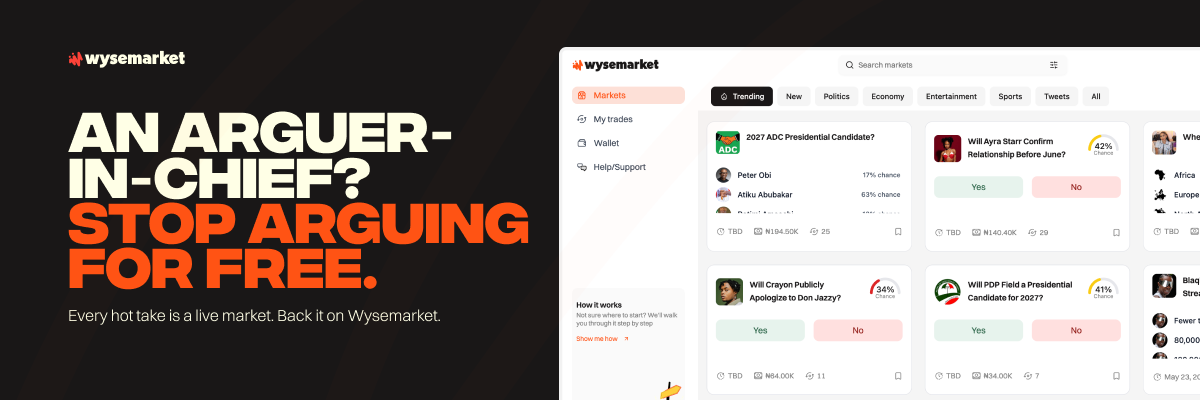
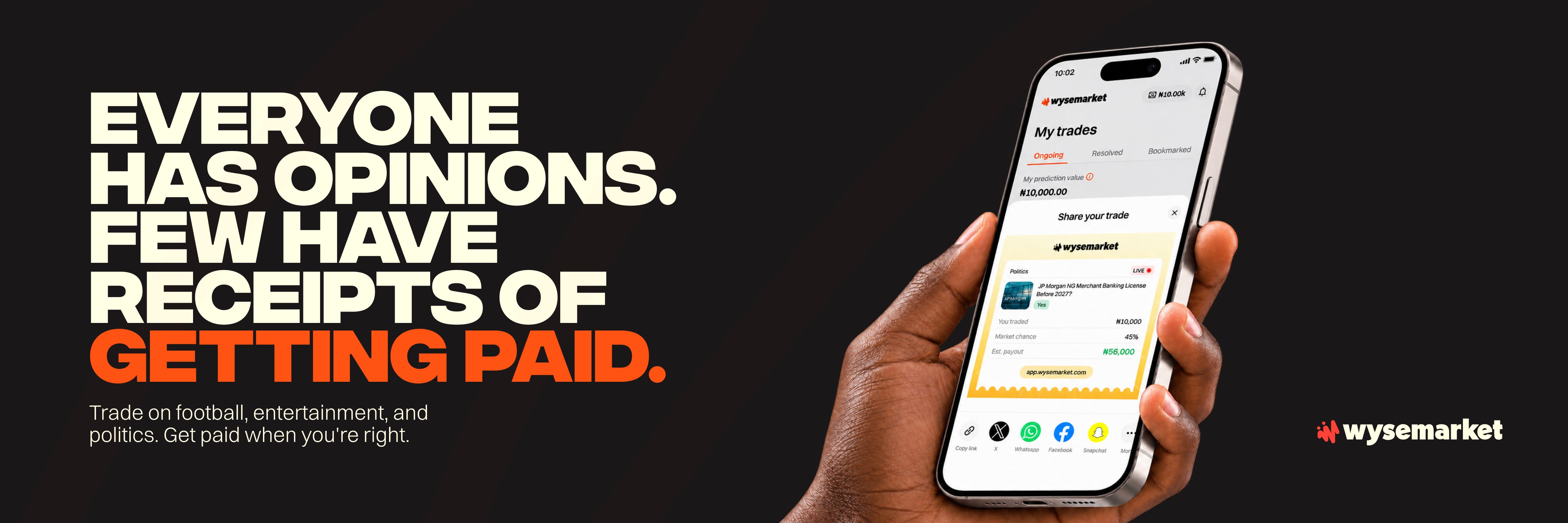
That question sits at the centre of Wysemarket, a 7-month-old Nigerian prediction market platform co-founded by Femi Laniyan, its Co-founder and CEO. It allows users to trade on the possible outcomes of real-world events, from politics and sports to entertainment and economic developments.

For Laniyan, however, the idea did not begin with a desire to take on other trading platforms. It started with a problem he encountered while working in compliance: finding reliable information about Africa.
The idea did not stay his alone for long. Three co-founders from Nigeria’s tech scene joined him early, and the four split the problem between them: how markets would be designed, built, and settled fairly, how users would be protected, and how ordinary Nigerians would actually experience the product.
What began as one man’s frustration with bad data became a 4-man founding team with a shared conviction: that the arguments Nigerians have every day are information, and that information deserves a market.
During Laniyan’s time as a compliance consultant for a US-based company, he became increasingly interested in how organisations gathered information and understood public sentiment in African markets. He noticed that much of what passed for reliable data was often built on assumptions, individual opinions, and outdated information.
He began to wonder whether there was a better way to understand what people actually believed would happen.
A colleague introduced him to prediction market platforms such as Kalshi and Polymarket. After researching how they worked, Laniyan saw an opportunity to apply the model to African markets.
“The concept just immediately made sense to me,” he said. “There’s something you want to know. There’s something you know that I don’t, and something someone else knows that neither of us knows. But at the end of the day, when you bring all this knowledge together, you can get a much better picture of what will likely happen.”
That became the thinking behind Wysemarket.
From law to building a prediction market
Laniyan’s route into technology was not a straightforward one. He trained as a lawyer, moved into compliance and later worked in the insurtech space, where he had his first experience building a startup.
That earlier venture focused on making insurance more accessible and improving adoption in Nigeria. It also strengthened his interest in finding opportunities in industries that were not necessarily familiar to him.
He describes entrepreneurship as a way to move beyond the routine of a conventional career and explore how different sectors could work better.
“I’ve always enjoyed stepping into familiar industries, basically understanding how they work and finding opportunities to do things the unconventional way or do things differently,” he said.
Wysemarket is his second startup, but it has taken him into a relatively unfamiliar corner of the financial technology industry.
Prediction markets allow people to buy and sell positions based on whether they think a particular event will happen. The price of a position reflects the market’s current assessment of that outcome. If the prediction is correct, the position pays out according to the platform’s rules.
For example, a market might ask whether an artist will reach one million streams within a week of a new music release. Users who believe the milestone will be reached can take a position on that outcome, while those who disagree can take the other side.
The important part is that the question must have a clear answer. Wysemarket says it checks each proposed market for a verifiable outcome, reliable sources, and rules that participants can understand before making it available for trading.
Laniyan said the team pays attention to conversations happening online and events attracting public interest, but a trending topic does not automatically become a market.

A question about an artist’s streaming numbers, for instance, must specify the platform being measured, the period covered, and the source that will be used to confirm the final figure.
The same applies to politics, sports and other categories.
“Every market needs a clearly defined outcome or verifiable source, rules for the participants to understand,” he said.
This matters because once people begin trading on a market, changing or withdrawing the question can become difficult, particularly when users have already committed money to positions.
What differentiates Wysemarket from other prediction markets
One of the most difficult challenges facing prediction markets is explaining how they differ from other markets. On the surface, it involves putting money behind an outcome, with users potentially losing what they stake if their prediction is wrong.
Laniyan acknowledges the similarity but says the pricing systems are different.
In traditional markets, bookmakers set the odds. Those odds determine the potential return a user receives when placing predictions. In a prediction market, prices change as participants buy and sell positions based on new information and changing expectations.
That means two people entering the same market at different times may pay different prices for the same outcome. Their potential returns can also differ.
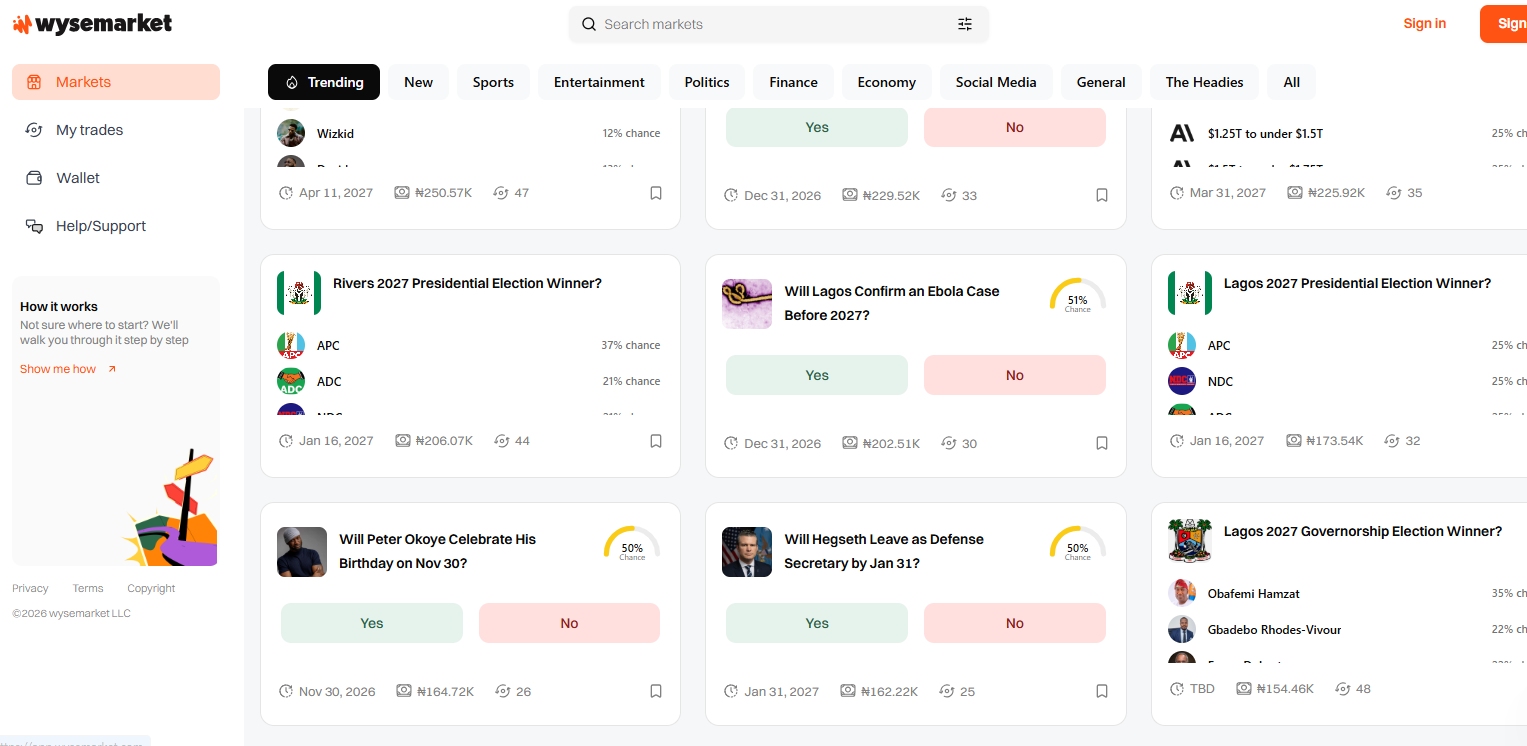
Wysemarket expresses these prices as probabilities. If an outcome is trading at 40%, for example, the platform is showing that the market currently prices the likelihood of that outcome at roughly 40%.
That figure is not a guarantee, nor does it mean that 40% of all users voted for it. It reflects the price at which participants are currently willing to trade that position.
For Laniyan, this is also what makes prediction markets useful beyond the possibility of financial returns. They can bring together information held by people with different experiences and perspectives.
He believes someone who understands grassroots politics, for example, may have insights that are missing from conversations dominated by social media commentary. A trader, student, or ordinary market participant could all have useful knowledge about an event.
“Your knowledge and understanding of what’s happening around you can have real value,” he said.
That belief also shapes how Wysemarket approaches its product.
Platforms such as Polymarket and Kalshi have helped popularise prediction markets globally, but Laniyan believes their interfaces can feel too much like financial trading platforms for people who are unfamiliar with the language of markets.
Wysemarket is prioritising simpler language, accessible probabilities and a more straightforward experience. The aim is to make it possible for an everyday Nigerian to understand what a market is asking without first learning complicated financial terms.
“We shouldn’t need to understand financial markets to have an opinion about something about the future,” he said.
He argues that Nigerians already make predictions and debate possible outcomes every day. Wysemarket wants to give those opinions a way to be expressed through a financial position.
Building the infrastructure behind the questions
Making the platform easy to use is only one part of the challenge. Behind every market is a system that must process trades, determine prices, manage risk, and ensure that users receive the correct payouts when an event is resolved.
Laniyan said assembling a team willing to work on an unfamiliar product was one of the early difficulties. He is particularly proud of the experience the company has brought together, including people who have worked at institutions such as JPMorgan, the London School of Economics, Flutterwave and Liberty Mutual.
But turning the idea into a working product also required solving the less visible problems of running a prediction market.
“How do we ensure there’s enough liquidity in each market that goes live? How do we manage the risk? How do we handle the compliance side of things and make sure users are paid correctly when an event is resolved?” he said.
These are important questions for a business whose product depends on people trusting both the market rules and the platform’s ability to settle outcomes correctly.
Wysemarket is still relatively young. In the seven months since launching, it has attracted thousands of Nigerian users, according to Laniyan. He also said the company had recorded trading volume that had surprised people who approached it for its figures, but did not disclose the amount.
He believes the platform is already among the top two or three prediction markets in Africa, although that is his assessment rather than an independently verified ranking.
The company is not positioning itself as the only player in the space. Laniyan sees platforms such as Polymarket and Kalshi as part of an industry that is still developing.
Instead, he wants Wysemarket to build around two priorities: simplicity and access to information.
More than a place to predict outcomes
The bigger ambition is for Wysemarket’s markets to become a source of information that people and organisations can use when making decisions.
Laniyan wants journalists to consult its probabilities when reporting on elections or economic developments. He also wants businesses and financial institutions to use its data as another signal when assessing uncertainty.
If someone wants to understand what people expect to happen to the naira, how an election might turn out, whether inflation could rise or whether an artist will reach a particular milestone, he wants Wysemarket to become one of the places they check.
That is a much larger ambition than attracting millions of users or generating millions in trading volume, although he wants both.
It also raises an important question: how reliable can a market-generated prediction be, especially when participants may have incomplete information, strong biases or financial incentives to take particular positions?
Laniyan does not claim prediction markets will always get things right. Rather, he sees them as another source of information that can sit alongside traditional data, surveys and expert analysis.
That distinction will matter as Wysemarket grows. A market price can show what participants currently believe, but it cannot automatically establish what will happen. Its usefulness will depend on the quality of the markets, the people participating, the information available, and the depth of trading activity.
For now, Laniyan is banking on the fact that Nigerians’ appetite for debate and their familiarity with everyday events can help make prediction markets more accessible.
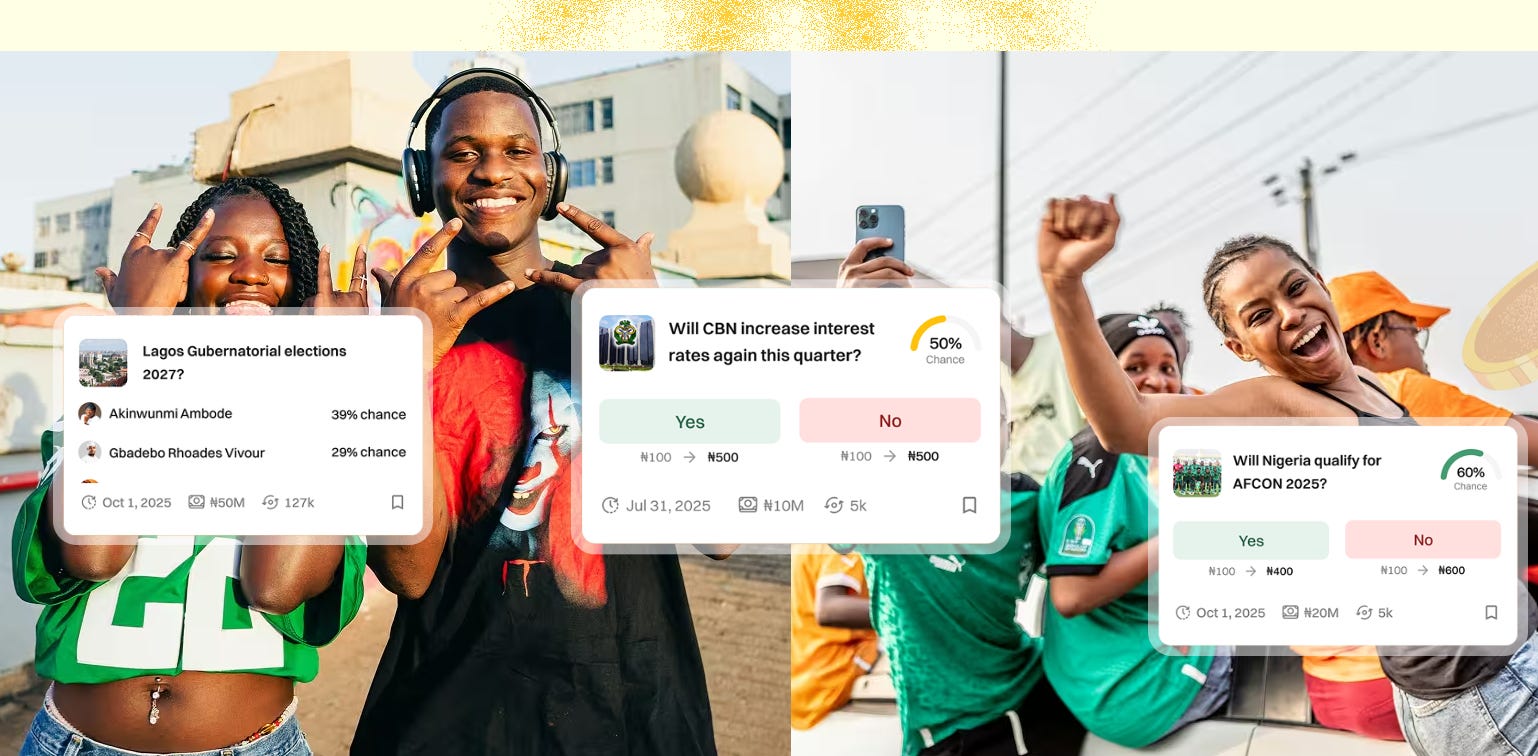
His ambition is to build a platform where people do not just argue about the future, but have a way to express what they believe will happen and potentially benefit when they are right.
Whether Wysemarket can turn that idea into a trusted source of market intelligence across Africa will depend on more than the questions it puts online. It will also depend on how well it handles money, resolves disputed outcomes, and earns the confidence of the people using it.
Don’t miss out on Wysemarket. Be Wyse by joining the community here!