

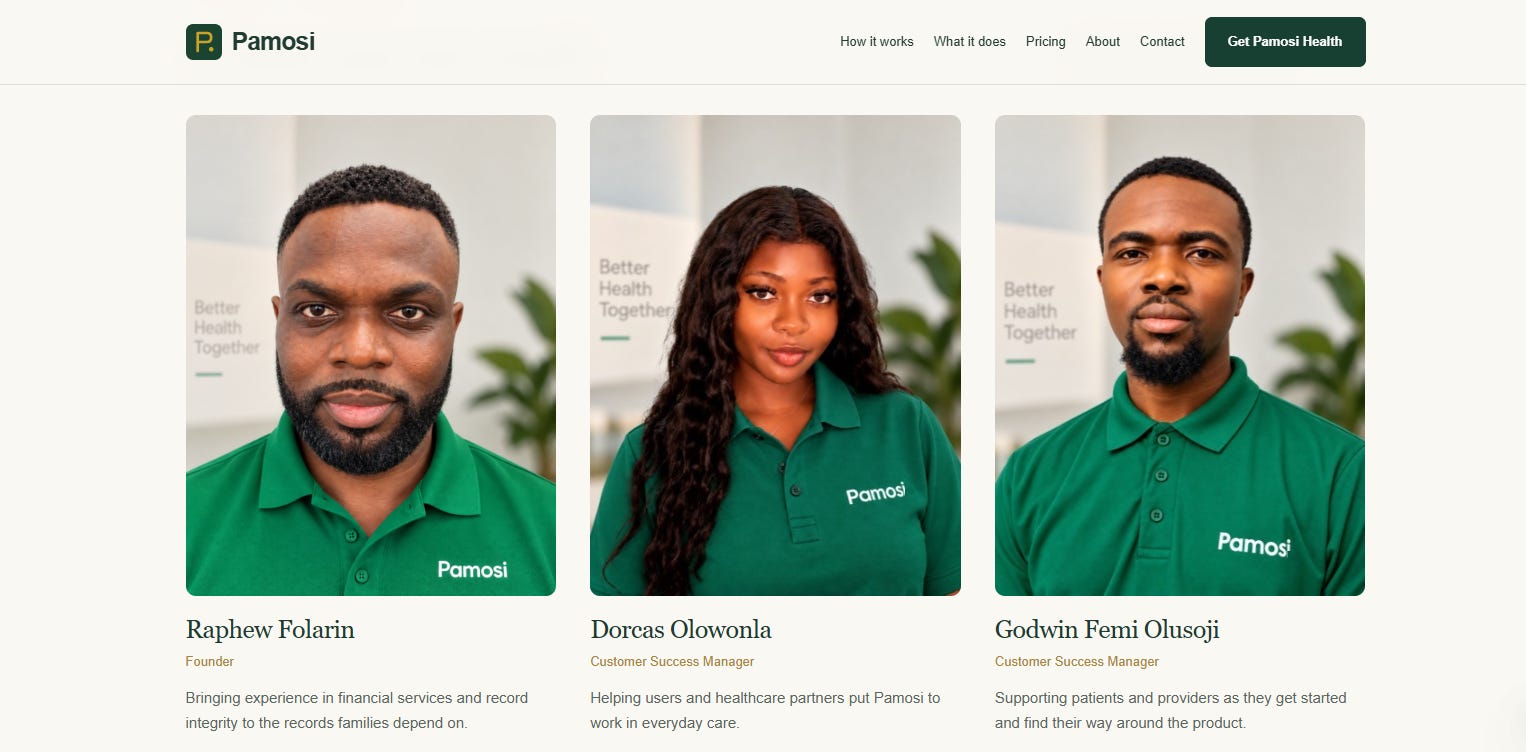
When Raphew Folarin moved from Nigeria to Canada as a child, he left behind more than familiar faces, places, and memories. He also lost access to his medical history.
At the time, it probably did not seem like something he would need to worry about. He was young, and his health records were somewhere in the country his family had left behind. But years later, during a conversation about his cardiac history, he was asked to provide basic medical information he could not remember or retrieve.
The people who might have helped him recover those details were no longer alive.

For Folarin, the experience was unsettling. Information about his own health existed somewhere in his past, but he could no longer access it. He had not known he would need those records one day, and by the time he did, recovering them was no longer possible.
That experience eventually led him to build Pamosi, a digital health-record platform designed to help people keep their medical information in one place and carry it with them wherever they go.
“I kept coming back to a simple idea: your health history should stay with you as you move between countries, hospitals and stages of life,” he said.
The problem with keeping your health history together
Folarin’s experience was personal, but his research into how people manage medical information in Nigeria revealed a much wider problem.
For many families, health records are scattered across paper folders, WhatsApp conversations, hospital databases, and old laboratory reports. Prescriptions may be saved in a phone gallery, while vaccination cards and test results sit in a drawer until someone needs them.
Finding the right document can become difficult, especially when a patient visits a new hospital or needs to explain a medical history they have not reviewed in years.
The consequences go beyond inconvenience. Patients may repeat tests because previous results are unavailable. Doctors may have to make decisions without a complete account of earlier treatment, allergies, or medication. Families also spend time searching for documents and trying to remember details when they should be focused on caring for someone unwell.
One reason the problem persists, Folarin explained, is that medical records are often organised around individual healthcare facilities. A hospital may have its own record system, but patients move between hospitals, laboratories, pharmacies and specialists.
Digitising a hospital’s records does not automatically solve the problem for someone who receives care from several providers.
“Patients move between hospitals, laboratories, pharmacies and specialists. In practice, the patient is still the one carrying the story across,” he said.
Pamosi’s approach is to put that history in the patient’s hands.
From WhatsApp messages to a personal health vault
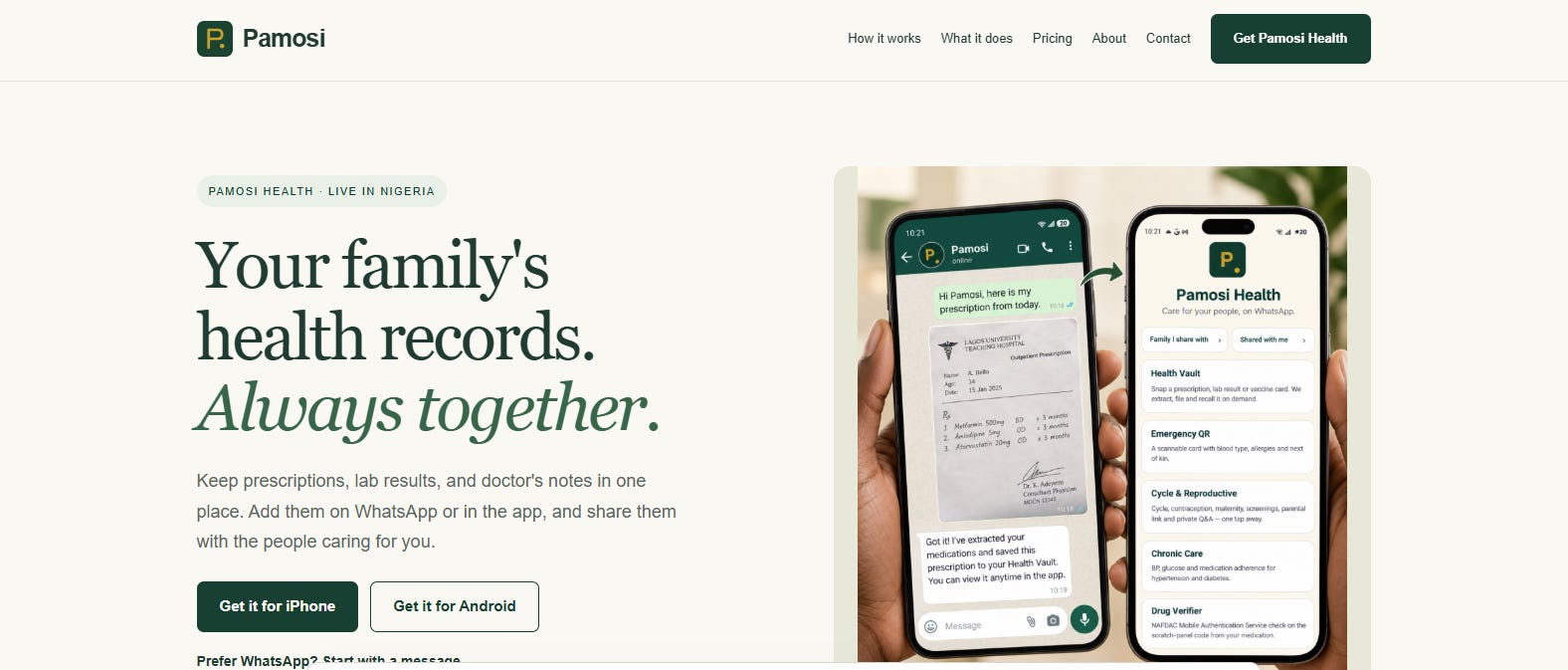
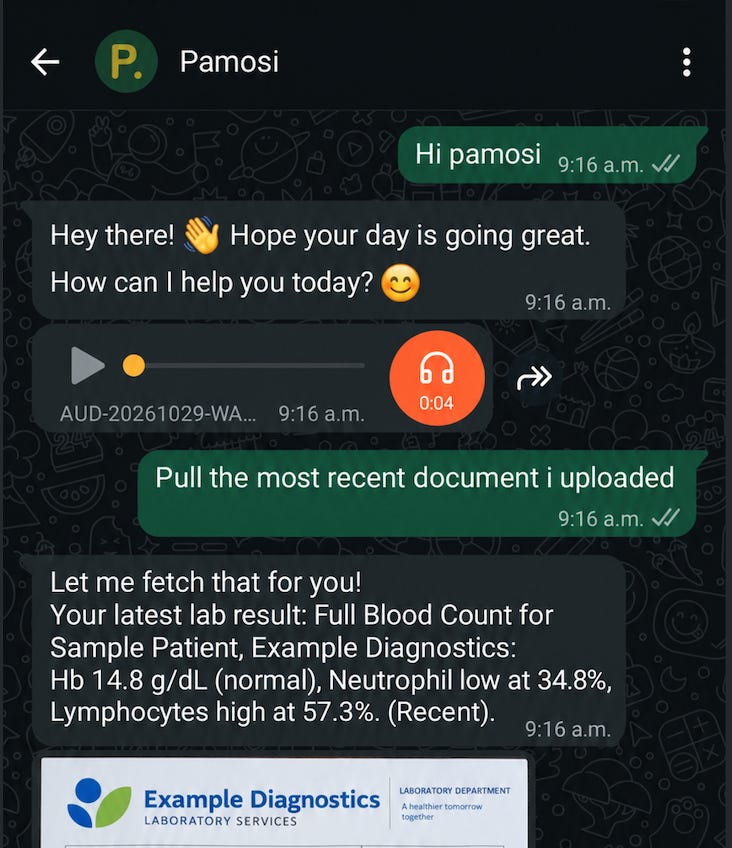
Pamosi allows users to add medical records through WhatsApp or its mobile app. Someone getting started can send a photograph of a prescription, laboratory result, or vaccination card through a WhatsApp conversation with Pamosi Health. The platform stores the document in a personal health vault and helps organise its information.
Rather than scrolling through old messages to find a test result, a user can ask for the document when needed.
The choice of WhatsApp is deliberate. Folarin wants people to start with a tool they already understand instead of having to download another application and learn how it works before they can store their first record.
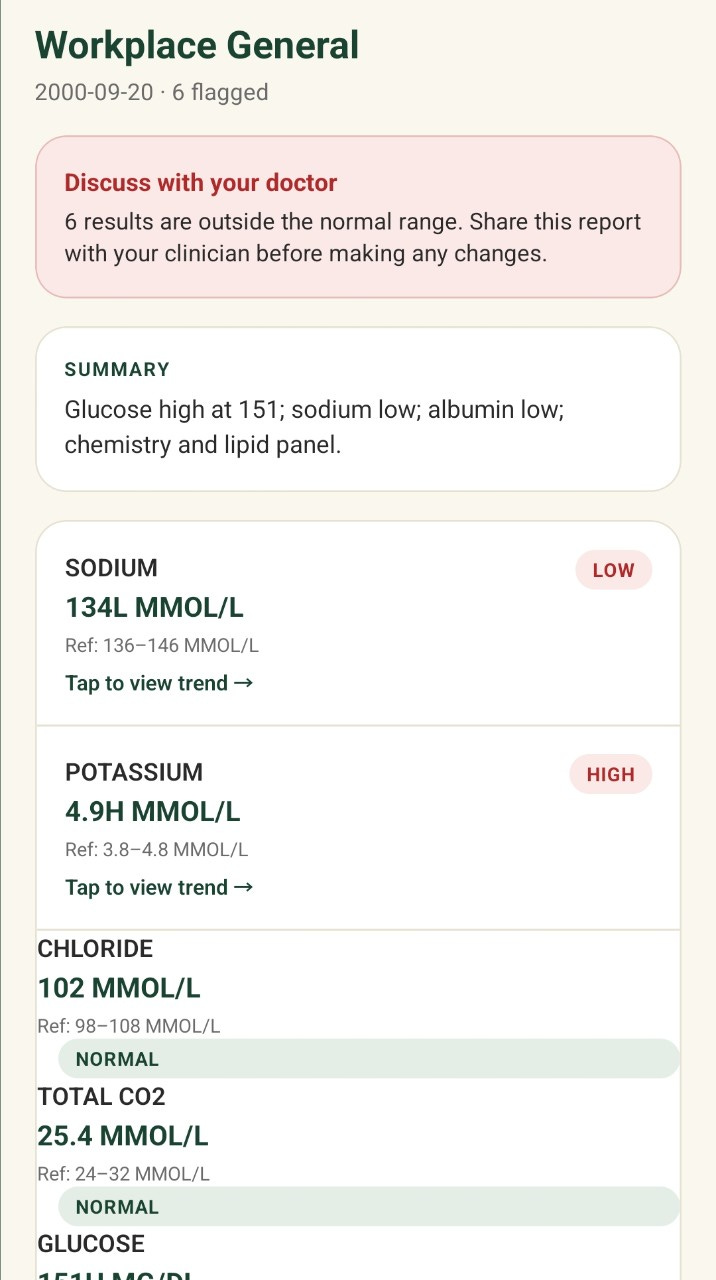
The app provides a broader view of the information, including medical documents, health trackers, medications, and sharing controls. WhatsApp serves as a convenient way to capture records, while the app allows users to review and manage them over time.
The product has also expanded beyond the original idea of a digital document vault. Conversations with friends and family members in Nigeria showed Folarin that people needed help managing more than old medical reports.
Parents have vaccination records to keep, pregnant women attend antenatal appointments, and people living with chronic conditions may need to monitor daily readings and medication. Families also help care for older relatives, sometimes taking responsibility for organising their medical information.
Pamosi has therefore added features for family health records, pregnancy and reproductive health, chronic conditions, medications and immunisations.
But managing family health information introduces another concern: privacy.
Folarin says being related to someone should not automatically give a person access to their medical records. Users can choose which information to share with family members or clinicians and revoke access when they no longer want it available through the platform.
The company also considers what might appear in messages and notifications, particularly where people share phones or devices.
There are limits to what these controls can do. Folarin acknowledges that revoking access through Pamosi cannot retrieve a document someone has already downloaded or photographed. For him, being honest about those limits is part of building trust.
Making digital records reliable
Pamosi’s ability to organise medical documents also depends on how accurately it reads them.
A blurry photograph, incomplete laboratory report, or difficult-to-read prescription can create problems if information is extracted incorrectly and treated as an accurate medical record.
Folarin’s background in financial services has shaped how he approaches this challenge. He spent more than a decade in investor operations, most recently leading a team supporting more than $10 billion in assets across 81 private fund managers. His earlier experience includes roles at SS&C Technologies, TD Asset Management and RBC Royal Bank.
That work exposed him to the importance of knowing where information came from, who could access it, and whether it had been changed.
He applies the same thinking to Pamosi. The platform retains the original document while using technology to extract and organise its contents. Where the system has low confidence in what it has read, the information is flagged for clarification. Medication suggestions also require confirmation before being added through the relevant workflow.
Importantly, extracting information from a medical document does not mean Pamosi has clinically verified it. A digital record can be easier to search but not necessarily more accurate than the original.
This distinction becomes even more important as the company prepares to introduce Pamosi Clinic, a web-based electronic medical records system for healthcare teams.
The system supports clinics' daily work, including consultations, prescriptions, laboratory orders, and patient records. With a patient’s permission, relevant information stored in Pamosi Health could inform a consultation, while records created by healthcare providers could help build a more complete medical history.
Connecting the two sides, however, requires more than making documents available online. The company has to ensure that records belong to the right patient, that permissions are respected and that healthcare workers can use the system without disrupting their daily routines.
Pamosi is currently seeking partnerships with clinics and hospitals to gather feedback, refine the system and shape its final pricing.
Turning a personal problem into a business
Pamosi is still at an early stage. Folarin said the platform is approaching 500 users, while a smaller group is actively uploading documents, logging daily health readings, processing laboratory reports and setting medication reminders.
He is careful to distinguish registrations from active usage. For the company, someone returning to manage their health information is a stronger indication of value than someone simply creating an account.
The platform currently offers a 60-day free trial, while its final pricing is still being worked out. Folarin says the company is exploring revenue opportunities through both its individual health-record product and its clinic software, while trying to keep the service affordable.
Over the next three to five years, he wants Pamosi to become something people routinely use before visiting a doctor. He hopes patients will spend less time searching for old documents, families will no longer have to rely on one person remembering everyone’s medical history, and clinicians will have access to useful background information when patients choose to share it.
Those ambitions will take more than a convenient WhatsApp interface. Pamosi will need to demonstrate that records remain accessible, that privacy controls work as promised, and that healthcare providers find the system useful enough to adopt.
For Folarin, the motivation goes back to the information he could not recover about his own childhood. He is building a platform around the belief that people should not have to depend on memory, old paper folders, or relatives to tell the story of their health.
A medical history should not become harder to access simply because someone has moved, changed hospitals, or grown older.
Pamosi is now available on both the Google Play Store and the Apple App Store in Nigeria.