Young people already spend hours online every day. They watch videos, like posts, share content, follow brands, discover new products and jump from one trend to another.
The platforms profit from that attention, while creators and businesses fight to turn it into something valuable. But most people who watch, like, and share get very little back.
Jessie Udah thought there should be another way.
As a product designer and entrepreneur, Jessie had spent years thinking about why some digital products become part of people’s everyday lives while others are quickly forgotten.
With Bravoo, the idea was to take the things young people already do and turn them into something more useful: experiences where they can discover things, learn practical skills, meet people and earn real rewards.
Alongside Kelvin Maduka, who leads operations and supports the business, Jessie launched Bravoo on July 15, 2026.
Two months later, the platform says it has grown to more than 40,000 registered users across Africa and Asia, with particularly strong traction in Nigeria and South Africa. It also records more than 29,000 weekly check-ins.
The bigger idea is simple. Don’t just consume the internet. Participate in it, learn and earn.
From scrolling to doing
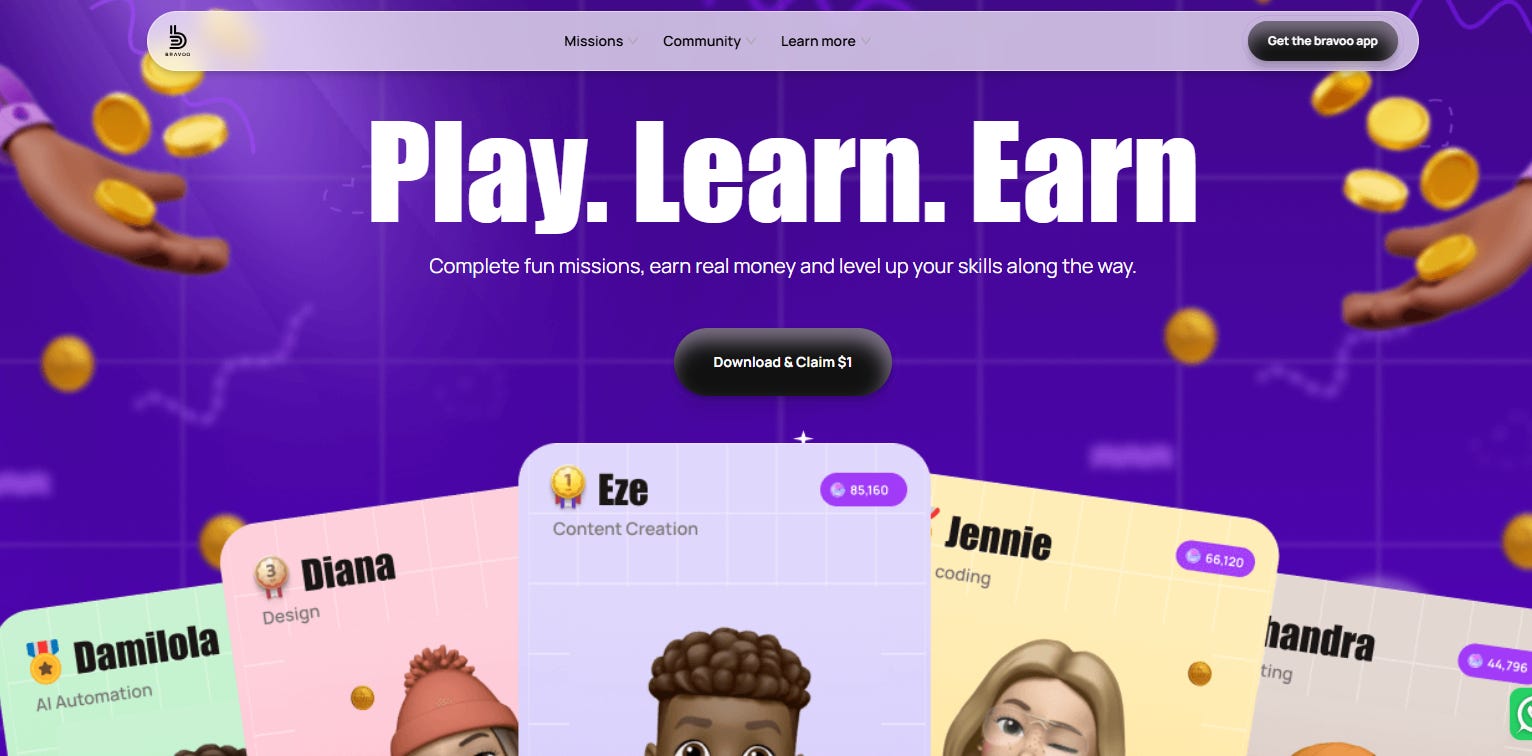
Bravoo is a community-driven platform built around missions. Instead of simply scrolling through content or completing repetitive online tasks, users are given things they can actually do in their everyday lives.
A mission might involve trying something new, learning a practical skill, exploring somewhere, supporting a local business, creating something or sharing an experience with the wider community.
Once they participate, they can earn rewards.
One example is Bravoo’s Support a Local Business mission, which encouraged users to visit a local business and share their experience with the community.
Other missions include Touch Grass, Snack or Nah, and Golden Hour, each of which has attracted more than 3,500 participants.
The point is not to make young people feel like they are completing work for a platform. Bravoo wants the activity itself to be worthwhile.
You might discover a new restaurant, learn something, try something you had never considered before or support a business in your neighbourhood. The reward comes on top of that experience.
“Likes are nice, but they don’t pay the bills. Your time and participation should be worth something too,” Jessie says.
That thinking is at the centre of Bravoo.
A different kind of youth platform
There is no shortage of platforms competing for young people’s attention.
There are social networks, creator communities, learning apps, rewards platforms and online communities. Bravoo does not want to become another place where people simply accumulate followers or likes.
It is trying to sit somewhere between community, discovery, participation and rewards.
That distinction matters because the company believes young people already have the attention and energy. What is missing is a better way to turn some of that participation into useful experiences.
Someone might spend an afternoon online discovering a new brand. Bravoo wants to give them a reason to go out and experience that brand.
Someone might want to learn something new. A mission can turn that interest into an activity.
Someone might simply want to try something different. There can be a reward waiting at the end.
The hope is that people eventually say: “I found this on Bravoo, I tried it, and it was worth my time.”
Missions are the engine
Missions are at the centre of how Bravoo works. They can be created by Bravoo itself or developed with partners. Some focus on skills and creativity, while others are built around everyday experiences, community participation or brands.
That gives the platform room to change depending on what its users and partners want. For brands, the proposition is also different from traditional advertising.
Most advertising is designed to get attention. Bravoo wants brands to give people a reason to do something.
A company launching a product, promoting an experience or trying to reach a younger audience can build a campaign around a mission rather than simply placing an advert in front of users.
Instead of saying, look at us, the brand can give people something to experience.
The young person gets an activity and potentially a reward. The brand gets an audience that is actively participating rather than simply scrolling past an advertisement.
Bravoo makes money from this relationship.
The company operates a B2B model, with brands and organizations paying to create performance campaigns, sponsored promotions and larger Bravoo experiences.
Pricing depends on the campaign and promotional placement, while larger sponsored experiences are priced separately.
It creates a three-way relationship: brands pay for access to an engaged community, Bravoo creates and manages the experience, and users get rewarded for participating.
40,000 users in two months
Bravoo is still very young. Since its July 15 launch, the platform says it has crossed 40,000 registered users across Africa and Asia and now records more than 29,000 weekly check-ins.
Nigeria and South Africa are currently among its strongest markets.
The individual missions are also producing meaningful participation. Some have attracted more than 3,500 people, suggesting that users are willing to do more than simply download the app.
But Bravoo wants to turn those individual missions into something bigger. That is where Bravoo Drop comes in.
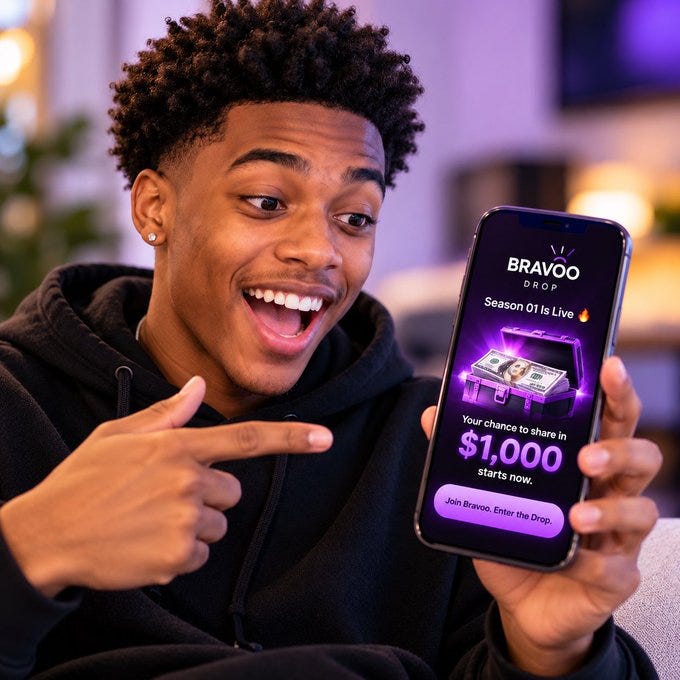
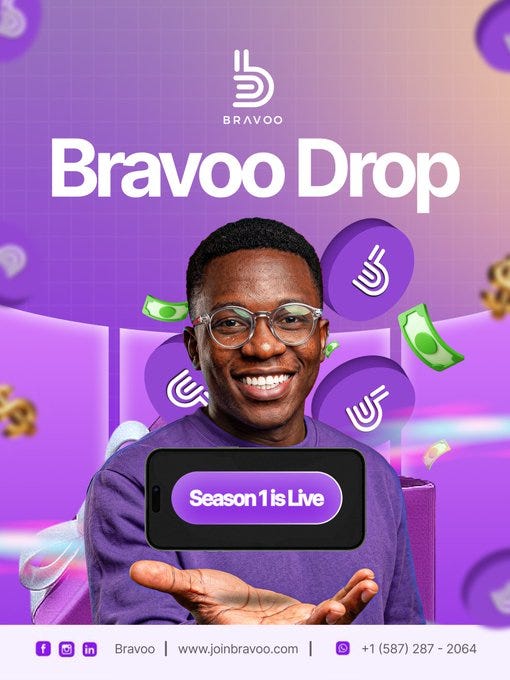
Bravoo Drop is a recurring community-wide experience where users participate across multiple missions for a chance to earn from a shared reward pool.
The first Drop comes with a $1,000 reward pool, with the company planning to run the experience four to five times a year and increase the reward pool over time.
The idea is to give people a bigger reason to remain active on the platform.
Instead of one mission ending and the user disappearing, Bravoo Drop creates a larger event that brings the community back together around participation and shared rewards.
Building an economy around participation
The interesting part of Bravoo is not really the rewards themselves. The company believes that young people’s participation can become valuable in a way that goes beyond likes and views.
The internet has already made it easy for people to discover things. Social platforms have made it easy to share them. Bravoo wants to add another layer: participation.
That means the young person is not just seeing a brand but experiencing it.
Not just watching something but trying it. Not just consuming content but building a skill.
And not just participating for free but potentially earning something from the time and effort involved.
That is also why the company does not describe itself as a task platform.
The goal is not to turn young people into people who complete endless assignments for small rewards. It wants participation to feel natural enough that users would have wanted to do the activity anyway.
The reward simply makes the experience more worthwhile.
Where Bravoo goes from here
There is no funding round to announce yet, and the company is still early in its journey. But the first two months have given Jessie and Kelvin something more important at this stage: evidence that people are willing to participate.
The next challenge is turning that early interest into a durable community and building enough value for both sides of the marketplace.
For users, that means better missions, more useful experiences, skills, community and rewards. For brands, it means access to young people who are willing to do more than look at an advert. And for Bravoo, it means building a business around that connection.
The ambition extends beyond Nigeria. With users already spread across Africa and Asia, the company wants to become a leading platform for young people across emerging markets.
A place where someone can open the app and find something worth trying, learn something useful, meet people, participate in a community and potentially earn from the experience.
That is a much bigger proposition than another rewards app.
Bravoo is betting that the next generation does not need another platform telling them to like, share and follow.
They need somewhere that gives them a reason to do something and, ideally, gives them something back for doing it.