

Idowu Kennedy Yinusa, a Nigerian software engineer with a decade of experience in EdTech, FinTech, InsurTech, and non-profits, returned to academia to pursue a Master's in Computing at Edinburgh Napier University.

There, he faced a common challenge: information overload. He constantly read research papers, textbooks, and documentation but struggled to retain the vast amount of information.
Kennedy's "aha!" moment came during a project when he needed a specific methodology he'd previously encountered. He knew he'd read it, but couldn't recall the details.
This forced him to re-read the paper, sparking an idea: what if reading could automatically become remembering? This question became the foundation for CogniPage, his new venture aimed at transforming how we retain information.
Kennedy has been building for more than 10 years
Kennedy, before co-founding CogniPage, carved a remarkable path through the tech world. As Lead Software Engineer at Tehilah Base Digital, he spearheaded an insurance and membership platform that recouped £1.08 million in just three months. He also innovated a generative AI application specifically for students.
As CTO at Shawali Intercontinental, he led the creation of a humanitarian portal that aided over 12,000 individuals, along with a bustling marketplace that connected over 30,000 vendors and delivery agents. He's also the innovative force behind ViapaAI as its Co-founder and CTO.
Kennedy's contributions haven't gone unnoticed. Thinkers360 recognized him as a Top 50 Global EdTech Thought Leader and a Top 25 Global Open-source Thought Leader. His pioneering AI work has also garnered international acclaim.
Despite these diverse achievements, education remained his enduring passion. He observed, "The real problem in learning isn't getting access to content. It's remembering it." This profound insight became the challenge he was determined to solve.
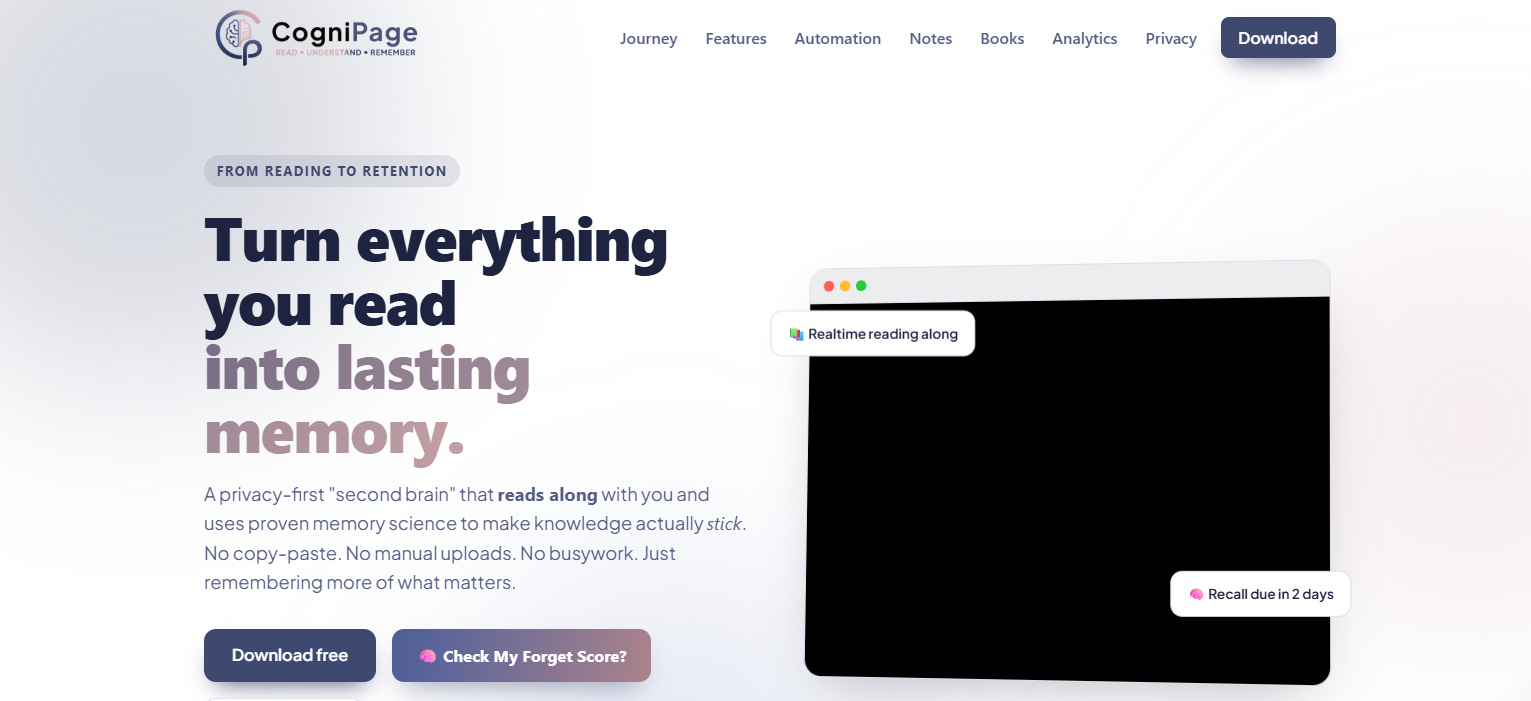
CogniPage wants to make reading stick
CogniPage revolutionizes how you learn by transforming your everyday reading into a powerful retention tool. Forget juggling bookmarks, highlights, and manual flashcards; CogniPage handles the heavy lifting, ensuring information truly sticks.
Here's how it works in four seamless steps:
1. Read: Dive into any content – PDFs, websites, videos, or even physical books.
2. Capture: CogniPage intelligently identifies and saves the parts you spend the most time on.
3. Recall: Those key passages are automatically converted into personalized flashcards and quizzes.
4. Retain: The system tracks your performance, identifying areas where you struggle and scheduling future reviews to solidify your memory.
CogniPage isn't about changing how you read; it's about making the reading you already do incredibly effective.
As Kennedy, its creator, puts it: "You don’t change how you read. CogniPage makes the reading stick."
Its first users are already shaping the product
Launched in August, CogniPage's beta has garnered over 600 downloads and 150 active users, primarily from Nigeria and the UK. Students form the largest user group, utilizing the platform for exam preparation, coursework, and transforming lectures into revision materials.
The AI platform actively collaborates with over 20 secondary and university students to refine its product, incorporating feedback that has already influenced its development.
User demand for mobile review led to the launch of an iOS app, with an Android version planned. Addressing the challenge of digitizing physical books, CogniPage is developing a smart camera that clips onto glasses and is currently in discussions with a manufacturer.
This unconventional hardware venture for a software company stems from observing actual study habits rather than assuming laptop-centric learning.

The business model is built around learners and institutions
CogniPage is free to download, with a monthly allowance. Its Pro plan costs $4.99 per month or $44.99 annually, alongside top-up credits. Kennedy also made a deliberate decision to support Naira payments.
For a Nigerian product trying to serve Nigerian learners, he says forcing users to pay in dollars creates an unnecessary barrier, particularly when local cards can fail on international transactions.
The bigger commercial opportunity, however, may be institutions.
Schools, universities, training providers and employers could eventually pay for CogniPage through pilots and per-seat licences.
The difference is that the platform would not only tell them who completed a course.
It could show what people actually retained.
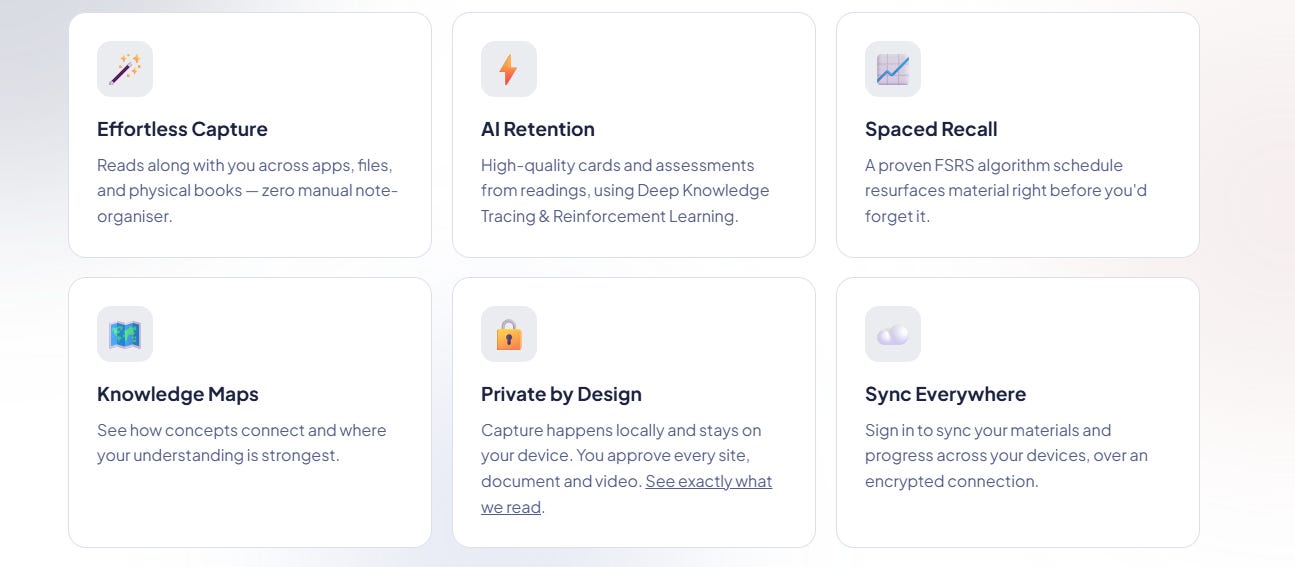
Kennedy thinks remembering could become the next learning problem
CogniPage aims to revolutionize how we retain information. While the internet has made information readily available, and AI is enhancing its processing, neither guarantees memory retention.
The product's long-term vision is to create a "memory layer for learning" that accompanies individuals throughout their educational and professional journeys, accessible across various devices and even physical books and wearables.
However, it is currently addressing a more immediate problem: the frustration of forgetting where you encountered crucial information just weeks after reading it. CogniPage strives to minimize such occurrences.