


There is a version of Oluwatosin Ajibade that most of the world knows. The artist. The guy who made “Skin Tight” and “Leg Over” and toured the world before most Nigerian artists had figured out how to get a visa.
The one who built a global music career from a series of intentional, almost defiant moves, starting with dropping a mixtape for free and calling it a “Borrower’s anthem.”
But there is another version of Mr Eazi that is less covered, and arguably more interesting right now.
The builder.
Choplife, the company Eazi founded, sits at the intersection of entertainment, media, technology, gaming and intellectual property. That sounds like a lot of things deliberately squeezed into one sentence. In practice, it makes more sense than you would expect.
It started as a music company. Then came events, Dirty Rave is now in its eighth year of operation, which tells you something about what it means to build event IP rather than just throw parties. Then gaming. Then one-versus-one sports with 1v1 Africa. Then sports events.
Somewhere around 2022 or 2023, a Harvard executive education class gave Eazi the language for what he was already building, an entertainment engine that pulls music, film, gaming, sports, and technology into one integrated platform.

“Enjoying life more intentionally” is how he puts it. That is Choplife’s entire ethos in four words. And when you look at everything the company touches, every single one of those things is something people reach for when they want to feel alive. The technology underneath it all is what makes it scalable beyond one person’s career.
Now Choplife has done something that most entertainment companies in Nigeria have never done. It has registered inside Itana, Africa’s first digital special economic zone, backed by the Africa Finance Corporation with a project value of $100 million, and built specifically for digital-first companies that want to operate from Africa and serve the world.
Why Itana. Why now.
The question worth sitting with is why. Eazi has built businesses across the continent. He has operated in multiple jurisdictions. He knows what Delaware incorporation looks like and what London structures feel like. He has done the offshore thing. So why come back and plant a flag inside a digital economic zone in Nigeria?
His answer was more honest than most founders allow themselves to be.
“A lot of people say oh there’s the Africa risk, the Nigeria risk, that’s why you have to go outside,” he said. “But having had the advantage of a global career, I do realize that there is also the global risk that nobody tells you about.”
What Itana offers Choplife is not just a tax structure or a registration address. It is a single, digitally native operational hub, one place where cross-border capital movement, licensing, banking, regulatory compliance, and business setup can all happen without the layers of friction that usually come with running a company across African markets.

Eazi described the current reality of doing business across borders on the continent with a specific example that lands hard when you actually think about it. From Lagos to Cotonou, Benin Republic, is physically about two hours by road. But to run a tech business in both countries, you essentially start the regulatory process from scratch in each jurisdiction. By the time the approvals come through, the opportunity you originally saw has moved on.
“It was important to us that it’s on the continent,” he said. “Everything we create is consumed across 54 African countries and beyond. We wanted a centralized, sovereign, digital-first hub, and we wanted it here.”
Itana’s CEO Chinyere Inya welcomed Choplife as part of a growing wave of innovative companies choosing to build from the zone for a global audience. “At Itana, we’re creating the infrastructure that allows companies like Choplife to scale seamlessly,” she said.
The engineers nobody is talking about
There is a detail buried in this story that deserves far more attention than it will probably get.
Choplife has already hired 21 engineers working out of Nigeria. Not from Eastern Europe. Not from India. Nigerian engineers, building global-standard technology with local nuances, from inside Nigeria. Eazi mentioned this almost in passing, the way you mention something that feels obvious to you but that the outside world has not caught up to yet.
“The story that has not been told enough is the quality of Nigerian engineers building technology, global standard technology, for Africa,” he said.
He is right. That story is not told enough. And part of what Itana is designed to do is make it more visible, not just to the Nigerian market, but to global investors and partners who have been told for too long that the serious technical talent lives in other time zones.

The plan from here includes building a campus presence within Itana. a creative and entrepreneurial environment where engineers and creatives come in, plug into each other’s energy, and produce. Content. Media. Film. Technology. From inside a digital economic zone in Nigeria.
Eazi talked about visiting the old Facebook campus and feeling the energy of like-minded people working in the same space. That is what he wants to recreate, not as a dormitory, but as a generator.
What Itana gets from this
Victor Famubode, Itana’s Head of Business and Compliance, was direct about why Choplife is an attractive fit for the zone. It is not just about the brand recognition — though that matters.
“We want to be able to show proof that this is possible,” he said. “Companies that belong to the creative sector can actually build, grow, and scale from Nigeria. Choplife is evidence of what is to come.”
The practical appeal goes both ways. Itana gives Choplife a predictable tax framework, multicurrency banking, simplified cross-border operations, and access to a regulatory environment that was designed with digital businesses in mind, not retrofitted from laws written for factories and import businesses.
Choplife gives Itana something equally valuable: a high-profile, globally recognised company that makes the zone real and legible to the next wave of founders who are watching to see whether this whole thing actually works before they commit.
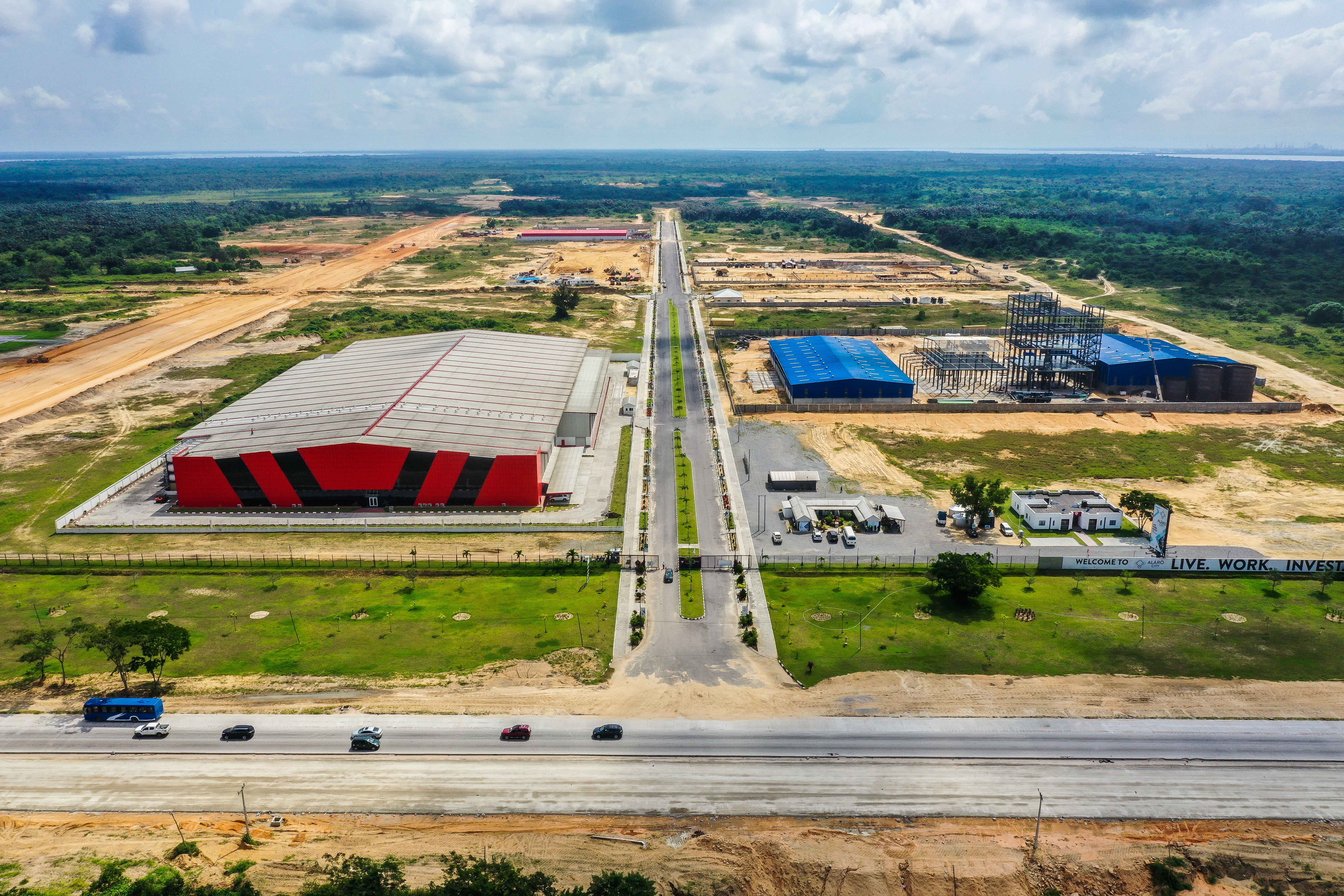
Companies can be fully registered within Itana in as little as two weeks, entirely remotely. Minimum share capital sits at $100,000. And for foreign-owned companies, 100% ownership is permitted under the zone’s regulatory framework.
Someone on the press call asked Eazi what he wants Choplife to be remembered for in ten years.
He paused before answering.
“I’m not thinking about ten years,” he said. “I’m thinking about now. Because now is what we have. That’s what we’re sure of.”
What he is focused on now is building a Pan-African company that is African from top to bottom, in its operations, its registration, its composition, and world class in its standards. Not African by aspiration. Actually African. Actually world class.
“If in ten years somebody can say ‘I’m at Itana’ and that means something, if investors hear it and feel safe, and know things are being done properly, that will be a great outcome,” he said.
That is the vision. Not a legacy statement. Not a decade-long roadmap. Just: do it right, at the highest level of integrity, and let what comes next build on what that actually means.

The artist who once gave his music away for free because he believed in it is now building an entertainment and technology ecosystem inside a digital economic zone because he believes in that too.
That is a certain kind of consistency. The kind that tends to compound.