


It was Children’s Day 2 days ago. It also coincides with Eid-el-Kabir, a day of celebration, of gratitude, of family. Governor Seyi Makinde of Oyo State spent the morning receiving Eid delegations at his home in Ibadan, praying for blessings and preaching unity ahead of the political season.
Somewhere in the forests of Oriire Local Government Area, some of his state’s children are still waiting to come home.
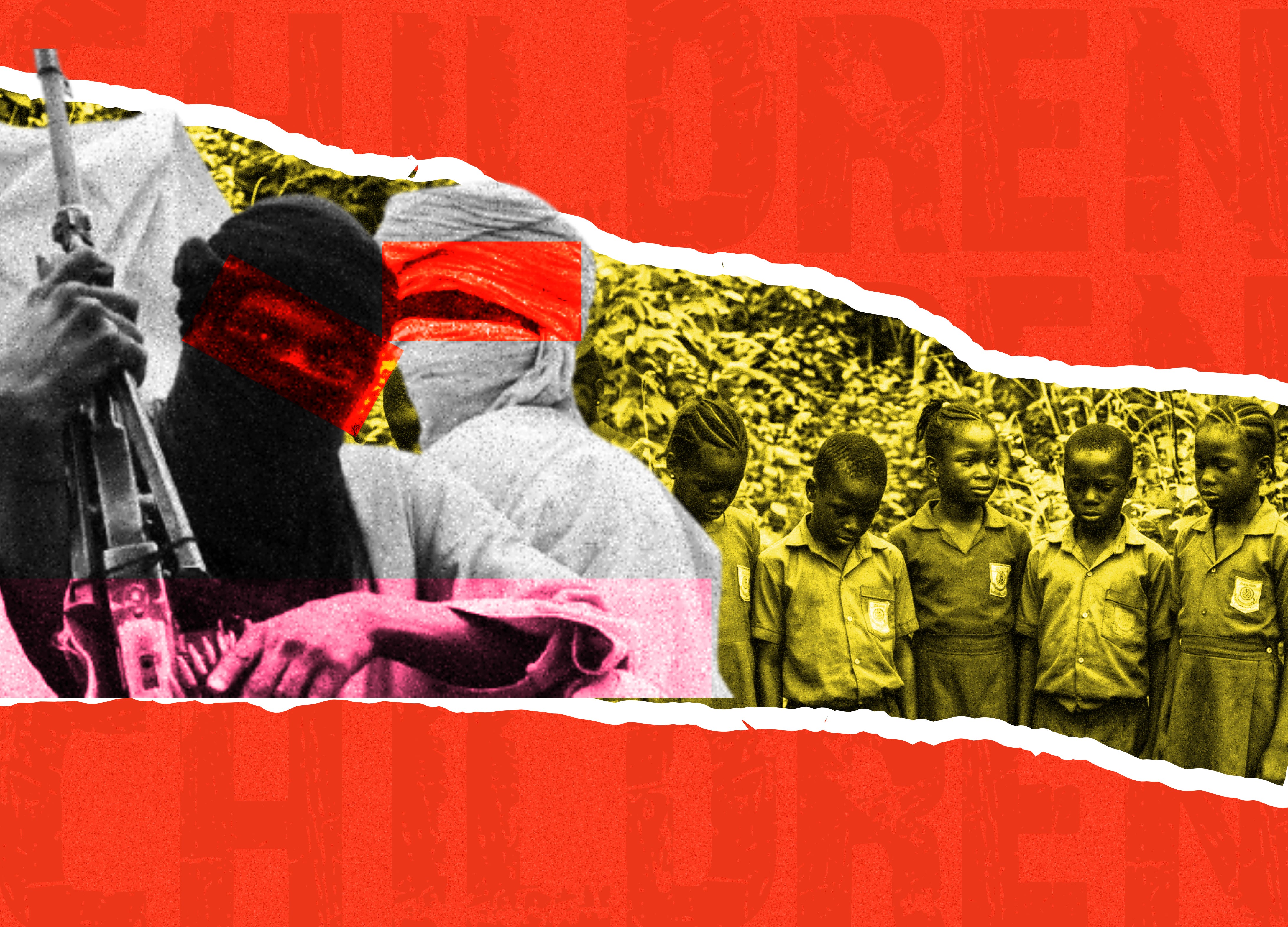
On May 15, 2026, more than twelve days ago, gunmen stormed three schools in the Ahoro-Esinele and Yawota communities of Oriire LGA in Oyo State and abducted pupils and teachers. Seven students were taken from Community Grammar School. Eighteen children and seven teachers were kidnapped from First Baptist Primary and Nursery School.
A separate abduction happened around the same time in Borno State. Over 40 pupils in total.
Twelve days later, on Children’s Day, they are still there.
President Tinubu marked Children’s Day by directing security agencies to strengthen protection for schools in high-risk areas. Governor Makinde said he was “working round the clock.” The Defence Headquarters said troops had made contact with the abductors. The Inspector-General of Police flew to Oyo to supervise what was described as a technology-driven rescue operation.
Words. Delegations. Press statements. The children are still in the forest.
Here is the part that should make every Nigerian angry.
Nigeria is not a country without resources. Nigeria is not a country without options. Nigeria spent $4.7 billion on defence in 2025. The country holds a seat on the African Union Peace and Security Council. It has military alliances, foreign partnerships, and access to some of the most advanced surveillance and drone technology on the planet.

And yet, a group of gunmen walked into three primary schools in broad daylight, took children and teachers, disappeared into the bush, and twelve days later the government’s best public communication is “we are working round the clock” and “God Almighty will meet them at their point of need.”
This is not a capability problem. It is a will and coordination problem. And technology keeps proving it.
Terra Industries, a Nigerian defence-tech startup, has already built interceptor drones, mine-clearing unmanned vehicles, and battlefield intelligence software specifically designed for counter-insurgency in Nigeria’s terrain. They signed an MOU with the Defence Industries Corporation of Nigeria in February 2026.
They are building what will be the largest drone manufacturing plant in Africa in Accra, targeting 50,000 units annually by 2028. The technology exists. It is being built by Nigerians, for Nigeria, right now.

But as Professor Freedom Onuoha of the University of Nigeria put it on Channels Television recently, the graveyard of Nigerian government technology initiatives, well-funded at launch and quietly abandoned, is long. Corruption, poor elite cohesion, and the failure to consistently support critical industries over the long term are the real enemies. Not just the gunmen in the forest.
The children of Chibok were taken in 2014. Some are still missing in 2026. The pattern is not new. The failure to break it is the scandal.
Now, stay with me here: a ring just dropped that can detect hypertension.
The Oura Ring 5, unveiled this week, is 40% smaller than its predecessor, fits like a regular wedding band, lasts a week on one charge, and can now detect hypertension and sleep apnea. You wear it. It monitors you. It tells you when your body is under more stress than it should be.
In a country where hypertension is one of the leading causes of death, where an estimated 38% of Nigerian adults live with high blood pressure, most of them undiagnosed, this ring is not a luxury gadget. It is a medical device that would sell out in Lagos in 48 hours if it were affordable and available.
But here is the darkest joke of all.
If you put that ring on the wrist of any parent in Oriire LGA right now, any mother waiting for her child to come home from a school that no longer feels safe, the hypertension alert would not stop going off.

If you put it on the wrist of any Nigerian founder working three income streams to survive an economy that punishes effort and rewards connection, same thing. If you put it on a teacher in a rural school in Oyo State who now goes to work every morning not knowing if today is the day the gunmen come back, the ring would break trying to keep up.
The technology is impressive. The market is right here. The irony is devastating.
We are celebrating the Children. It is also Eid. It should be full of noise and colour and children running around in new clothes while their parents eat well and laugh.
Instead, some families in Oyo are sitting in silence, waiting for a phone call, praying to a God they hope is listening harder than their government is acting.
We celebrate the children we can celebrate today. And we demand, loudly, clearly, without apology, that the ones still missing come home.
Technology can help. The will to use it is the only thing missing.