


Let me ask you something honestly.
When was the last time a VAR decision made you feel like justice was served? Not relieved. Not vindicated. Actually satisfied, like the technology did exactly what it promised and made the game fairer.
Because right now, at the 2026 FIFA World Cup, VAR is producing the opposite feeling. And the people it is producing it in are not just angry fans. They are coaches, former referees, football analysts, and entire national football associations filing formal complaints.
This tournament has become the biggest stress test VAR has ever faced. And it is not passing.
The Argentina situation, because we have to talk about it
Argentina’s 3-2 comeback win over Egypt in the Round of 16 became one of the tournament’s most controversial matches, with disputed VAR decisions drawing widespread criticism from international media, former players, and fans.
Egypt were leading 2-0. They were minutes away from dumping out the defending world champions. A VAR intervention ruled out one of Egypt’s goals, and a chain of events followed that ultimately led to Argentina’s victory.
Egypt manager Hossam Hassan accused FIFA of protecting Lionel Messi and Argentina, and the Egyptian Football Association filed a formal complaint alleging inconsistent use of VAR.
Fox Sports analyst and former FIFA referee Mark Clattenburg said the challenge leading to Egypt’s disallowed goal did not appear to be a foul, arguing that VAR appeared to be searching for a reason to overturn the goal.
Social media flooded with claims that Messi’s Argentina has been the most protected team at the World Cup when it comes to refereeing decisions. Argentina ranks second among teams benefiting from VAR interventions at the tournament.
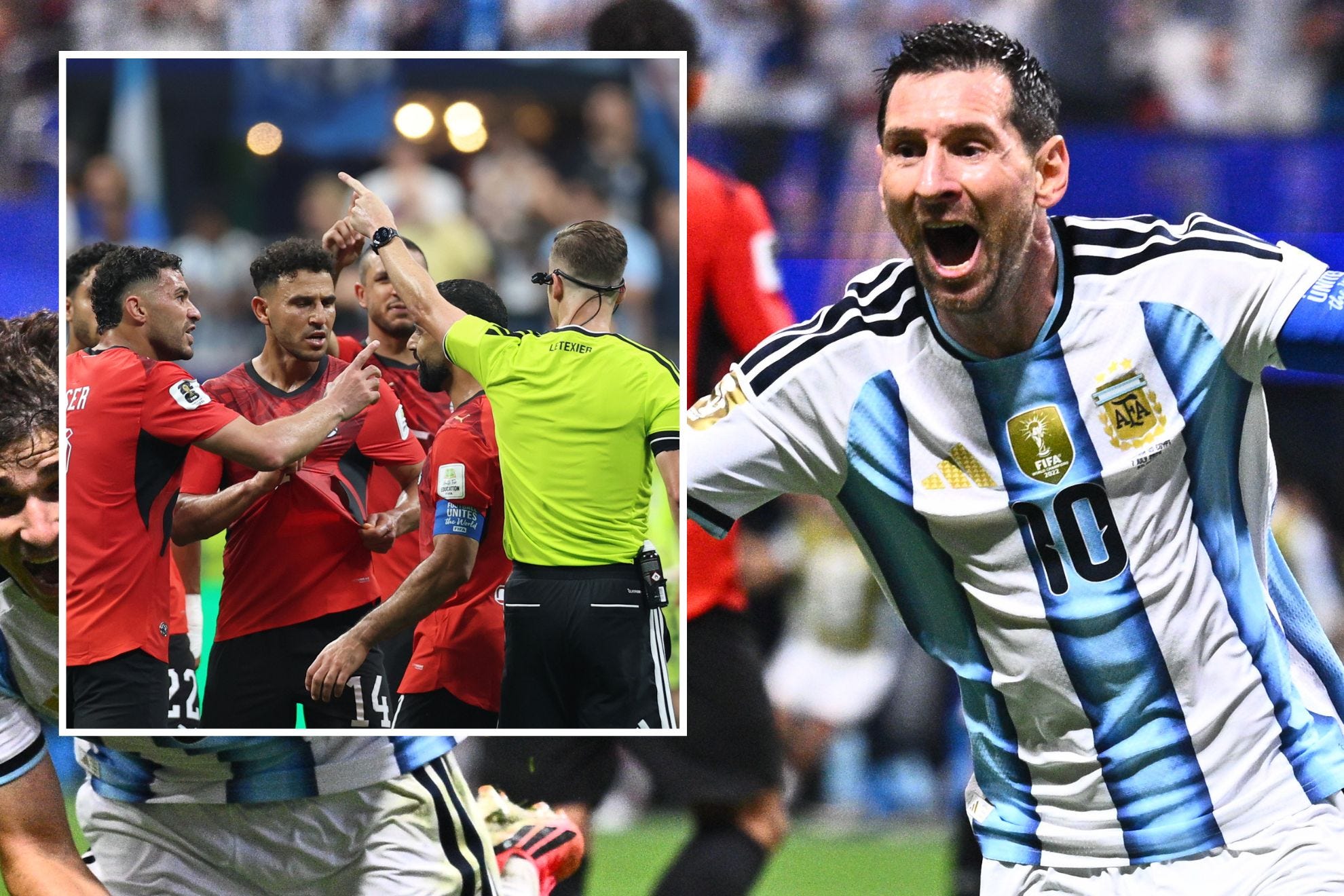
And then earlier, during Argentina’s match against Algeria, fans and analysts argued Messi should have received a red card for a studs-up challenge. The referee chose not to issue even a yellow card.
FIFA’s head of refereeing Pierluigi Collina responded publicly: “We are not influenced by anyone,” warning that unfounded allegations have no place in the sport.
Almost nobody fully believed him. That silence is telling.
But Argentina is not even the most alarming part
A day before the Egypt match, Trump revealed he had asked FIFA to review and overturn USA striker Folarin Balogun’s one-game suspension for a red card, and the governing body controversially obliged.
Professor Simon Chadwick of Emlyon Business School put it plainly: “After the Balogun affair, who knows which decisions are legitimate and can be trusted, and which can’t?”
When political figures can call FIFA and get suspensions reversed, and when that same tournament then produces a string of VAR decisions that favour the team whose president is a close ally of that political figure, the technology is not the problem anymore. The institution behind it is.
Amid the controversies, FIFA changed how VAR operations would be conducted for the rest of the tournament. Whether that change comes too late to repair the damage to its credibility is a different question entirely.

What VAR was supposed to do, and what it actually does
The promise of VAR was simple. Remove clear and obvious errors. Give referees better information. Make football fairer.
Every VAR argument at the 2026 World Cup traces back to one distinction: factual decisions versus subjective ones.
Factual decisions, offside, goal-line incidents, VAR handles brilliantly. Semi-automated offside technology measures limb positions precisely and gets it right almost every time. The referee never needs to go to the monitor because the measurement is the decision.
Subjective decisions, fouls, handballs, red cards, are a completely different story. VAR can give the referee more angles. It cannot tell them what to see in those angles. And when five people in a room in New York are watching the same footage and reaching different conclusions, the technology has not eliminated human error. It has just given human error more equipment.
VAR is an assistant, not a substitute referee. Football has preserved the authority of the official on the pitch, even as it has surrounded that official with more information than ever before.
That is the fundamental tension. And nobody has resolved it.
Do people still believe in it?
The honest answer is: it depends on which decision just went against your team.
Fans whose teams benefit from VAR call it progress. Fans whose teams lose to it call it corruption. The technology has not changed human nature, it has just made human nature more visible and more debatable.
Football is not retreating from technological officiating. It is refining it. Whether that refinement ultimately strengthens the game will depend on a balance football has not yet fully mastered: using technology to serve justice without allowing it to dominate the experience. VAR is no longer on trial. The way football chooses to govern it still is.
That last sentence is the whole argument. The camera is fine. The sensor in the ball is fine. The problem has always been the people deciding what the camera and the sensor mean.
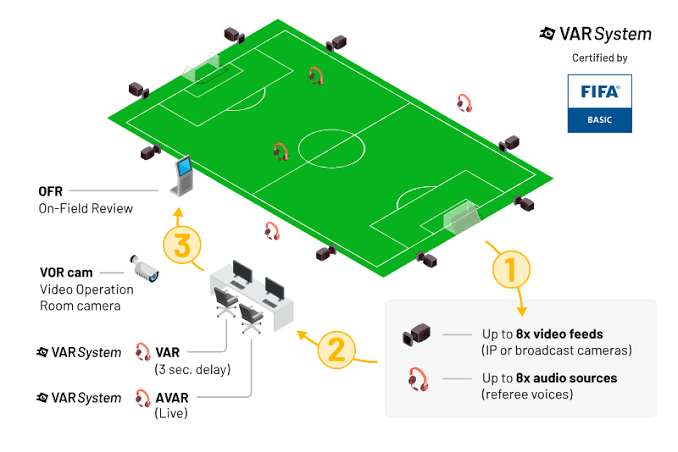
And until that is fixed, every controversial World Cup decision will start and end the same way. With a screen nobody fully trusts, showing footage everyone interprets differently, in a tournament where power clearly still matters more than technology.
The beautiful game deserves better. Whether it will get it is another question entirely.