


Good morning. Sit down. This week's recap starts with the story everyone was talking about, and it involves fake restaurants, food poisoning, and the internet doing what it does best: arguing.
01: The Glovo & Chowdeck gist, and yes, it’s as bad as you heard
Let me paint you a picture.
You’re hungry. Long day. You open your food delivery app, find a restaurant you’ve ordered from before, and place your order. The rider comes. The food arrives. You eat it. And then you spend the rest of the night sick, wondering what went wrong.
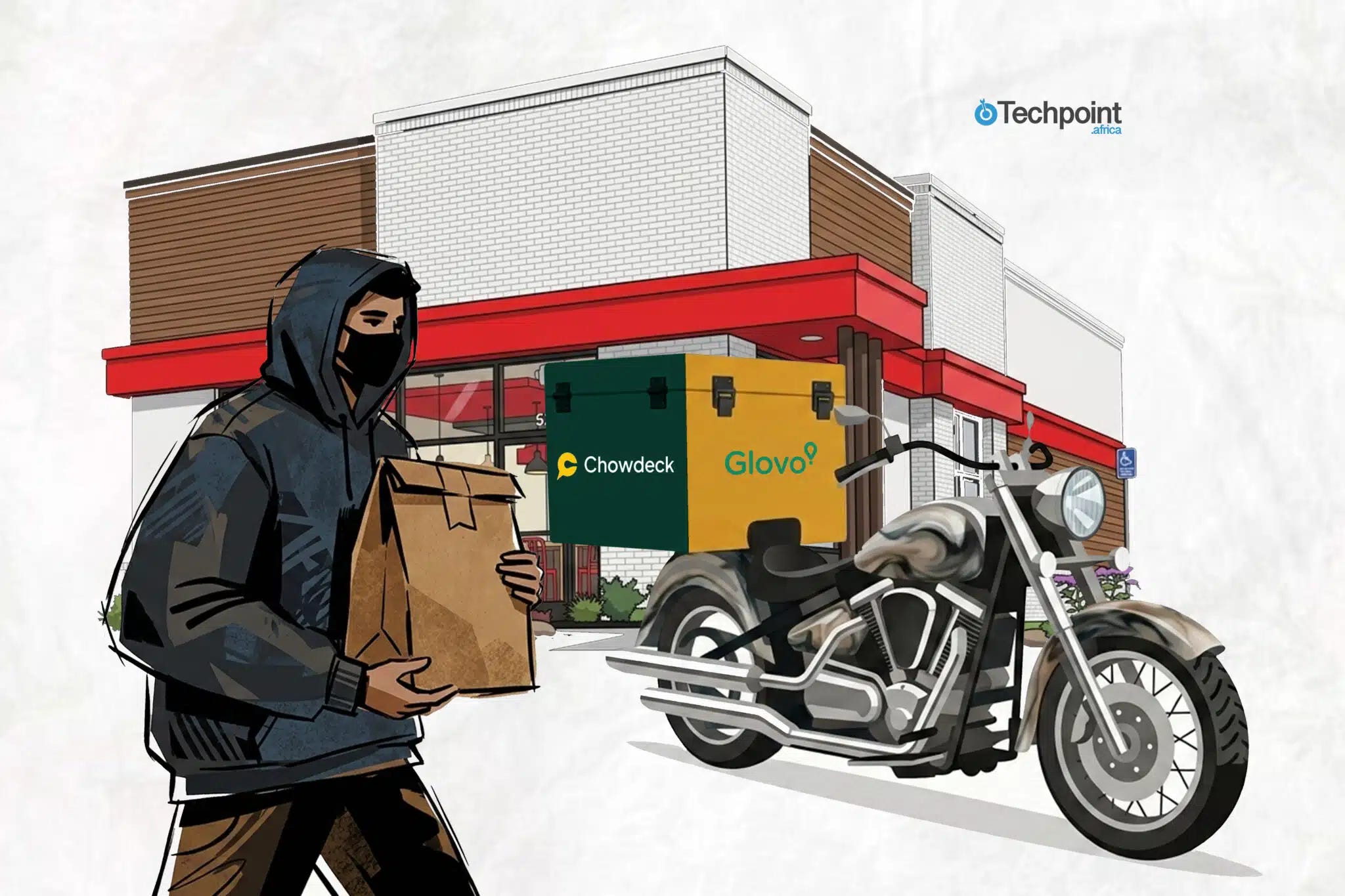
That’s not a hypothetical. That’s Ahmed from Agege. He had been ordering from what he thought was a trusted restaurant for months, same app, same name, same photos. One evening the food arrived with different packaging, different taste. He figured maybe they changed something. He ate it anyway. Food poisoning. He hasn’t ordered food online since.
What Ahmed didn’t know, what none of us knew, is that the restaurant he was ordering from may not have been the restaurant at all.
Here’s how it started. A Lagos food vendor called Corporate Ewa woke up to find multiple fake versions of her business live on Glovo. Accounts she never created. Using her photos. Taking her customers’ money. She posted about it on X. The internet got loud. And Techpoint Africa decided to find out exactly how easy this was to pull off.
Very easy, as it turns out.
Their team impersonated a well-known Lagos restaurant on both Glovo and Chowdeck, fake tax ID, photos lifted straight from the real restaurant’s Instagram, a completely unrelated address. On Glovo, nothing was flagged. On Chowdeck, the system noticed the CAC document didn’t match the business name, rejected it, and then let them proceed and go live anyway. Within an hour, the fake store was up. A rider showed up. An order was fulfilled. Start to finish.
Now the internet split into two camps, and honestly, both have a point:
🔴 “The platforms dropped the ball” Tech founders called it platform negligence, plain and simple. If a fake store can go live, take orders, and make a real person sick, the verification system is not working. Glovo has onboarded over 6,000 vendors in Nigeria. How many of them were never properly checked?
🟡 “The investigation wasn’t entirely fair” Others pushed back. You can’t deliberately set up a fake store and then blame the platform for not catching you. Chowdeck flagged the mismatch, that’s not nothing. Building zero-friction onboarding while running airtight fraud detection at the same time is genuinely difficult, especially at scale in a market like Nigeria.
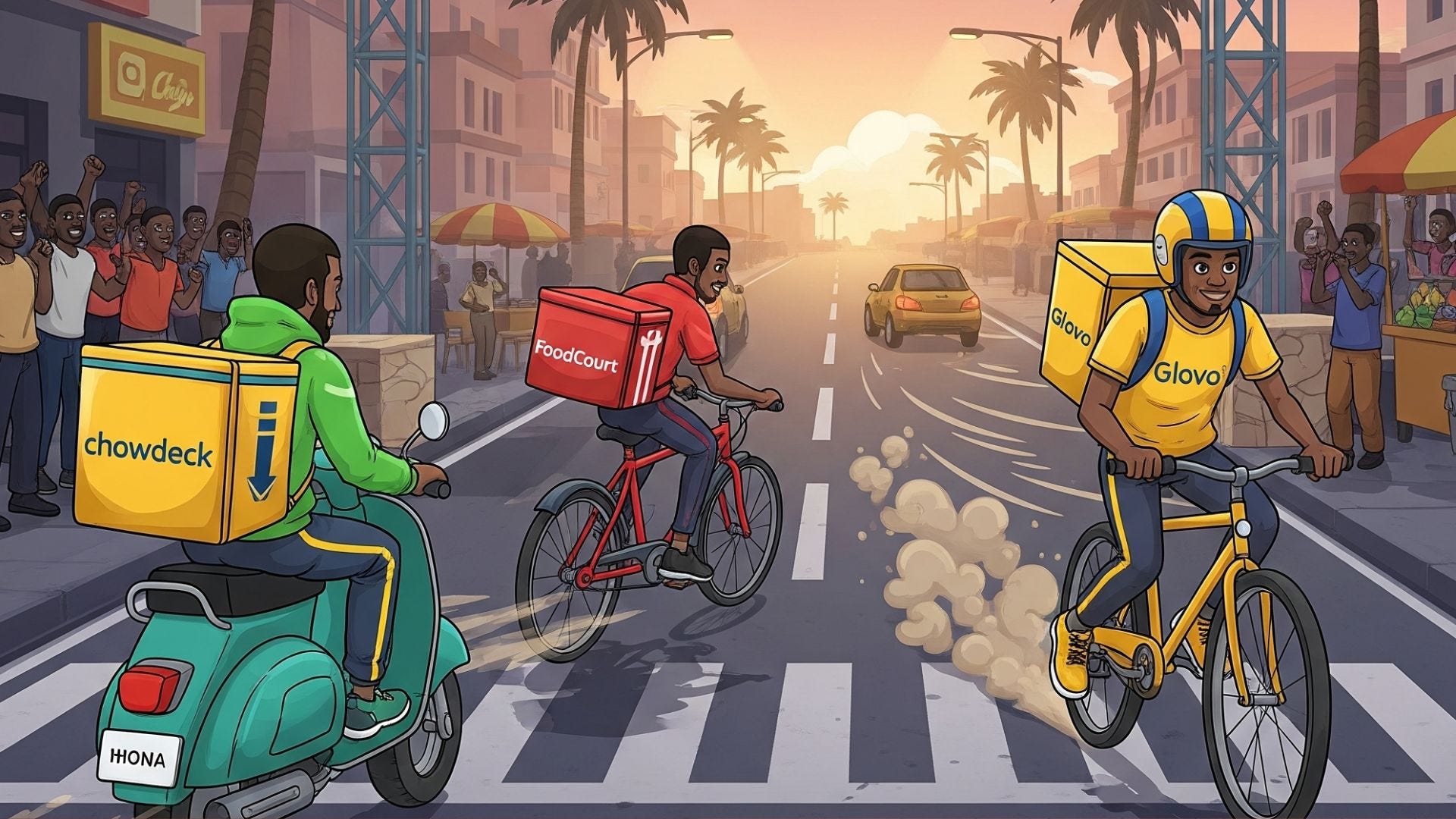
My take? Both sides are right, but here’s the thing. Ahmed from Agege wasn’t running an investigation. He was just hungry. And a customer ordering dinner shouldn’t have to verify whether the restaurant on the other side is real. That is the platform’s job. And right now, that job is not being done well enough.
With Swoop entering Lagos and promising a different experience, Glovo and Chowdeck have every reason to get this right before it becomes a much bigger problem than it already is.
02: Nigeria’s telcos recovered ₦2 trillion. Your line is still restricted.
MTN, Airtel, Glo, and 9mobile collectively clawed back over ₦2 trillion from subscribers after suspending airtime and data lending, and millions of Nigerians woke up with restricted lines until they cleared their debt.
The official airtime lending market sits at an estimated ₦400 billion annually. But that recovery number tells us the real exposure runs far deeper. For a lot of people, especially in the informal economy, ₦200 of borrowed airtime is how they stay connected for work, for clients, for everything. Not a luxury. A lifeline.
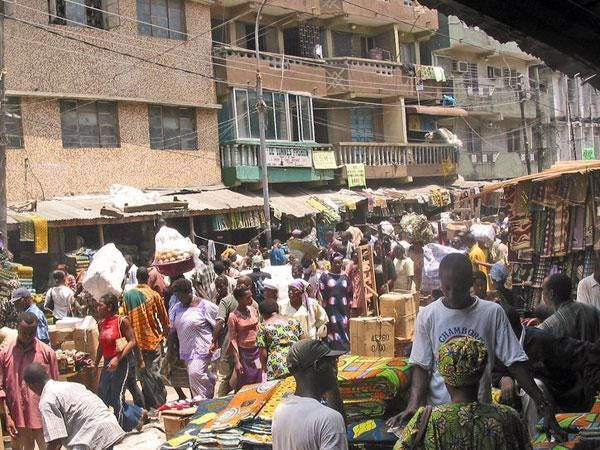
And right now, that lifeline is on hold while courts issue conflicting orders, the NCC and FCCPC argue over who’s in charge, and services remain suspended. Millions of Nigerians are caught in the middle of a system they depend on but have no control over. Classic.
03: Fincra just walked into Ghana. Quietly. Officially.
While everyone was busy with the drama, Fincra secured an Enhanced Payment Service Provider licence from the Bank of Ghana, one of the highest operational tiers in Ghana’s entire payments ecosystem.
They can now process payments across MTN MoMo, Telecel, AirtelTigo, and direct bank transfers. No middleman. Clean rails.
The detail that should make every founder sit up: Fincra has raised just $120,000, from Techstars, and now holds licences across Nigeria, South Africa, Kenya, Tanzania, Canada, and Ghana.
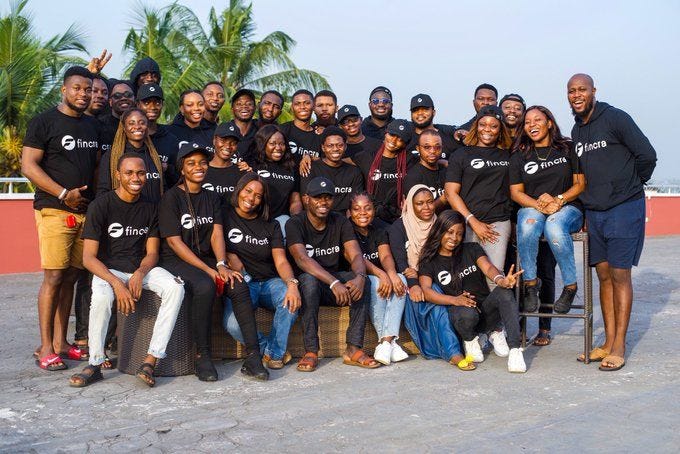
Companies like Jiji and BetKing already run on their infrastructure. No noise. No massive funding rounds. Just steady, deliberate work across five years.
This is the kind of builder in60 exists to tell you about.
📢 Partner Spotlight — Spotlight by Technext × Kora
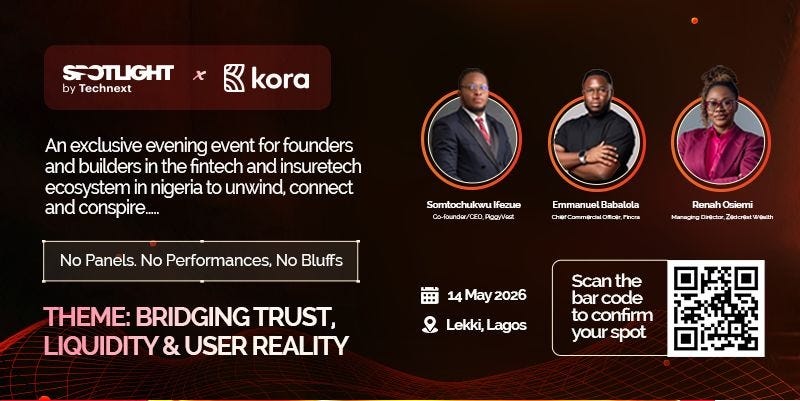
Nigeria’s fintech leaders are gathering on May 14 in Lekki for Spotlight by Technext, 150 people, no panels, no bluffing.
Just honest conversations on trust, liquidity, and user reality with Somtochukwu Ifezue (PiggyVest), Emmanuel Babalola (Fincra), and Renah Osiemi (Zedcrest Wealth) in the room.