When Chidubem Ogbuefi wanted to pay for something with cryptocurrency, he kept running into the same problem. He could hold digital assets and transact with them, but taking that money to a restaurant, retail store, or other business and actually spending it was another matter.

Most merchants were not set up to accept crypto, and the ones interested in doing so did not necessarily want the headache of managing wallets, converting assets or worrying about price swings.
For a software engineer who had worked with blockchain technology and financial systems, the problem was difficult to ignore. Cryptocurrency had created new ways to hold and move value, but using it in ordinary commerce remained unnecessarily complicated.
That frustration became the starting point for CoinCircuit, the startup Ogbuefi founded to help businesses accept digital assets without having to understand all the technology running underneath.
But as he spoke to more businesses, he realised that accepting a payment was only one part of the problem. A retailer needed to confirm a sale. An online business needed to connect a payment to an order or subscription. A fintech had to offer crypto deposits and withdrawals within its own app.
Behind these different experiences were the same requirements: wallets, payment processing, liquidity, compliance and settlement. Each connection could mean more engineering work and another provider to manage.
“The decision came from understanding where the actual bottleneck was,” Ogbuefi told in60. “There are already numerous wallets, exchanges and consumer crypto applications. But the infrastructure businesses have to integrate digital assets into their products remains relatively fragmented.”
CoinCircuit’s focus is simplifying the infrastructure businesses must collect, settle and move value using digital assets.
The hard part begins after the payment
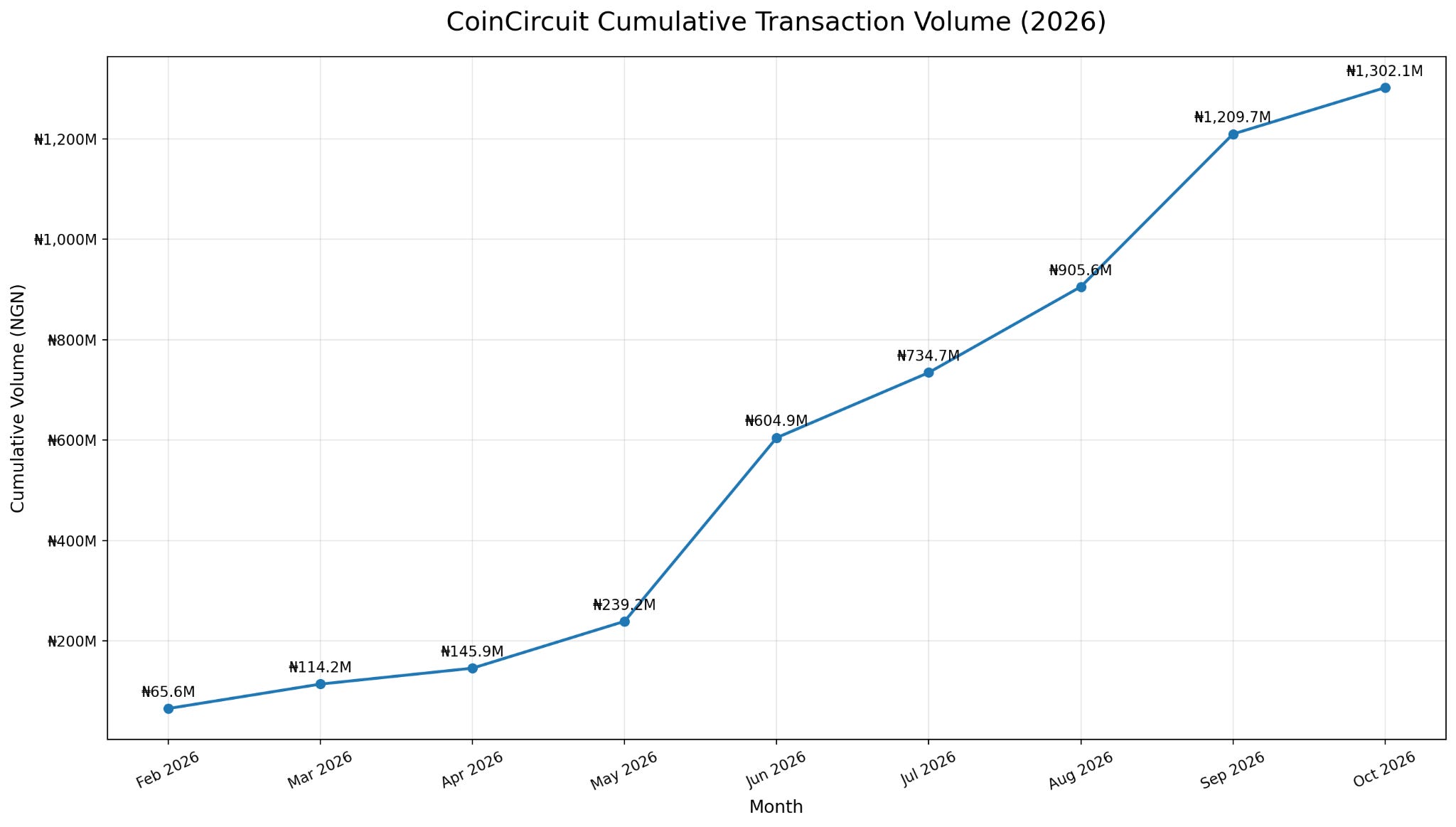
CoinCircuit began development in 2025 and launched its initial product in December that year. Since then, Ogbuefi says the company has processed more than ₦1 billion in cumulative transaction volume.
Monthly transaction volume increased from approximately ₦32 million in April 2026 to ₦313 million in September. CoinCircuit has served more than 10,000 cumulative payers to date, according to figures supplied by Ogbuefi.
Those numbers offer a glimpse into a business that is still young but has begun handling meaningful payment activity. They do not, on their own, reveal how much revenue CoinCircuit earns or how many customers use it regularly. But they show that the startup has moved beyond an idea and is processing transactions for businesses and their customers.
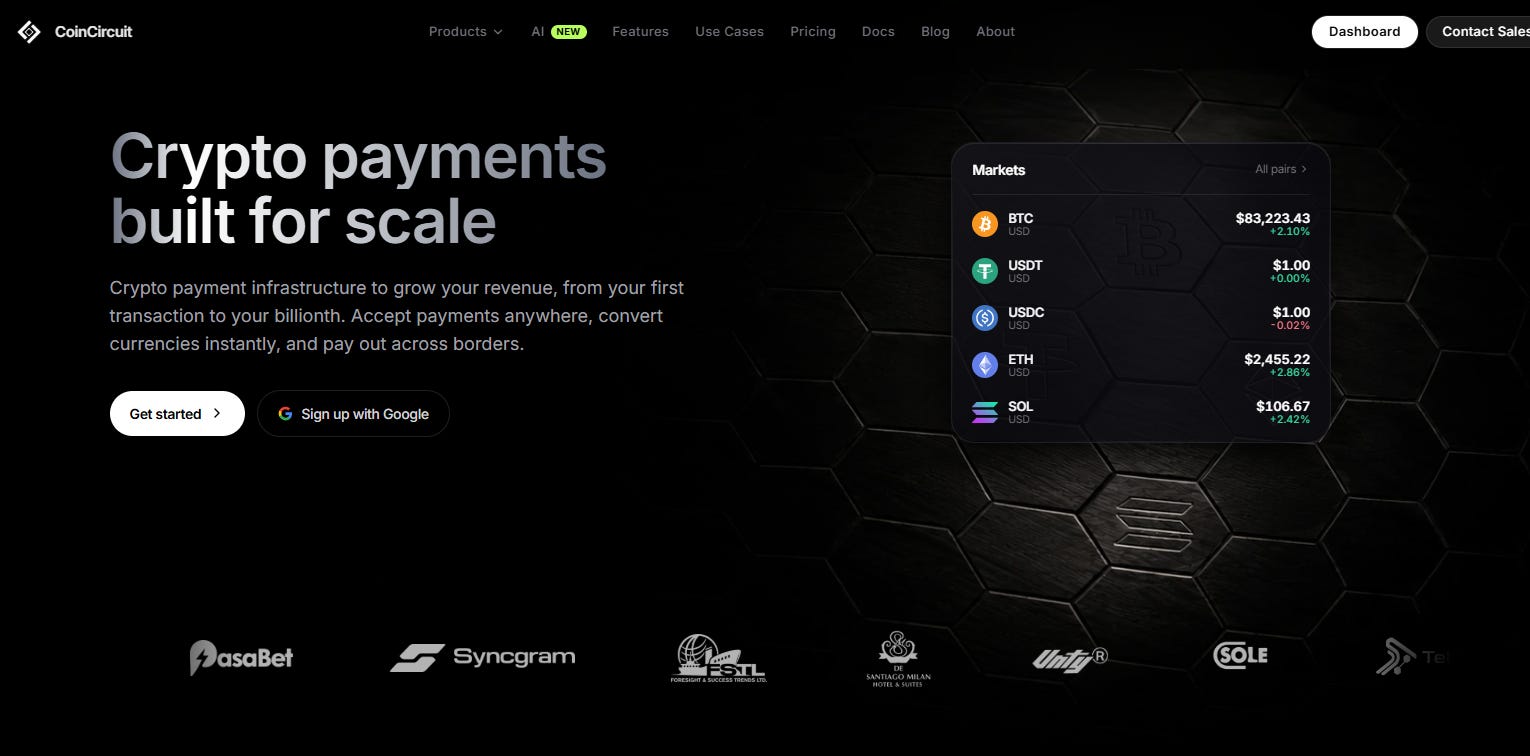
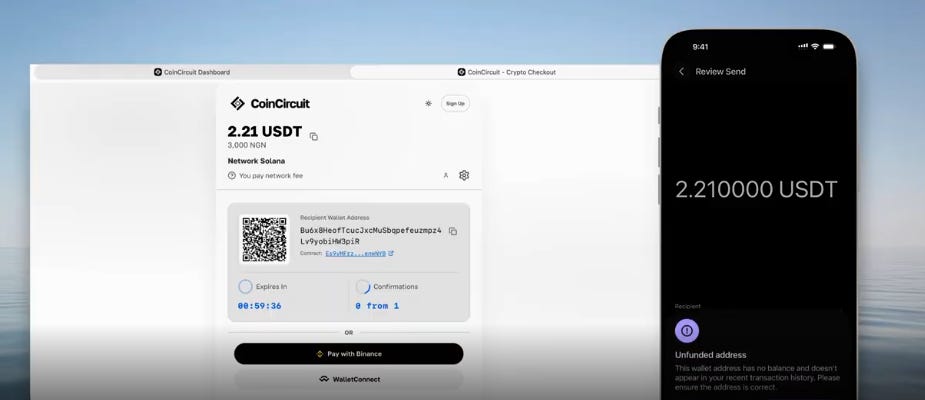
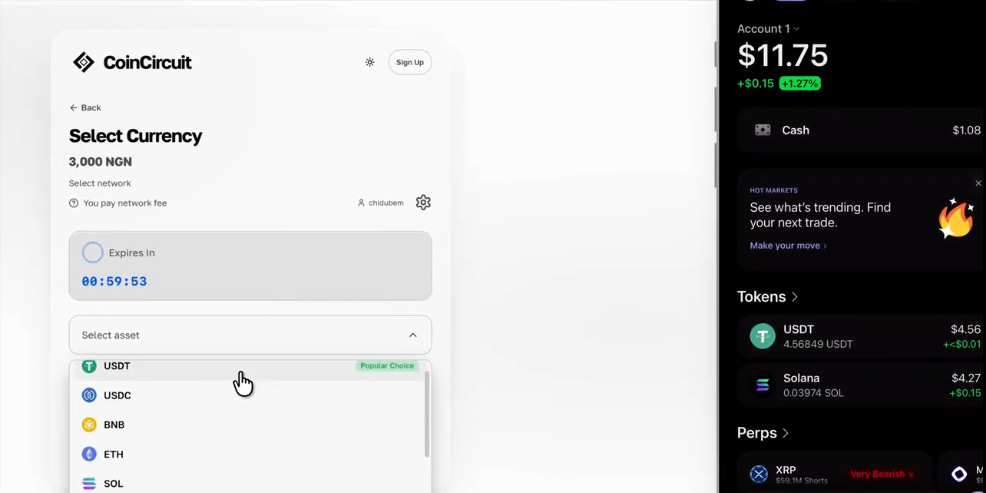
For merchants accepting payments directly from their customers, the process is designed to be straightforward. A merchant can create a payment link or invoice, display a QR code in a physical store, or integrate CoinCircuit into an application through its APIs. A customer selects a supported digital asset and blockchain network, and CoinCircuit monitors the transaction.
Once the required confirmations and checks are complete, the payment can be recorded against the relevant order or account.
For a business accepting crypto, the work continues after a customer sends the payment. The transaction needs to be confirmed, recorded and settled. CoinCircuit handles those steps, with settlement in naira or supported stablecoins.
Businesses can also use stablecoins to fund fiat payouts through supported local payment channels, including in Ghana and Kenya. This extends CoinCircuit’s role beyond collecting payments for goods and services to helping businesses move value through supported payout channels.
The distinction matters because accepting crypto is not the same as managing a payment from beginning to end. Businesses need to know whether a transaction has gone through, how it fits into their records and how the resulting value will be settled. Building those capabilities independently can be a substantial technical undertaking.
CoinCircuit aims to provide that underlying infrastructure so businesses do not have to assemble every component themselves.
As Ogbuefi explained, “They don’t need to monitor blockchain transactions manually, maintain infrastructure for every supported network, or separately coordinate conversion and settlement.”
Building for businesses, not just crypto users
Businesses use that infrastructure in different ways. Retail and online merchants use CoinCircuit to accept payments for their own goods and services. Fintechs and software platforms can embed its collection and settlement capabilities into products their customers use.
The company serves businesses across fintech, e-commerce, retail, software-as-a-service and gaming. For a merchant, CoinCircuit might sit at checkout. For a fintech, the same underlying capabilities could support deposits, payments, and withdrawals inside its own application.
Whether CoinCircuit processes a customer’s checkout payment or powers a feature inside a fintech’s app, the underlying job is similar: collect the payment, confirm the transaction, and make the funds available through the appropriate settlement channel. The difference is how each business uses the infrastructure to serve its own customers.
That model also shapes how the startup makes money. CoinCircuit earns revenue through transaction processing, currency conversion, and payouts. Its costs include liquidity and settlement providers, blockchain network fees, conversion costs, compliance monitoring, security, and engineering infrastructure.
Ogbuefi says sustainable profitability will depend on increasing transaction volume, retaining customers and improving the economics of each transaction.
That is a more demanding task than simply signing up users. Payment infrastructure must work consistently, including when transactions are delayed, funds arrive in unexpected amounts, or customers use the wrong blockchain network.
CoinCircuit says it monitors transactions and wallet addresses for sanctions exposure and suspicious activity, and can flag transactions for further review.
There is also a limitation inherent in blockchain payments: confirmed transactions generally cannot be reversed at the network level in the way some conventional card payments can. CoinCircuit supports refunds, but these require a separate transaction.
For businesses, reliability is not an optional feature. It is part of the reason to use an infrastructure provider instead of building everything themselves.
The next customer could be an AI agent
CoinCircuit’s ambitions now reach beyond conventional crypto payments. The company has implemented payment capabilities based on x402, a protocol that enables software to pay for digital resources through web interactions.
Ogbuefi sees this as an emerging need as AI agents become capable of carrying out more complex tasks. An AI research agent, for example, might need to purchase access to a financial data API to finish a job. Instead of waiting for a person to enter card details or complete a checkout, the agent could pay within predefined spending limits.
That scenario still depends on the right safeguards and permissions, but it points to a different kind of customer for payment infrastructure: software that initiates transactions on behalf of people or businesses.
“I don’t see agentic payments as separate from our broader infrastructure strategy,” Ogbuefi said. “They are another way financial transactions will be initiated, and the underlying requirements for wallets, settlement, compliance and reliable execution remain relevant.”
For now, CoinCircuit’s immediate challenge is to deepen its presence in Nigeria, expand across other African markets and support more businesses internationally. Different currencies, liquidity conditions and regulatory requirements make that expansion complex, especially for a company handling financial transactions.
Ogbuefi’s ambition is for CoinCircuit to become one of the infrastructure providers businesses turn to when building products that use digital assets.
He wants companies developing crypto-native financial services to spend less time assembling wallets, payment systems and settlement connections, and more time building products for their customers.
It is a bigger goal than helping someone pay for lunch with crypto. CoinCircuit is betting that as digital assets become part of more financial products, the companies that make them useful will be the ones that solve the difficult work behind the transaction.