


Before Yewande Akomolafe-Kalu became the Head, Marketing at Flutterwave, she spent years in industries where attention was everything.
She worked in entertainment, fashion and digital businesses before joining Chocolate City, where she led content development and social media. She was part of a company building the careers and public identities of some of Nigeria’s biggest music acts, including M.I Abaga, at a time when Nigerian music was increasingly finding an audience beyond the country.

Her background was already pointing in one direction: understanding people, understanding culture and figuring out how to make something connect. Public profiles of her career also show that she studied psychology at Birmingham City University, a foundation that would later become part of how she thinks about marketing and audiences.
So when she eventually moved into technology, it was not because she had suddenly decided that entertainment was no longer interesting. It was almost the opposite.
“I think for me it was more about the opportunity with Flutterwave,” she says.
At Chocolate City, she had found a workplace where creativity and work could exist together. She could enjoy the culture around her while still doing serious work.
“By nature, I love a good time,” she says. “Don’t get me wrong, work was still work, but at Chocolate City, it felt like I had the best of both worlds.”
That mattered because the next opportunity gave her something similar, only in a completely different industry.
Payments was still a relatively young space when she joined Flutterwave. The company was building infrastructure that was difficult to explain to ordinary people, while also trying to establish itself as a brand people could understand and trust.
Yewande saw an opportunity.
“I could see the potential from quite early on,” she says. “The opportunity to help shape how a new brand would show up and interact with the world really excited me.”
She was not walking away from entertainment. She was taking the thing she had learned there, how to understand people and make stories connect, into a new industry.
That decision would eventually take her from being Flutterwave’s early storytelling and branding lead to leading its marketing function.
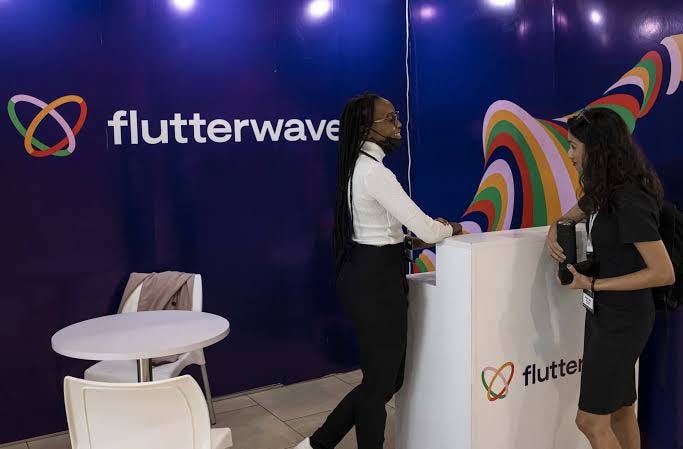
The people behind the payments
When Yewande arrived at Flutterwave, she did not think the company needed to invent a completely different story. She thought it needed to show people what was already there.
“The people,” she says.
Payments can be difficult to explain. There are processors, infrastructure, APIs, cards, transfers, compliance and a long list of things happening underneath a transaction that most customers never see.
But the people building all of that are not infrastructure. They have stories.
“They were just as complex and interesting,” she says. “There were so many unique stories within Flutterwave that we needed to bring to the forefront, beyond all the technical jargon.” That became an important part of her work.
Instead of allowing Flutterwave to exist only as a technology company talking about payments, she wanted people to see the businesses using the technology, the people building it and the problems it was helping solve.
That approach eventually showed up in initiatives such as Flutterwave Merchant Stories, which put the businesses using the platform at the centre of the story.
A profile of Yewande’s early Flutterwave work described her as the company’s first storyteller and credited her with creating opportunities for audiences to understand Flutterwave through its users.
It was a simple shift, but an important one. People understand people much faster than they understand infrastructure.
The story did not change. Flutterwave did.
Flutterwave has changed considerably since Yewande joined. The company that began with a focus on helping businesses make and receive payments has expanded its products and markets, with its conversations now covering everything from bank transfers and remittances to stablecoins and banking.
But Yewande does not think the fundamental story has changed.
“At its core, it hasn’t really changed,” she says.
The original ambition was to help make Africa feel more connected through payments and make it easier for people and businesses on the continent to participate in the global economy.
What changed was the technology available to deliver that ambition.
“The conversation may move from card payments to Pay with Bank Transfer, stablecoins, or banking,” she says, “but they’re all different expressions of the same fundamental idea.”

That creates a different challenge for a marketer. It is no longer enough to explain one product. You have to help people understand how several different products fit into one larger story.
For Yewande, that has meant making sure the story grows with the company without losing the original reason the company exists.
You cannot market your way into trust
Fintech marketing comes with a problem that entertainment does not have in quite the same way. When someone watches an artist perform, the stakes are different. When a business hands a fintech company its money, trust becomes part of the product.
Yewande believes that is why marketing cannot manufacture trust that the business itself has not earned.
“For me, trust starts long before marketing,” she says. “You can’t communicate your way into being trusted.”
That belief has shaped how she thinks about marketing Flutterwave across Africa.
There is no single African customer.
Markets have different regulations, cultures, business environments and expectations. A message that works in Lagos may not mean the same thing in Nairobi or Johannesburg.
“Africa isn’t one market,” she says.
So the brand has to understand the people it is speaking to rather than assuming that one message can simply be copied across the continent.
She points to Flutterwave’s response during COVID-19 as an example. The company launched its Keep the Lights On campaign to support businesses struggling through the disruption.
For her, the important thing was not simply that the company had a campaign to talk about. It was that the campaign reflected something businesses were actually experiencing.
That is where she believes marketing becomes more meaningful.
“When the way you operate, the products you build, and the stories you tell are all grounded in the realities of the people you serve,” she says, “the brand becomes a reflection of that trust.”
Africa should not need permission to tell its own story
Yewande has also watched African technology change from an industry outsiders were simply curious about into one attracting serious global attention. But she thinks there is still a question around who gets to tell the story.
“For a long time, a lot of the narrative around African tech was being told from the outside,” she says.
The problem was not necessarily that outsiders were interested in Africa. It was that African companies were sometimes allowing other people to decide which parts of the story were worth telling.

Yewande believes that is changing.
African companies now have more confidence to explain their markets, products and problems in their own language and from their own perspective.
“We should be confident enough to own the narrative and let the world engage with the story on our terms,” she says.
It is an idea that fits neatly with the work she has spent years doing at Flutterwave.
The technology may be African. The customers may be African. The problems may have been understood from lived experience. There is no reason the story should have to be translated through somebody else before the rest of the world can understand it.
The psychology behind the marketing
Perhaps the most interesting part of Yewande’s career is that, despite moving between industries that look completely different on paper, the thread connecting them is surprisingly consistent.
She studied psychology. She worked in fashion. She worked in entertainment. She worked at Chocolate City. Then she moved into fintech. The industries changed. Her interest in people did not.
“I think I’m really good at understanding people, what motivates them, what matters to them, and how they think,” she says.
That curiosity has become part of how she approaches marketing.
She likes taking complicated ideas and making them easier for people to understand. She likes finding the human story underneath a technical product. And she likes building the bridge between what a company wants to say and what its audience actually cares about.
That may explain why her transition from music and entertainment into technology never really felt like a complete career reset.
She was still doing what she had always been interested in, just with different products.

At Chocolate City, the story might have been an artist trying to reach a larger audience. At Flutterwave, it might be a business trying to receive payments from customers across borders.
The technology is different. The human question is not. Why should anyone care? How does this make their life better? And how do you tell that story in a way that feels true?
What remains after the job titles
Yewande has spent more than a decade building brands, leading storytelling and marketing teams, working across industries and helping a fintech company explain increasingly complex products to increasingly diverse audiences.
Her career has moved from entertainment to technology without losing the creative instinct that brought her into the industry in the first place.
Her public profile now describes more than 10 years of experience across branding, storytelling and marketing, while her recent work at Flutterwave has included shaping campaigns, brand narratives and marketing initiatives across its growing markets.
But take all of that away, and she does not describe herself through any of those titles.
“If we removed ‘marketing’, ‘Flutterwave,’ and every job title from your story,” we asked her, “what are you actually good at?”
Her answer was perhaps the simplest description of her career.
“I think I’m really good at understanding people, what motivates them, what matters to them, and how they think.”
Then she adds something else. “I’m also passionate and creative.”
It is a fitting combination for someone whose career has moved from music to fintech, from artists to entrepreneurs, and from entertainment audiences to customers moving money across borders.
Ultimately, she says she wants to be known as someone who “understands people, sees possibilities, and has the creativity to bring them to life.”
Maybe that is what the journey from Chocolate City to Flutterwave has really been about. Not leaving one world for another.
Finding out that the same ability to understand people, spot a possibility and tell a story can travel much further than the industry where you first discovered it.

Stories like Yewande’s remind us why we started in60 in the first place. There are so many brilliant people shaping Africa’s future, and we want to keep telling their stories, one person, one journey, and one idea at a time.
So, kindly subscribe if you haven’t.