


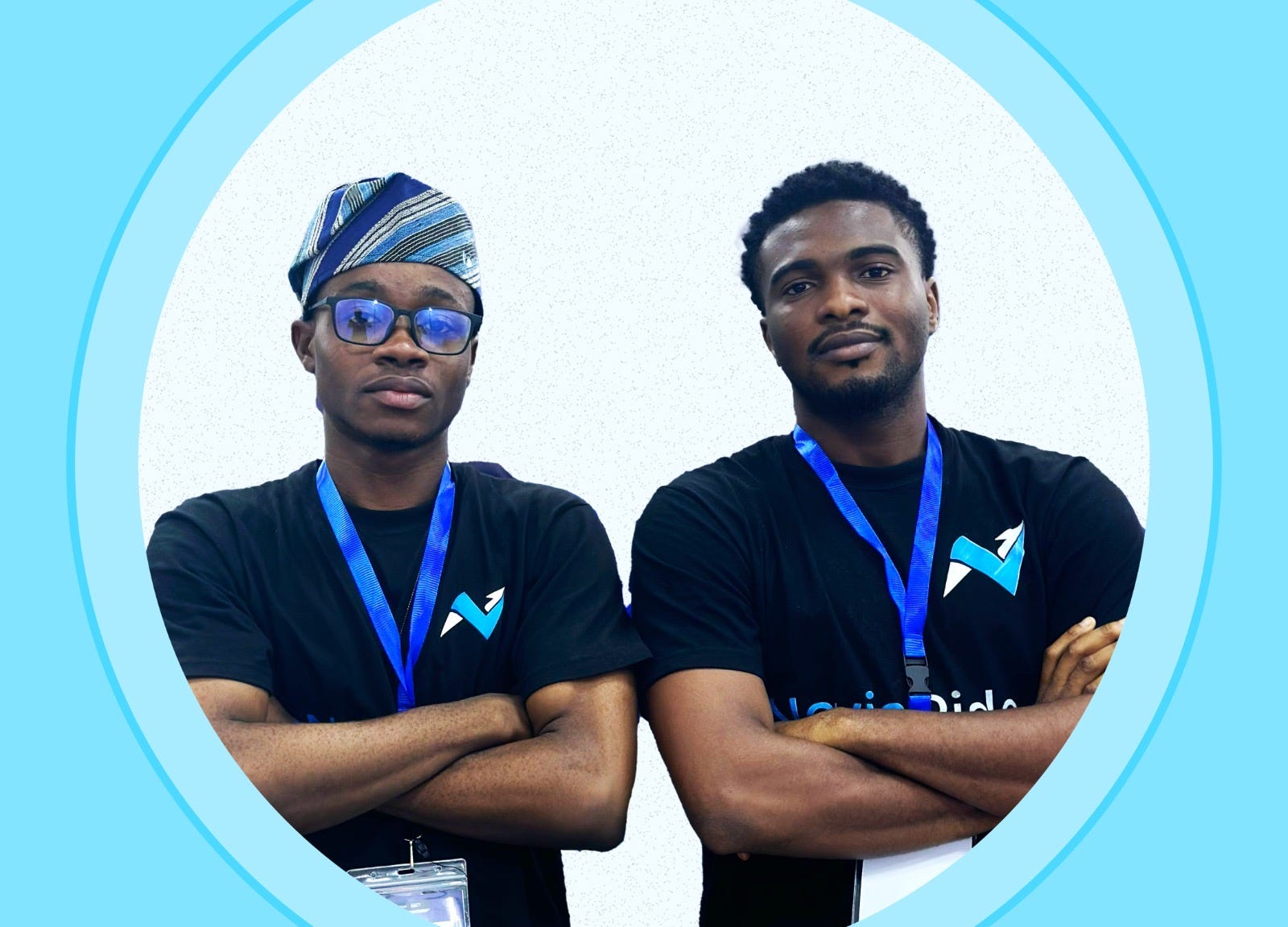
If you have ever stood at a bus stop in Lagos at 7am watching danfo after danfo squeeze past you, already full, already late, already somehow moving faster than anything should move, you understand the specific frustration that Timileyin Adebisi and Green Chidozie decided to build a company around.
Not the mild inconvenience kind of frustration. The kind that makes you do the math in your head on what percentage of your monthly salary is disappearing into Uber surge pricing just to get to work with your dignity intact.
That math, multiplied across millions of Nigerian commuters every single day, is what NaviaRide is trying to fix.
Timileyin and Green first crossed paths as undergraduates at Caleb University in Lagos, representing their school at the Zenith Tech Fair at Eko Hotels, VI, in their second year. Timileyin was studying Computer Science.
Green was studying Biochemistry, while quietly becoming a backend engineer of genuine depth, over three years of building and deploying software systems at scale, accumulated while most people his age were still trying to figure out their career direction.
By their final year, they were roommates.
In December 2025, after applying to Y Combinator and missing that batch, they sat down together and decided to build something anyway. They spent a week whiteboarding ideas, the kind of focused, slightly desperate creative session that produces either nothing or something real.
What came out of it was a question that had been obvious all along, once they let themselves ask it properly.
Lagos roads are full of private cars travelling the same corridors every morning with empty seats. Thousands of them. Every single day.
Why is nobody sitting in those seats?
NaviaRide’s answer to that question is what they call a verified cost-sharing transit network and the description matters more than it sounds.
It is not a ride-hailing app. Bolt and Uber already exist, and the problem with them, from a daily commuter’s perspective, is cost and surge pricing that can make a month of Ubers genuinely painful to look at on a bank statement. NaviaRide is not asking someone to become a commercial driver.
It is connecting people who are already driving a route, heading to the Island from Lekki, crossing Third Mainland, commuting from Abuja’s suburbs to the CBD, with verified passengers moving in the exact same direction.
The driver offsets fuel and maintenance costs. The passenger saves up to 40 percent on their daily commute compared to conventional ride-hailing. Nobody is adding more cars to already overwhelmed roads. Existing capacity, all those empty seats, just stops being wasted.
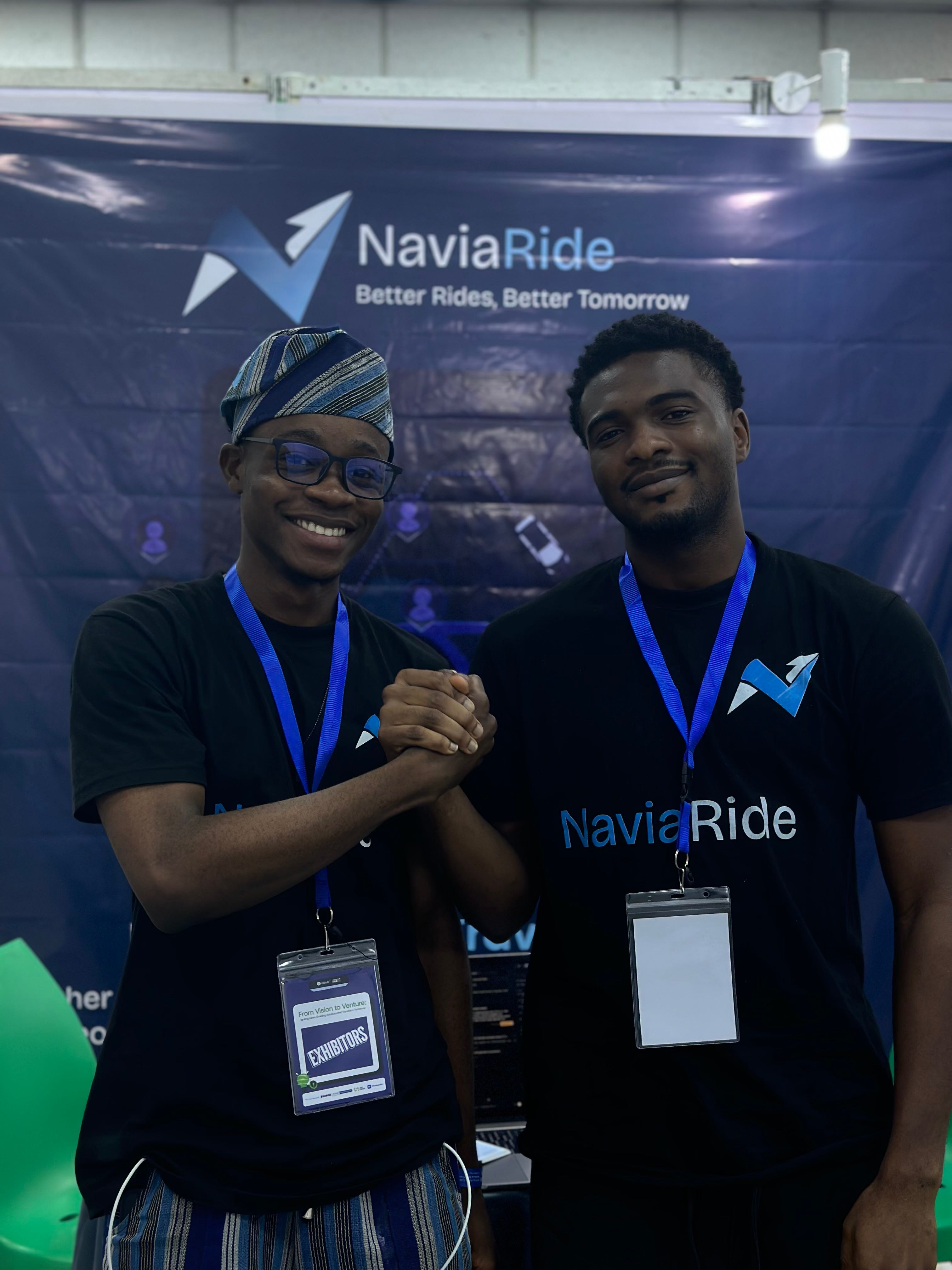
“The solution wasn’t adding more cars to overburdened roads,” Timileyin told in60. “It was optimizing existing capacity.”
That insight sounds simple. Most good ideas do, in hindsight.
The harder problem and the one that has killed every previous attempt at ride-sharing in Nigeria before it could reach meaningful scale is trust.
Nigeria is not a country where you can build a platform that connects strangers in a moving vehicle and assume people will just figure it out. Trust has to be built deliberately, structurally, and in both directions.
Traditional ride-hailing platforms verify drivers and leave them exposed to anonymous passengers. NaviaRide flipped that logic on its head.
Their proprietary Trust Engine runs real-time identity validation against official government databases, NIMC and NIN, for every single user on the platform. Not just drivers. Everyone. Before a driver can publish a route or a passenger can book a ride, they have been verified.
“Trust cannot be assumed,” Timileyin said. “It must be engineered.”
That verification infrastructure is NaviaRide’s core moat. It is what makes the thing work in a Nigerian context rather than in a Scandinavian one. And it is what transforms a theoretically good idea into something people will actually trust enough to use every morning.
Building this, the verification systems, the matching engine, the driver onboarding pipeline, the full core platform, has been done completely bootstrapped. No external funding. No equity dilution.
Two founders from Caleb University, one summa cum laude in Computer Science, one a backend engineer who quietly became very good at his craft, building something that should not be possible without a seed round.
“Navigating this journey pre-revenue while remaining completely bootstrapped has been deeply transformative,” Timileyin said. “We evolved from software builders into operational strategists.”
That evolution from writing code to thinking about corridor liquidity, community trust pipelines, and driver onboarding at scale, is the unglamorous education that every founder has to go through and almost nobody writes about honestly.
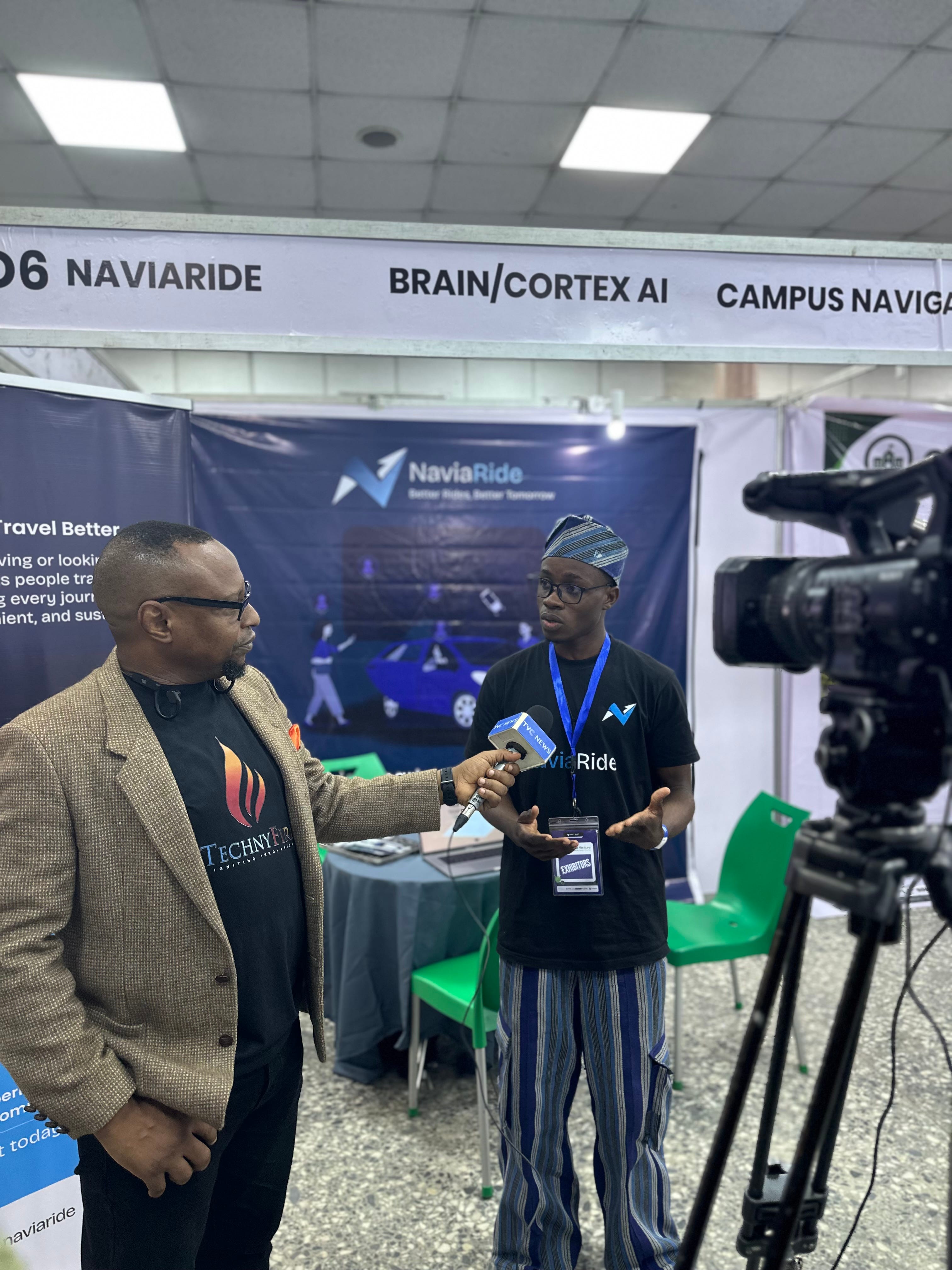
NaviaRide is currently onboarding verified corporate car owners, they call them Navigators, across high-density city corridors ahead of their public launch on September 1, 2026.
They have been selected as an exhibiting startup for the 2026 Nithub Innovation Fair at UNILAG and shortlisted for the Abuja Startup Challenge.

The vision Timileyin describes for what NaviaRide becomes at scale is worth taking seriously. Not because it is ambitious, though it is, but because the logic behind it holds up.
Transportation drives 57 percent of Nigeria’s services economy. Most of it runs on informal, fragmented systems that extract enormous costs from the people who can least afford to pay them.
A verified, structured, cost-sharing network running at scale across Lagos and Abuja corridors does not just save individuals money on their commute. It changes the economics of urban mobility for an entire working population.
“We envision Nigerian cities with significantly reduced carbon footprints and structured corridor transit,” Timileyin said.
“Verified carpooling as the default daily commute for West Africa’s workforce.”
Two roommates from Caleb University. One week of whiteboarding. One trust engine built from scratch. One launch date: September 1, 2026.
The empty seats on Lagos roads are running out of excuses.

This is nice can't wait for the launch