


Here is a number worth sitting with before we get into anything else.
430 million people around the world experience disabling hearing loss. These communities communicate through between 200 and 300 documented sign languages, full, complex, natural languages with their own grammar, syntax, and structure, expressed simultaneously through the hands, the face, the upper body, and space.
And almost none of those languages exist in any meaningful way inside the AI systems being built right now.
Not because the technology cannot handle it. Because the data is not there.
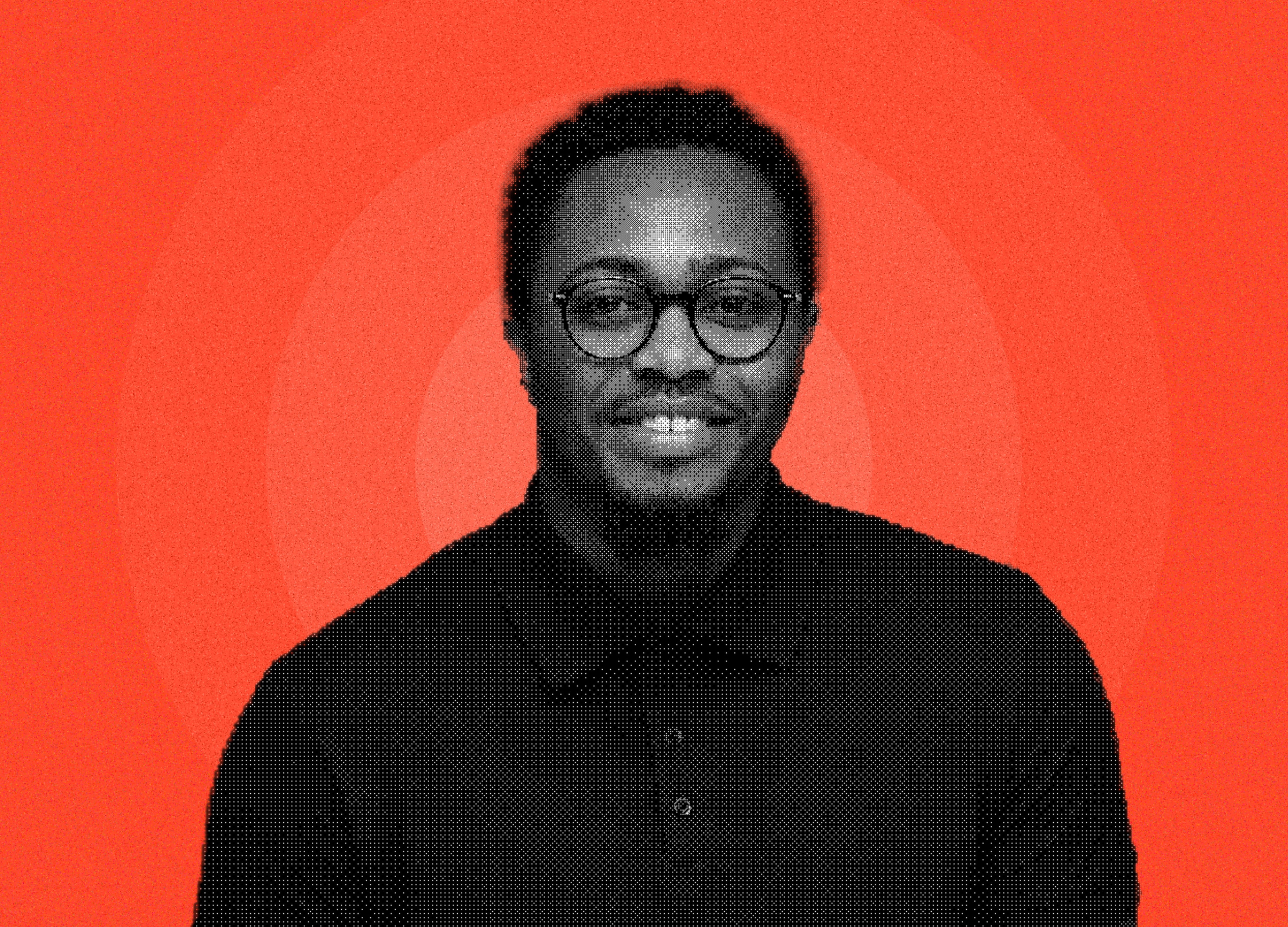
Edidiong Ekong understood this problem the way most people understand problems that matter, from the inside, not from a pitch deck.
He is the co-founder and CEO of Talksign, a Nigerian-founded company building AI-powered communication infrastructure for Deaf and hearing people.
Talksign has developed real-time AI that translates speech into sign language and sign language back into speech simultaneously, allowing both sides to communicate naturally without waiting for an interpreter.
The company’s current system supports American Sign Language and works across web, mobile, desktop and smart glasses, while an API allows other platforms to integrate its translation technology directly into their products.
“Speech models learn from hundreds of thousands of hours of data,” Edidiong said. “Sign language models learn from a few hundred. The high-quality, well-annotated data this work depends on barely exists.
That scarcity, not the technology, is why accessibility tools still fail the people they’re built for.”
So he built the infrastructure himself.
What the Talksign Marketplace is, in plain terms
Think about how AI learns to understand spoken language.
It listens to millions of hours of recorded speech, transcribed and annotated by humans, until it can recognize patterns and produce accurate responses.
The data is abundant. The pipelines for collecting and cleaning it are established. The economics work.
Now think about sign language. The data that would let an AI model learn Nigerian Sign Language, or American Sign Language, or British Sign Language sits locked in university archives with no commercial licensing pathway.
It sits with Deaf organizations that have never been offered a financial reason to share it. It sits uncollected, unannotated, invisible to the systems that are supposed to serve the people who use it.
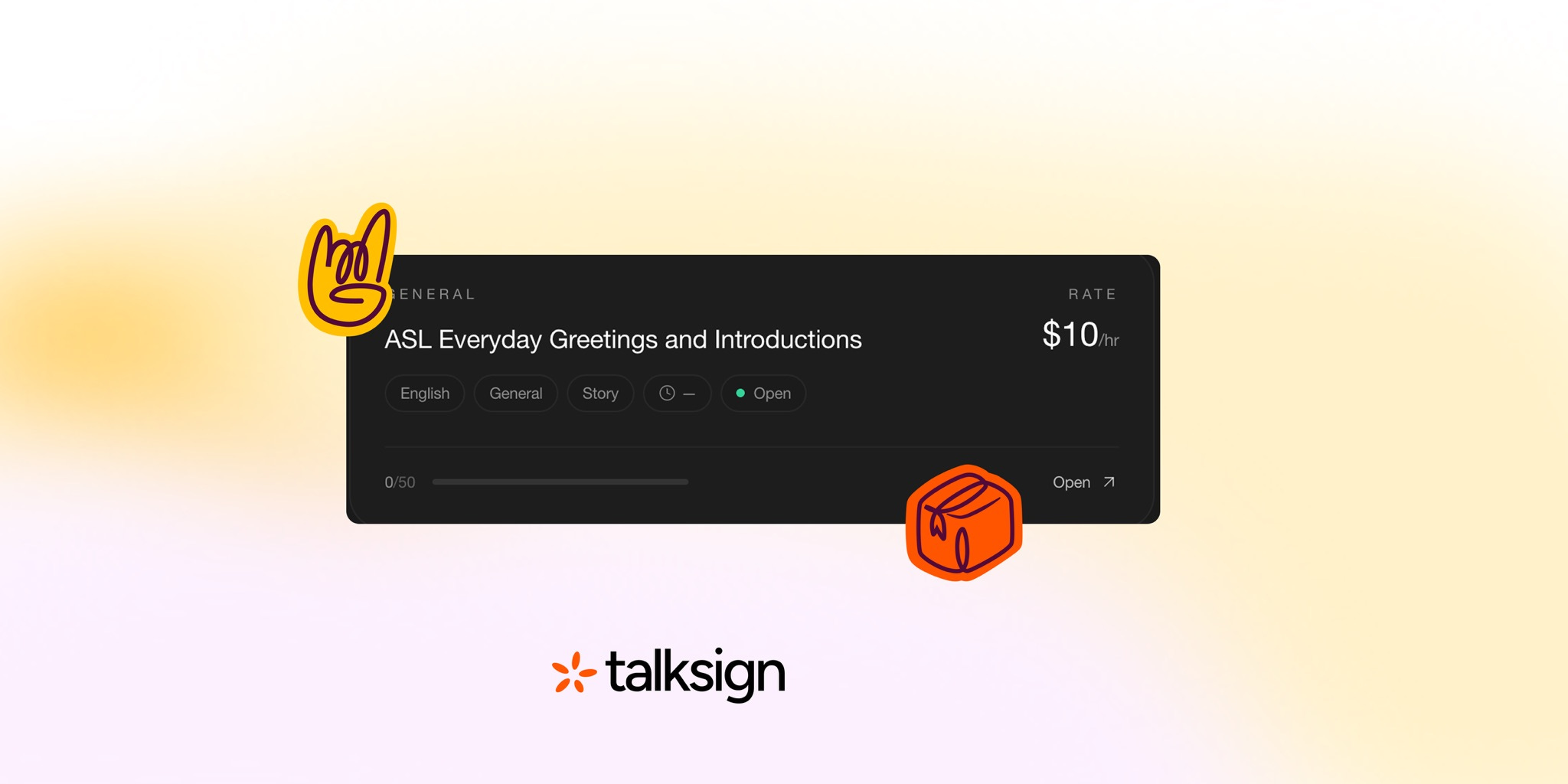
The Talksign Marketplace is the structure built to change that.
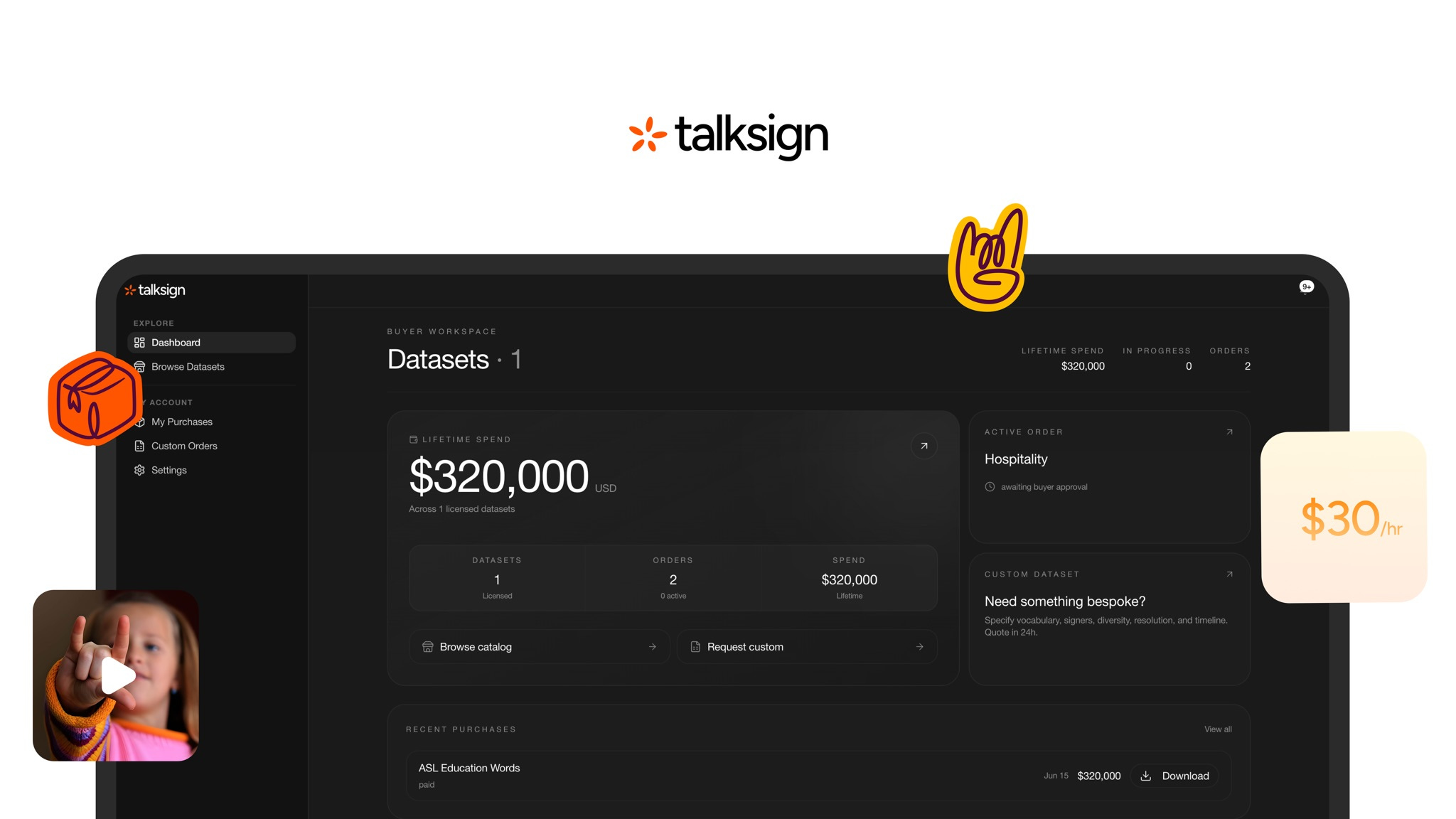
It works across four simple functions. Deaf communities, independent signers, and organisations can contribute recorded video data and get paid for it directly.
That raw video is then processed into usable training data through annotation and labelling, work that Talksign routes to fluent signers rather than outsourcing to people who do not actually know the language.
Organizations that need the data can license it with clear, machine-readable terms and full provenance records.
And anyone building in this space can access diverse datasets across multiple sign languages and dialects from one place.

The result is a marketplace that puts money in the hands of the communities generating the data, gives AI builders the material they need to build responsibly, and creates the infrastructure layer that every serious sign language AI product has been missing.
The accuracy problem, and why it matters more here than almost anywhere else
Talksign’s internal models give you a sense of what becomes possible when the data problem starts to get solved.
Their speech-to-sign model, Palm 1.0, reaches 84.2% semantic accuracy at roughly 29 milliseconds of latency.
Their sign-to-speech model, Echo 1.0, hits a 0.927 structural similarity score at 30 frames per second.
These are not vanity metrics. In accessibility AI, accuracy is not a nice-to-have. It is the entire point. A speech recognition model that gets things wrong 15% of the time is inconvenient. A sign language model that gets things wrong 15% of the time fails a Deaf person in a medical appointment, a job interview, a courtroom. The stakes are different.
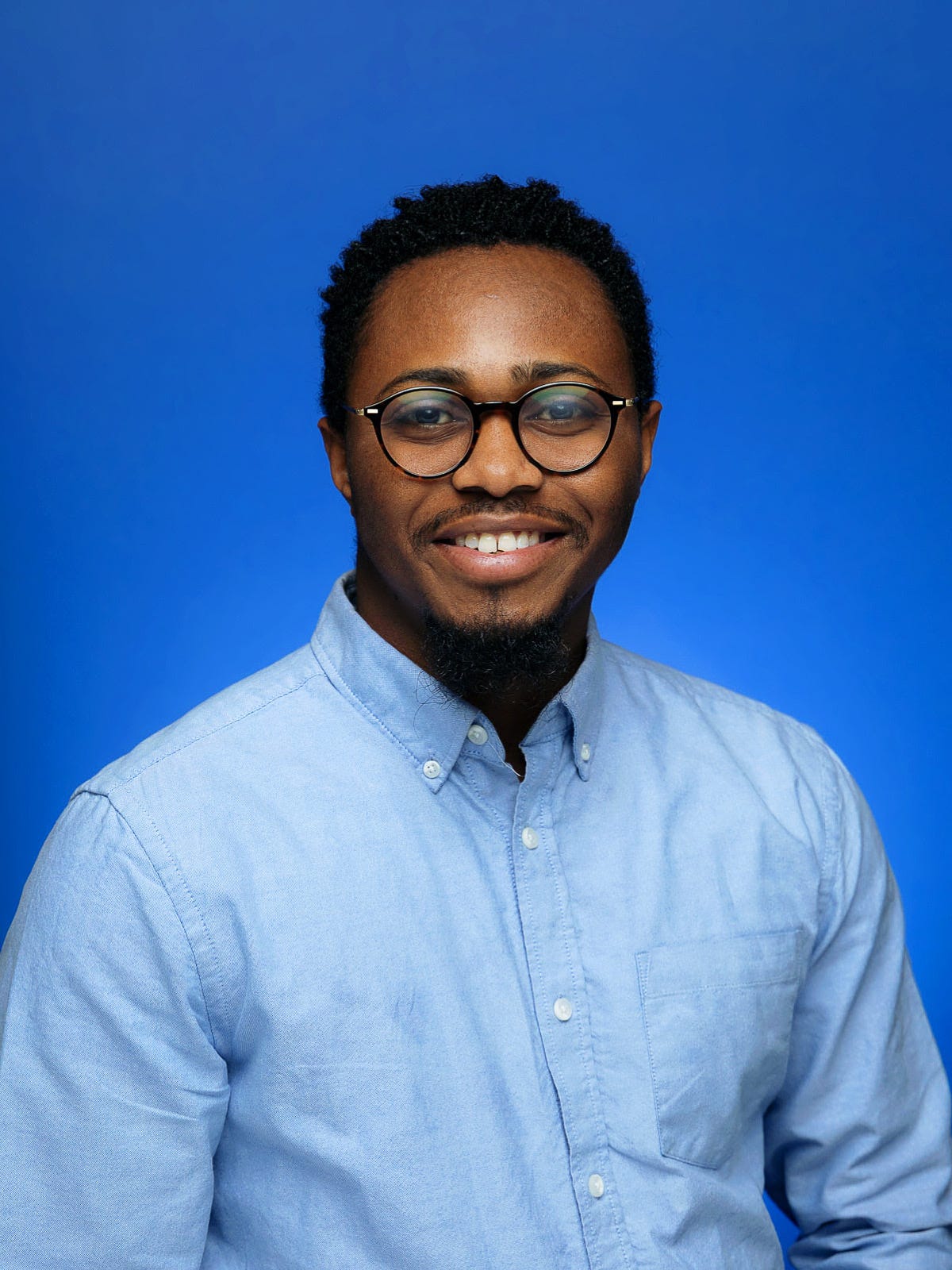
“A model is only as good as the data underneath it,” Edidiong said.
That is why the Marketplace was designed not just to collect data, but to verify it. Every dataset on the platform can be independently checked, the fluency of the signers, the accuracy of the annotations, the consent and licensing terms.
Sign language data is inherently biometric, capturing a person’s face and body in ways that cannot be anonymized the way text can.
Talksign built an open verification portal specifically to address this, tying every dataset back to its source and ensuring that the communities contributing the data retain clear rights over it.
What this means for Africa specifically
Here is where Edidiong’s work connects to something much closer to home.
Africa is home to thousands of spoken and signed languages, including Nigerian Sign Language, that suffer from the exact same data scarcity problem. Developers building AI tools for Hausa, Yoruba, Igbo, or Swahili consistently hit a wall where the language data simply does not exist in the form or volume needed to train a useful model.
The Talksign framework is a blueprint for how that problem gets solved. Not through slow academic grant cycles, but through a commercial marketplace that pays native speakers and signers for their contributions, creates clear licensing pathways for buyers, and builds the kind of data infrastructure that makes locally relevant AI possible.
“Sign language carries meaning across the hands, the face, the body, and space at once,” Edidiong said, “making it some of the richest multimodal training data in the world.”
An African founder building infrastructure for a language the global AI industry has ignored, creating economic value for the communities generating the data, and open-sourcing the verification so nobody has to take his word for it, that is the kind of story in60 exists to tell.
The Talksign Marketplace is live now
If you hold sign language data and want to list it, if you are a signer or organization interested in contributing or annotating, or if you are building something that needs licensed multimodal sign data, Talksign wants to hear from you.