Before we talk about Maoni, you need to know why it exists.
David Igbe was nine years old when his mother died. She had been given counterfeit insulin from a local pharmacy. She trusted the pharmacy. The pharmacy failed her. And there was no system in place, no review, no rating, no public record, that would have warned her or anyone else that this could happen.

David grew up. He went to the United States. He built a career at IBM and the New York Stock Exchange, working in software engineering and technology leadership. He became the kind of person who knew how to build things that worked at scale.
And he came back to Nigeria to build what might have saved his mother’s life. That thing is Maoni.
So what exactly is Maoni?
Maoni is Nigeria’s review and discovery platform. Think of it as the honest answer to the question Nigerians are always asking each other on Twitter, in WhatsApp groups, and at family dinners: has anybody used this place before? Can I trust them?
Right now, when a Nigerian wants to know whether a hospital is any good, whether a contractor will actually show up, whether a skincare brand is genuine, or whether that new restaurant in Lekki is worth the drive, they ask someone they know.
If they don't know someone who's used that business, they are basically guessing.
That guessing has real consequences. Money lost to businesses that did not deliver. Health affected by products that were not what they claimed. Time wasted on services that underdelivered. Trust broken, repeatedly, in a market where trust is already one of the hardest things to build.
Maoni fixes this by putting verified customer experiences in one place where anyone can find them before they spend their money, not after.

How it actually works
You have just used a business, a restaurant, a hospital, a logistics company, an online store, a pharmacy. You go to Maoni, find the business, and leave a review. What did they get right? What went wrong? Would you go back?
That review goes onto the business’s Maoni profile. The next person considering that business finds it before they commit. They read real experiences from real customers. They make a better decision.
And the numbers show people are doing exactly that.
Maoni has recorded approximately 10,000 app downloads across iOS and Android, with 2,500 registered users who have collectively contributed more than 3,000 reviews covering real experiences with places they have visited, products they have used, and services they have paid for.
The platform’s website received approximately 25,000 visits in the last month alone, which tells you something important: people are discovering Maoni not just through the app but through search, through links, through word of mouth. The discovery loop is already working.
The platform’s strongest usage is currently in Lagos, Rivers, Enugu, Ogun, and Abuja Nigeria’s most commercially active cities and an in-house data team is continuously expanding coverage across more cities, states, and business categories.
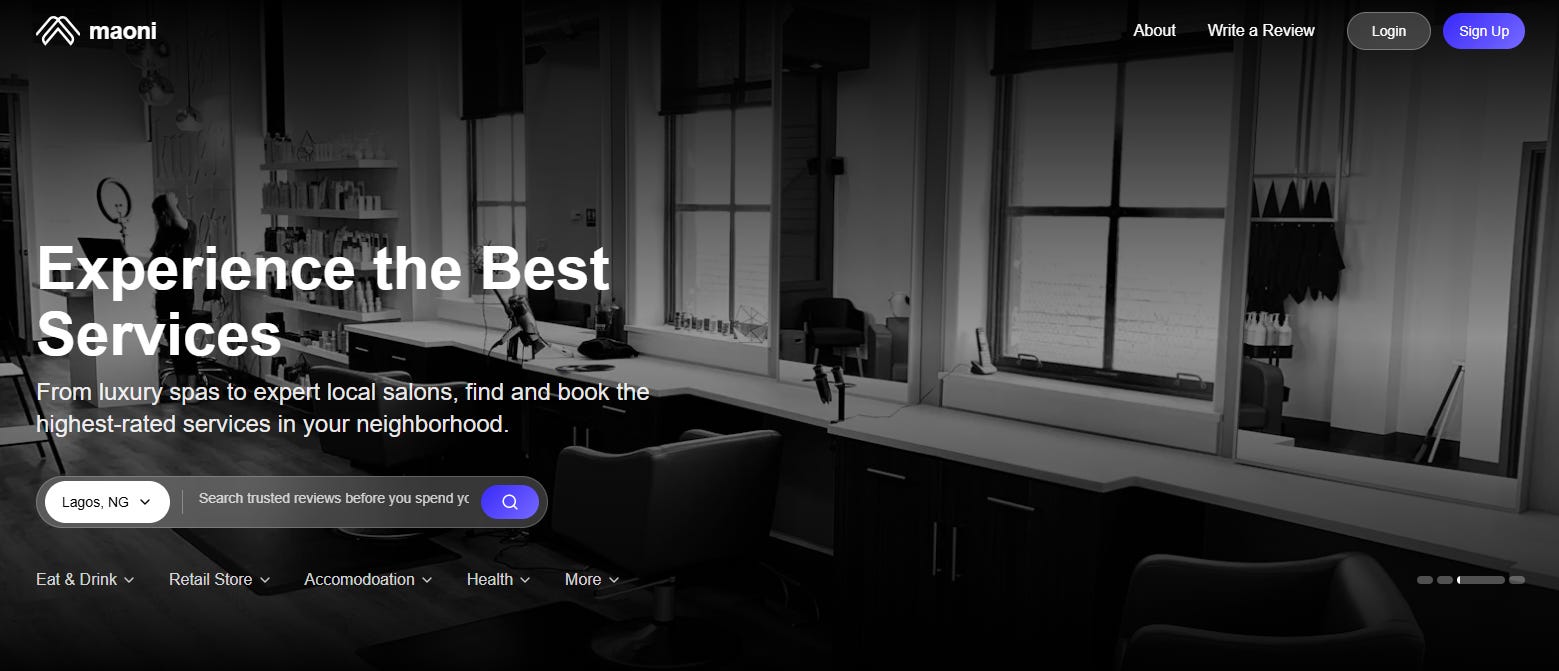
Maoni currently lists more than 30,000 businesses, including smaller and informal ones that have little to no digital presence anywhere else. That last part matters enormously.
The businesses that most need accountability infrastructure are often the ones least likely to appear on existing platforms.
What the product has become
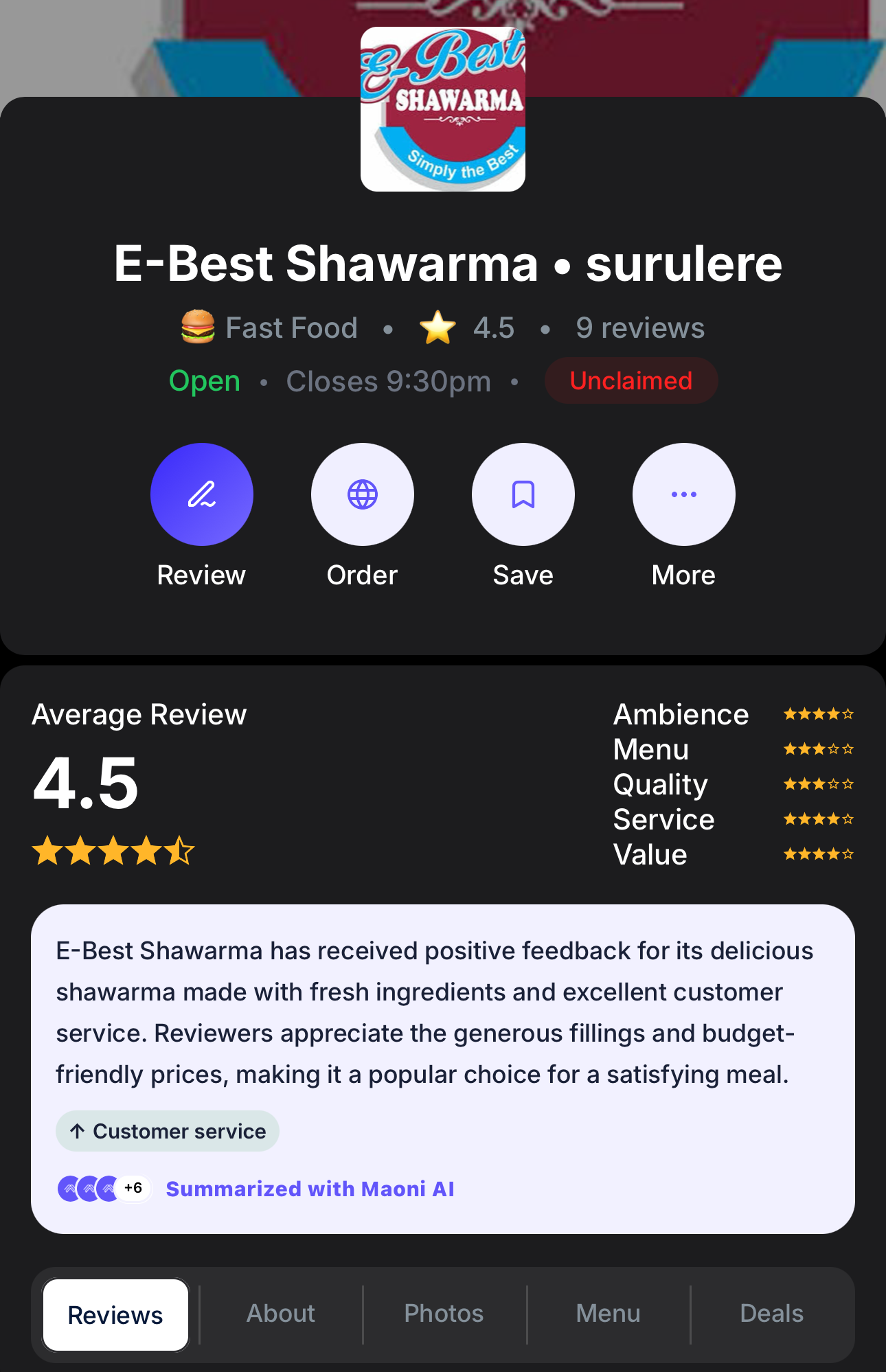
Maoni has grown well beyond a simple review app. The platform now includes category-specific ratings so that a hospital review captures different things from a restaurant review.
AI-powered review summaries and Pro Tips surface the most useful information from what users have written, so you do not have to read every single review to get a clear picture.
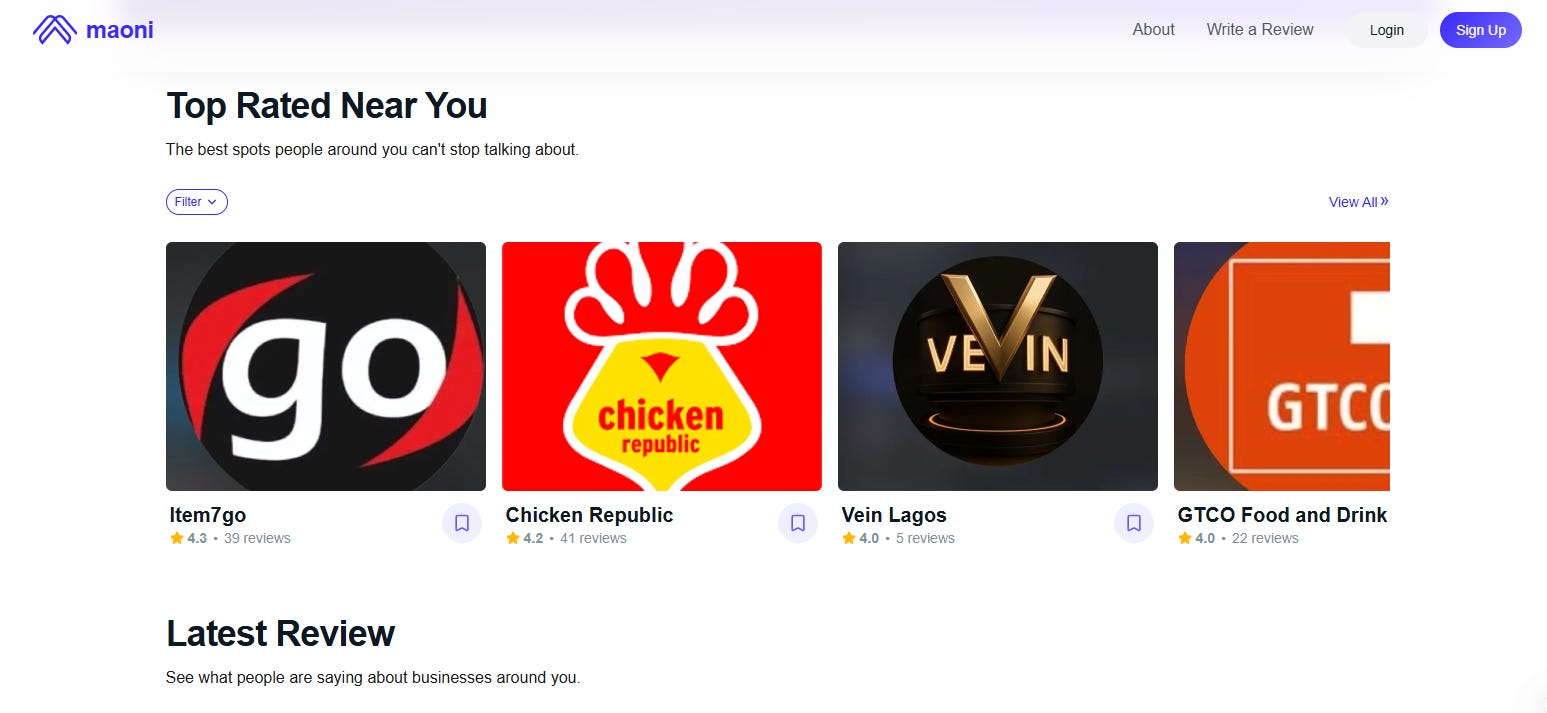
Collections let users curate lists of trusted businesses they want to share. Businesses can respond directly to reviews, adding context or addressing concerns publicly.
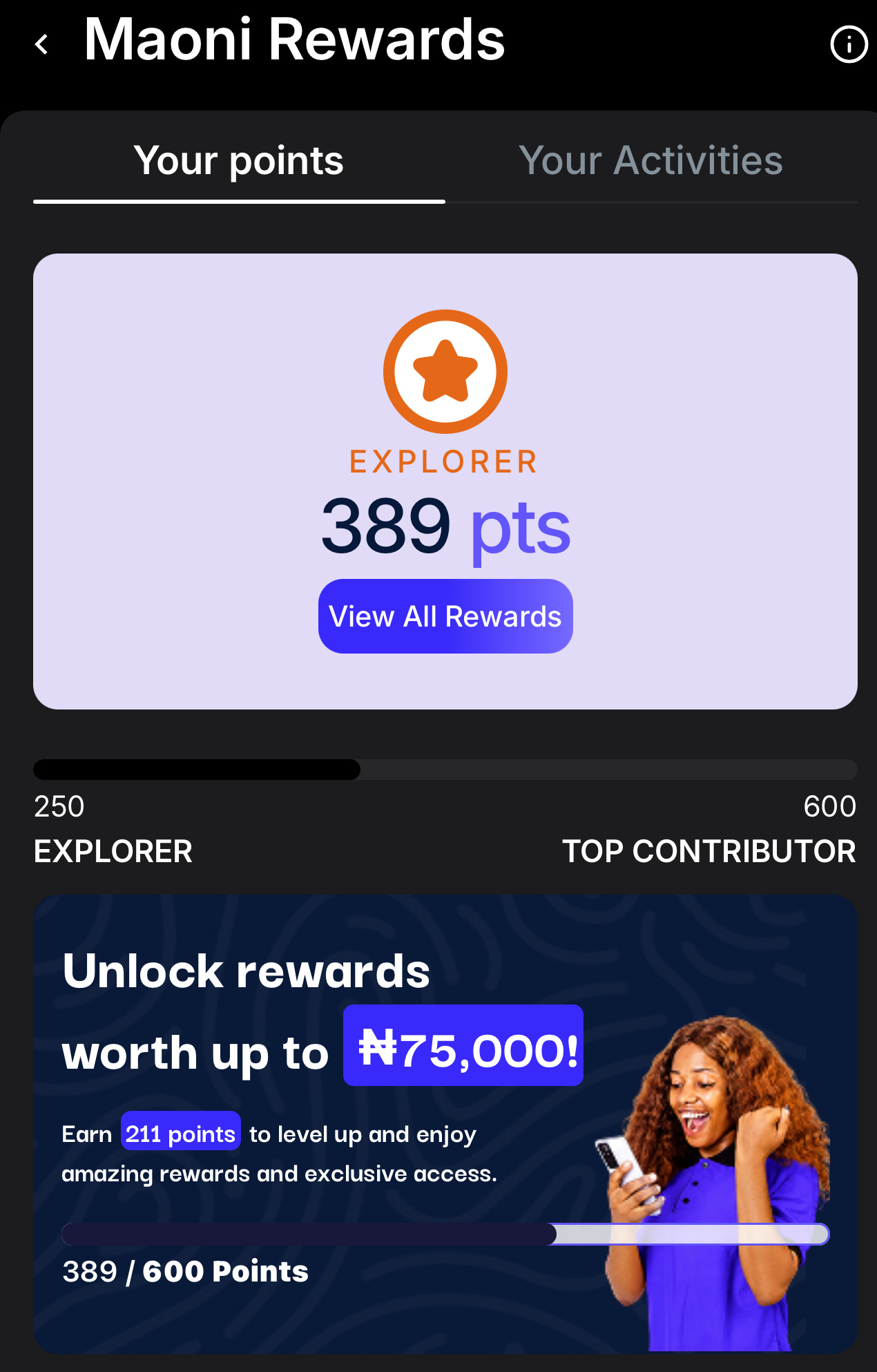
And then there is the Maoni Rewards Marketplace, where users earn points for contributing reviews and can redeem those points for products, vouchers, and experiences. That one feature does something subtle but important: it makes leaving a review feel like it is worth something, which increases the volume of contributions, which makes the platform more useful for everyone.
On the business side, Maoni is developing tools that turn customer feedback into structured insights, sentiment analysis, engagement tracking, and competitive performance benchmarking. A business owner should be able to look at their Maoni dashboard and understand not just what customers think but how that compares to similar businesses in their category and what is driving the gap.
David’s title is Chief Happiness Engineer. It is not a gimmick. It reflects a specific philosophy: the goal is not to build a platform for complaints. It is to build a system where businesses that treat customers well get rewarded with visibility, and businesses that do not get honest feedback that forces them to improve or get left behind.
The verification question
The obvious challenge with any review platform is fake reviews. Businesses paying for five-star ratings. Competitors leaving false one-star attacks. Random people reviewing places they have never visited.
Maoni built verification into the core of how the platform works, not as an afterthought. Reviews on Maoni are tied to verified customer interactions; the platform uses multiple layers of checks to confirm that a review comes from someone who actually transacted with the business before it goes live.
This is what separates Maoni from a simple comment section. The reviews carry weight because they are earned. A five-star rating on Maoni means something different from a five-star rating that anyone can post without any accountability.
For Nigerian consumers who have been burned before by fake products, by businesses that overpromise and underdeliver, by services that look great on Instagram and fall apart in reality, verification is not just a feature. It is the entire point.
Why Nigeria specifically needs this
Nigeria processes an enormous volume of consumer transactions every single day. Food delivery. Healthcare. Construction. E-commerce. Financial services. Education. Beauty and personal care.
In almost every one of these sectors, the gap between what a business claims and what customers actually experience is significant, and the information to bridge that gap has never been properly organised.
Google reviews exist, but they are sparse, unverified, and often irrelevant to the Nigerian context. Social media word of mouth works, but it is chaotic, temporary, and only reaches people who happen to see the right post at the right time.
Referrals from friends and family are the most trusted source of information, but they only cover the businesses your specific social circle has used.
Maoni is building the layer that sits above all of that. Not replacing word of mouth, but organising it. Making it searchable. Making it persistent. Making it available to everyone, not just people with the right connections.
David’s experience at IBM and the NYSE shaped how he thinks about building this. Systems at that scale live or die on data integrity and trust. You cannot build the world’s most powerful stock exchange on unreliable information.
You cannot build a review platform that actually changes behaviour if the reviews themselves cannot be trusted. The technical infrastructure of Maoni reflects that background, built for accuracy and reliability, not just speed to market.
What this means for Nigerian businesses
A business with a strong Maoni profile is not just collecting reviews. It is building a public trust asset, one that compounds over time as more customers leave verified experiences that future customers can rely on.
For small and medium businesses especially, this matters enormously. A well-known pharmacy chain in Lagos can survive a bad experience because its brand carries weight.
A neighbourhood pharmacy that has been doing honest business for ten years cannot easily communicate that reputation to a new customer who has never heard of them. Maoni gives that pharmacy a way to show its track record, not through advertising, but through the accumulated testimony of the customers who have actually walked through its doors.
There is something quietly powerful about that. In a country where consumer protection infrastructure is still developing, and the consequences of misplaced trust can be severe, as David’s family learned at enormous personal cost, a platform that helps Nigerians make better decisions about who to trust is not just a useful product.
It is infrastructure.
David Igbe built a career at some of the most trusted institutions in American finance and technology. Then he came home and started building the kind of trust infrastructure Nigeria has been missing.
Maoni is where that work lives. Every review on the platform is a small act of accountability: someone who paid money, had an experience, and chose to share it so the next person would have better information than they did.
That is how trust gets built in a market. One honest review at a time.