


Most tech publications in Africa do the same thing. Something happens, they write about it fast, the clicks come, the clicks go, and nobody ends up any wiser about how the industry actually works beneath the surface.
The headline was attention-grabbing. The story was thin. And the founder, the investor, or the product manager who got written about is now fielding uncomfortable questions from their board because of something that was not entirely accurate to begin with.

Condia — formerly Bendada.com, rebranded in 2024 after six years, was built on a deliberate rejection of that model. And after eight years of operation, it is now doubling down on that rejection in ways that make it one of the more interesting media businesses in African tech right now.
The founding insight was this: the people writing about an industry need to have genuine context, not just the facts, but the mechanics, the pressures, the behind-the-scenes dynamics that only come from having actually been inside the space. Without that, the reporting is always going to miss something important.
A user complains that a fintech held their money. A journalist rushes to publish. The headline says fraud or misconduct. The reality was a routine compliance flag that temporarily restricted account activity, a standard internal process with no malice behind it. The headline has already done its damage long before any correction is possible.
“By the time you are trying to retract your statement, it’s already done,” Benjamin Dada, Condia’s founder, told in60. That gap between what happened and what gets reported, and the real-world consequences of that gap on the CEO, the customer support team, the product manager fielding internal questions, is exactly what Condia was built to close.

But context does not just mean accuracy. It also means knowing when a founder’s enthusiasm is going to get them into trouble. Dada gave a specific example: a regulated fintech company that wants to publicly say their regulators don’t know what they are doing.
As a journalist, you know the CBN is made up of real people who are on Twitter and LinkedIn. If that quote gets published as-is, the regulator sees it, and the company potentially faces consequences. Part of what Condia does, especially in its PR and communications work for fintech clients, is help companies say what they need to say in a way that does not expose them to unnecessary risk.
“Instead of saying our regulators don’t know what they are doing, you can say things like our regulators take a proactive approach to regulation,” Dada explained.
Same message. Different framing. No witch hunt.
This dual understanding, knowing the media side and the operator side simultaneously, is what Dada describes as Condia’s real edge.
He understands the pressure founders feel, the frustration of employees whose compensation never keeps pace with company growth, and the sense of grievance investors carry when things do not go as planned. “It makes me a more balanced individual and a more empathetic person in general,” he said.
It also makes Condia’s PR and communications offering, helping fintech companies shape how their stories land, more credible than a typical agency that has only ever been on the media side.
On the editorial side, Condia has made a deliberate tradeoff that is worth understanding. The publication trades speed for depth, almost every time. If a story is not coming to Condia as an exclusive, they are probably not rushing to be first. Instead, the team goes two layers deeper, past the announcement and into the mechanics of what is actually happening and why.

The honest metric consequence of this is real: a competitor publishing faster might pull 2,000 views on a breaking story while Condia publishes later and draws 1,500. But those 1,500 readers read longer, return more often, and share more consistently. Stickiness over volume. It is a deliberate editorial philosophy, and Dada is clear-eyed about what it costs and what it buys.
On the current state of African tech funding, Condia’s own data tells a story that every founder should sit with. According to the publication’s funding tracker, seed-stage deals in Africa dropped to around 30 in a recent tracked period, compared to 105 in 2022.
Debt has overtaken equity as the dominant funding instrument on the continent, which significantly favors later-stage companies with predictable cash flows and leaves early-stage founders with far fewer options than the 2021 and 2022 boom years suggested would be permanently available. What is getting funded is now deeply country-specific: fintech in Nigeria, climate tech in Kenya, SaaS and fintech in South Africa, AI and tech hub activity in Morocco and Tunisia.
The AI question, what African founders should actually do with AI rather than just talk about it, is one Dada thinks the ecosystem has not resolved honestly.

“Finding where to play in the AI space in Africa is going to be hard,” he said, “because the question is always, what if Google builds it, what if Anthropic builds it, what if the cost of delivering it will never be cheap enough to charge what you need to charge to run it.”
The founders who will win in African AI, his view suggests, are those solving problems specific enough that the large global players will not bother, not those trying to build general-purpose AI tools in competition with companies spending billions on the same problem.
What Condia is now building toward is a return to its original founding intent. In the early years, the vision was a platform for deep insights into the African tech ecosystem, not a news aggregator, but a genuine thought partner for operators, professionals, founders, and investors who needed to understand how things actually work, not just what happened today.
As the team grew and financial pressure mounted, the publication drifted toward faster, lighter news content that kept the metrics moving. Now it is hiring writers who are deeply embedded in the ecosystem, people who attend the events, understand the industry from the inside, and can produce analysis that an operator reads and feels is written by someone who actually understands what they are going through.
“We want people who are very connected to the ecosystem, eat and dine with these people that they write with,” Dada said. The goal is not for Condia to be called the fastest publication in African tech. It is for Condia to be the one that, over time, if you collect everything they have written about a specific industry, you come away understanding that industry at a level that most general media cannot offer.
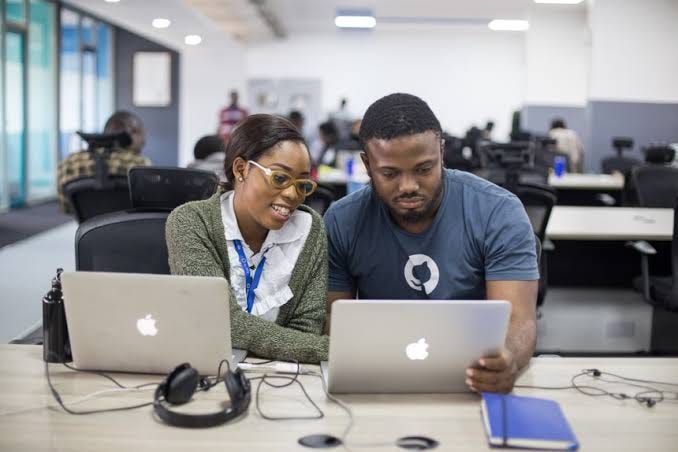
For a local reader, that means seeing people who look like them building real things. For a foreign company trying to understand Africa, it means getting past the press release layer into something that actually explains how things work. For an investor, it means knowing which startups are genuinely doing well, not just which ones have the loudest PR.
Eight years in, after a rebrand and a recommitment to the original vision, Condia is not trying to win the traffic race. It is trying to build something more durable, the kind of publication that the African tech ecosystem will still need ten years from now, when the stories being told today will look like the foundation of something much larger.
Follow Condia: thecondia.com · @thecondia on X