


Most people who use a payment product never think about what happens between the moment they tap “Pay” and the moment the money arrives. That gap, sometimes milliseconds, sometimes days, is where Bachs lives.
Bolu Dada is the co-founder and CEO who thinks about what the product should feel like for the person building on top of it. Tega Akpojiyovwi, co-founder and CTO, thinks about everything happening underneath that experience to make it possible.
They are not two people doing different jobs inside the same company. They are two people with the same conviction, approaching the same problem from two different angles.

That problem is this: moving money on the internet from Africa is still harder than it should be. Not because the technology does not exist. Because nobody has assembled it properly for the people who need it most.
Bachs is that assembly.
Where the idea to build Bachs came from
Bolu was building a product around paid Telegram communities before Bachs existed. His customers had their own customers scattered across multiple countries.
Getting paid by those customers, and then getting that money back to the right business owner, required stitching together tools that were not designed to work together.
“We became very familiar with the complexity of payments very quickly,” Bolu said.
One late-night session working through a particularly stubborn payment problem with Tega, it clicked. The problem they were solving for their own product was the same problem thousands of other internet businesses were dealing with, just with slightly different details.
They stopped building the original product. They started building Bachs.
The founding thesis was straightforward but important. The world needed another payment product, not to do something new, but to do something that already existed in theory far better than it was being done in practice.
Specifically for internet entrepreneurs in emerging markets who were being left out or left behind by infrastructure that was not built with them in mind.
“We weren’t trying to invent payments,” Bolu said. “We were trying to make them dramatically easier and more accessible.”
What Bachs actually is
Bachs is a payments platform for internet entrepreneurs, software founders, digital product creators, freelancers, agencies, community builders, creators, and anyone else building a business that lives online and needs reliable ways to collect, manage, and move money.
The connecting thread across all of those users is not what they build. It is their situation. They are building for the internet. Their customers can be anywhere. And right now, getting paid by those customers and moving that money where it needs to go requires more technical complexity than it should.
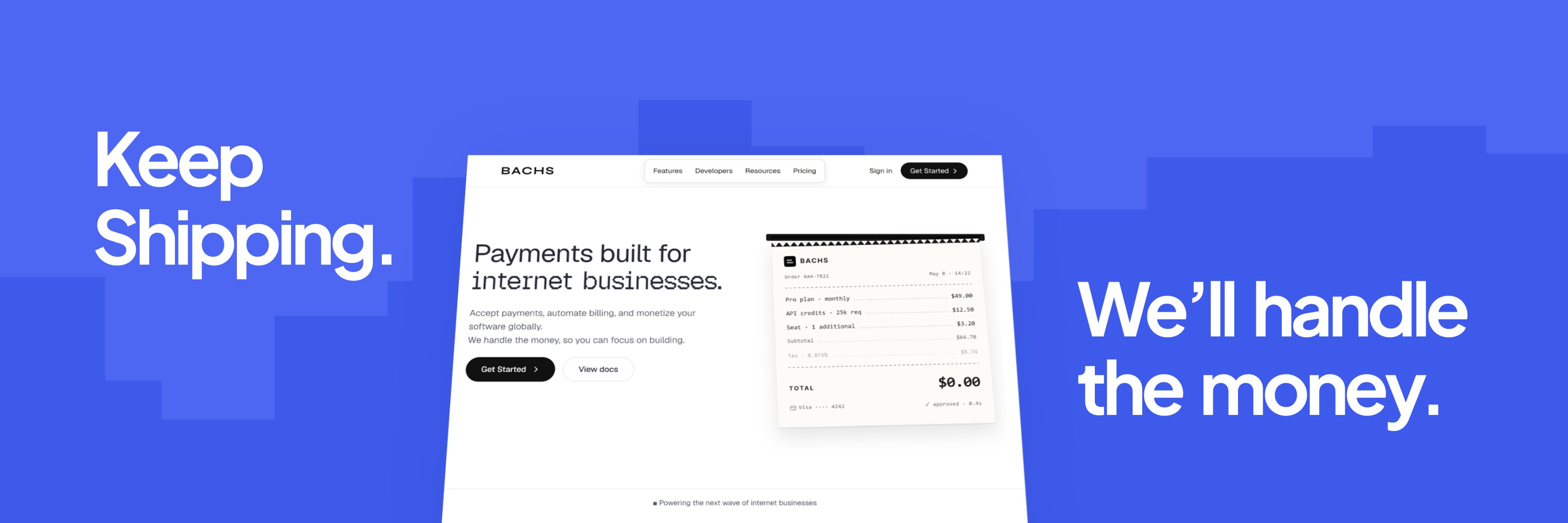
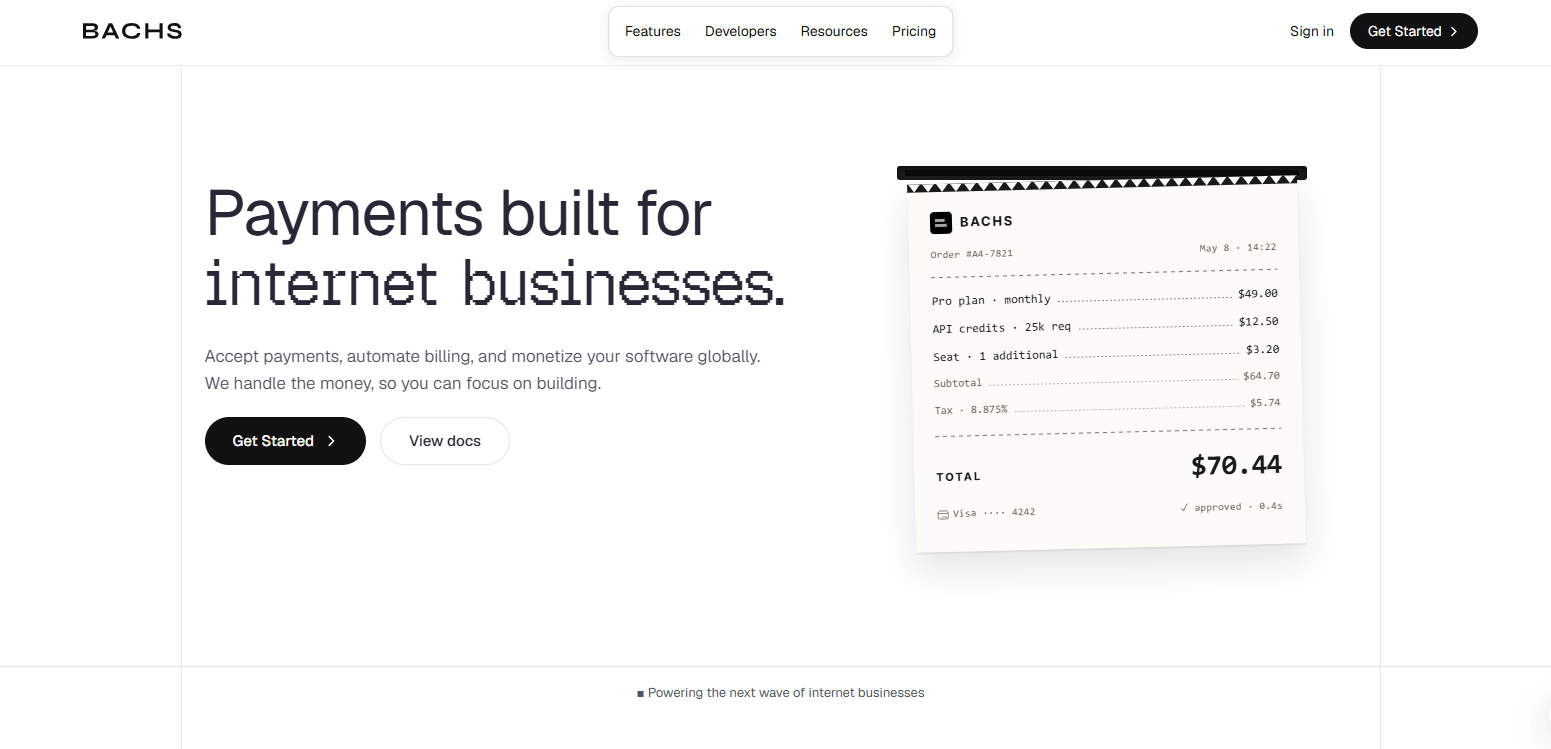
Bachs handles checkout, subscriptions, global payouts, virtual accounts, cards, FX, and stablecoin payment rails, all in one system rather than five separate integrations with five different providers, each with their own documentation and their own ways of failing.
“What if you could give an internet entrepreneur one place to collect, manage and move money, without having to figure out all the complexity underneath?” Bolu said. “That is the approach we took with Bachs.”
The infrastructure underneath
Tega is the person who has to make that promise real. And he is unusually honest about how hard it actually is.
When a customer clicks “Pay,” what can go wrong? Tega walked through it without softening anything.
Naira bank transfers are generally reliable; delay is usually the worst case, not outright failure. Mobile money has more friction points: the customer might decline the prompt, the prompt might not arrive, or they might abandon the flow.
Cards introduce a different category of problems entirely: a local Verve card might not work for an international payment, authentication might fail, the bank might block it, or the card simply might not support that transaction type.
“A payment passes through several systems before it reaches the business,” Tega said.
“If any one of them has a problem, the transaction can fail or be delayed.”
The complexity of payment infrastructure lies in reliably connecting disparate systems such as banks, processors, card networks, wallets, and mobile operators, each built with unique standards, APIs, and response time assumptions.
The hardest part is not connecting them. It is maintaining visibility across all of them simultaneously.
“You need to know what is happening at every stage of a transaction,” Tega said. “When something goes wrong, you need to know where it happened and why.”
The fragmentation problem, and why it has not been solved
One of the most consistent things Bolu heard from founders before building Bachs was this: getting paid globally is much harder than it should be. Some are excluded from international payment options entirely because of where they are based.
Others have to integrate multiple providers just to cover the currencies and payment methods their customers use. Then they have to manage different settlement times, different failure modes, and different customer support contacts for each one.
“The internet has made it possible to sell to almost anyone in the world,” Bolu said. “Getting paid by that customer shouldn’t be the hard part.”
Tega explained why the fragmentation has persisted. The first reason is genuine technical complexity; different payment methods work in fundamentally different ways.
The second is commercial reality. A Nigerian payments company handling mobile money from Uganda might not see enough volume to justify deep investment in that corridor. If it breaks, fixing it may not be urgent. “The problem is not just technical,” Tega said. “It also comes down to business priorities, local rules and customer demand.”
What Bachs is doing is absorbing all of that complexity on behalf of the businesses using it. The developer building on Bachs should not need to understand the difference between how a Kenyan mobile money provider and a Dutch bank process a transaction. That is Bachs’s problem to solve, not theirs.
Subscriptions, settlement gaps, and the money that disappears quietly
Two specific problems come up repeatedly when Bolu talks to the internet entrepreneurs using Bachs. The first is the gap between “payment successful” and “money I can actually use.” The second is recurring revenue that silently leaks through failed subscription renewals.
On settlement: a customer pays, gets a confirmation, and the money still is not in the merchant’s account. Tega explained why. Some payment partners clear funds the same day. Others take a day or longer. Card fraud reviews add deliberate time to some USD transactions.
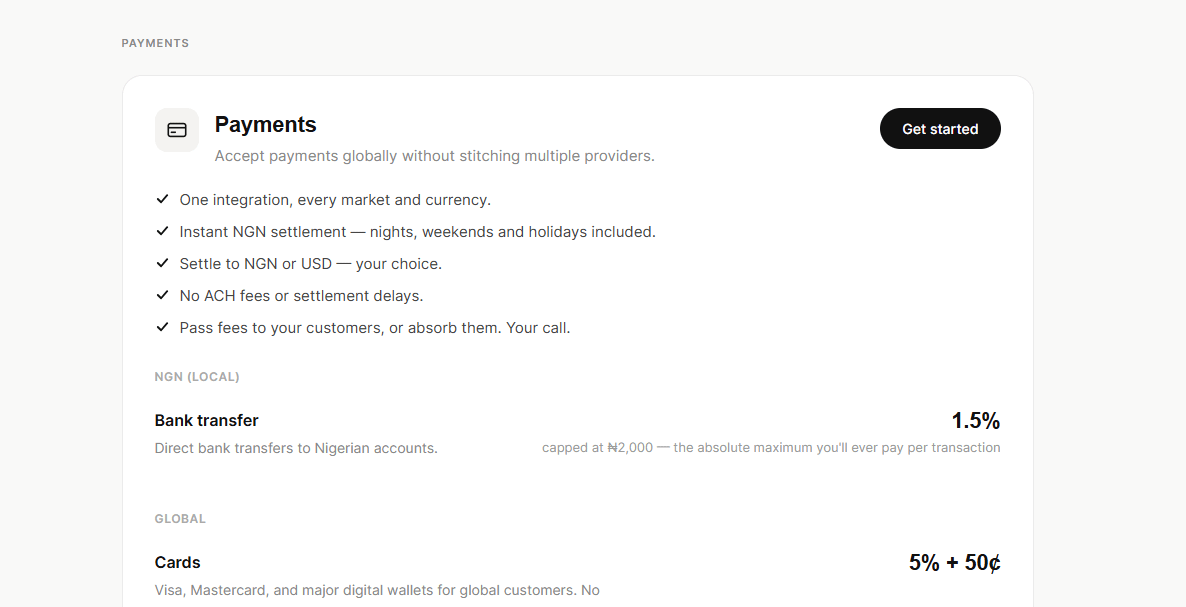
“At Bachs, we have done a lot of work to make naira payments available immediately,” Tega said. “Once we confirm the money, the merchant can withdraw it.”

On subscriptions: the biggest culprit is failed renewals. Cards expire. Customers forget to update them. Banks decline payments for reasons that have nothing to do with whether the customer wants to stay subscribed.
“There is no point repeatedly trying a cancelled card,” Tega said, “but a payment that failed because of low funds may succeed a few days later.”
Bachs built its subscription engine around that distinction, retrying intelligently, reminding customers when action is needed, and understanding failure types well enough to know when to keep trying and when to stop.
Bolu’s version of the same point: businesses should not be losing customers because of technical failures they had no way to prevent. Bachs should be the thing that catches it before it becomes churn.
FX and the cross-border bottleneck
For cross-border payments, Tega named the hardest part clearly.
“For us, FX is the biggest bottleneck.”
The challenge is not showing the right exchange rate. It is managing everything that comes after. A business might price in one currency, receive payment in a second, and want to be settled in a third.
Bachs has to calculate the conversion, manage exchange-rate risk as rates move, make sure there are enough funds available in each currency, and still deliver the amount the business expects.
“This becomes even harder when rates are changing quickly, or there is not enough liquidity available in a particular market,” Tega said.
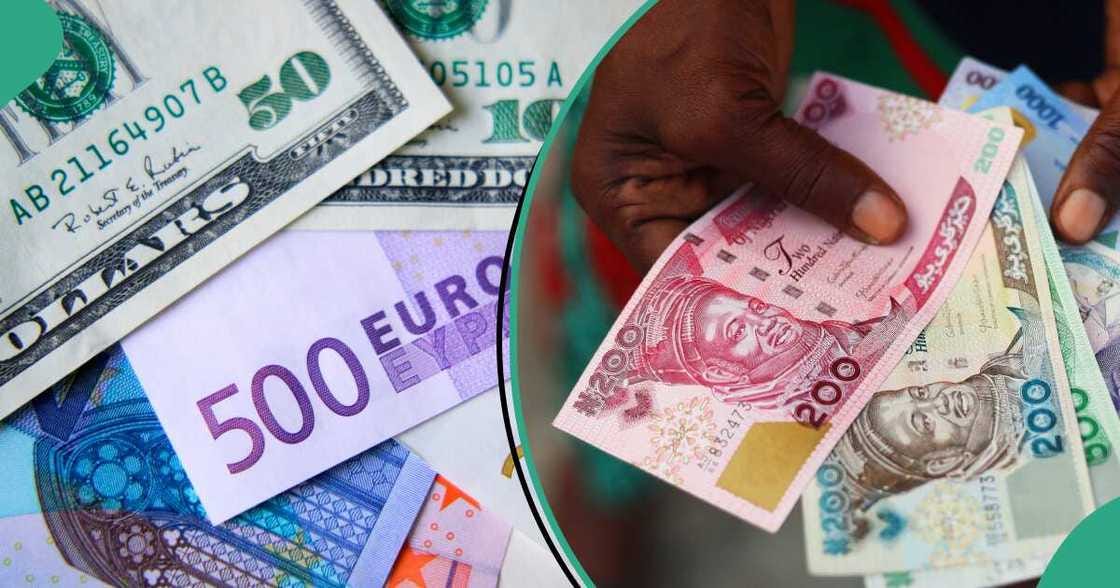
Bolu describes the goal from the business side: a founder in Lagos accepting payment from a customer in Berlin should not write a single line of FX-handling code. They should just receive the money. Bachs handles everything between those two points.
Stablecoins already inside the rails
One of the more interesting details about how Bachs actually works is that stablecoins are not a future feature. They are already part of the infrastructure.
“A lot of our money movement and payouts already run through stablecoins,” Tega said. “We have hidden most of that complexity so customers do not need to know which system is being used underneath.”
Bachs supports payments in cNGN, USDT, and USDC, with some dollar settlements arriving as stablecoins. Partners can easily integrate stablecoin transactions, allowing customers a seamless payment experience without needing to understand the underlying blockchain infrastructure.
Bachs Connect, a product facilitating money movement between customers, sellers, and users on various platforms, was re-engineered and relaunched with significant improvements.
“When you’re building financial products, you can’t optimise for shipping quickly at the expense of getting the foundations right,” Bolu said.
That decision to pause something with real momentum and fix what was underneath reflects how both founders think about what they are building. Not fast. Right.
Where Bachs is going
Bolu is clear that Africa is the starting point, not the ceiling.
“Africa should be our proof of concept, not our ceiling,” he said. Bachs addresses fragmented payments, limited access, multiple currencies, and cross-border money movement for internet businesses in underserved markets.
Tega envisions a data-driven payments system, leveraging open banking and enhanced financial data to combat fraud, a major impediment to cross-border payments in Africa. Improved risk data would facilitate more accurate fraud detection, approve legitimate transactions, and enable market expansion without supply chain disruptions.
“At Bachs, we are investing heavily in our fraud systems because we believe better risk tools will help us grow into a global payment platform,” Tega said.
Early customers like Bid9ja, Werbstore, Pxxl, HagFish, and Gamms App have already taught both founders something important: reliability matters more than features. When real businesses run their revenue through your product, what they need most is to know the money will be there when they need it.
“Not that someone says they like Bachs,” Bolu said, “but that they’ve trusted us with a small part of their business, seen that it works consistently, and then decided to trust us with the rest.”
That trust, earned transaction by transaction, is what Bachs is building toward. Not a payment processor. A financial platform that internet businesses in Africa and beyond can rely on.
Bolu builds what you see. Tega makes sure it never breaks. Together they are building something the ecosystem has needed for a long time.