


Good morning football lovers and haterssss. So, on Saturday night, Arsenal’s bid to win the Champions League for the first time in their 140-year history ended in heartbreak after a penalty shootout defeat to Paris Saint-Germain.
The score after 120 minutes was 1-1. PSG won 4-3 on penalties.

And the painful part? Arsenal had already won the Premier League this season using some of the most advanced sports technology ever deployed by a football club. GPS vests. AI-powered set-piece analysis. Predictive fatigue models. A data analytics system that helped them sign the right players and rest them at exactly the right time.
They had all of that. And they still lost on penalties to a French club that played better football.
Which raises the most interesting question in football right now: how much can technology actually do?
The game on Saturday night, what the numbers say
PSG had 75.3% possession. They had 21 shot attempts to Arsenal’s 7. They had 4 shots on goal to Arsenal’s 1. Arsenal made 3 saves. PSG made none, because Arsenal barely troubled their goalkeeper.
Statistically, this was not a close game. PSG dominated for large parts of 120 minutes. Arsenal held on through defensive discipline, heart, and the kind of organization that only comes from a very well-coached team.
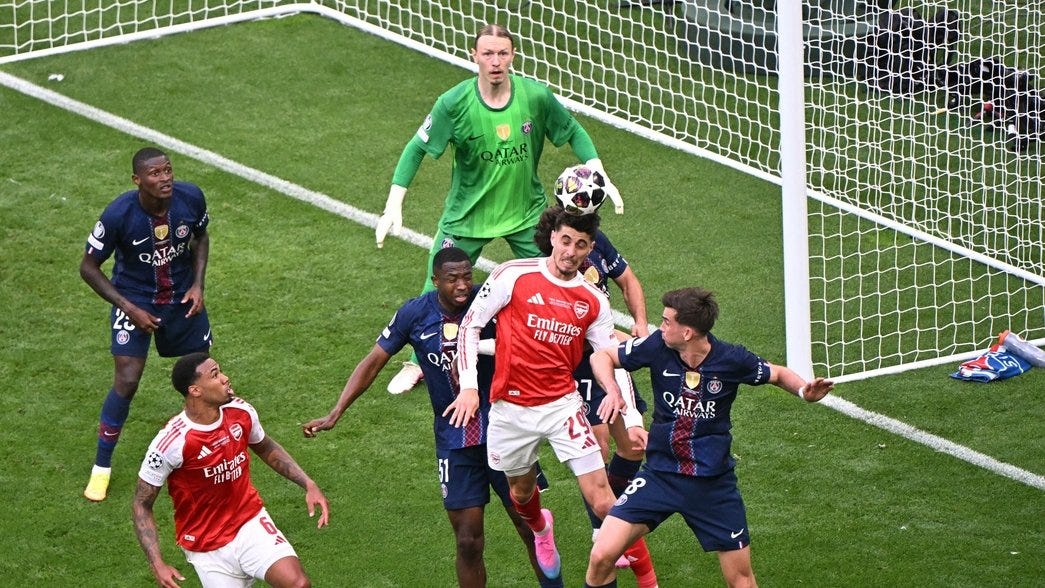
Mikel Arteta described himself as “very ambitious” for next summer after marveling at PSG’s quality. Declan Rice said he was “gutted” but proud. These are not the words of a team that felt outplayed by technology. They felt outplayed by better footballers on the night.
And that is exactly the point.
Arsenal’s tech machine, and what it got them
Arsenal’s title-winning season was built on extraordinary technology. Their STATSports Sonra system tracked every player’s movement and physical exertion in real time, feeding information to coaches during training so adjustments could be made on the spot, not after the session ended.
Their StatDNA platform used predictive technology to monitor fatigue, telling Arteta exactly when to rest players before they broke down. It also guided recruitment, helping identify and sign players like Piero Hincapié and Eberechi Eze based on precise data on pressing ability, recovery rate, and structural discipline.
Their set-piece coach Nicolas Jover used High-Angle Video Mapping technology to analyze every opponent’s defensive spacing and zonal marking blind spots. The result was a record-breaking 24 set-piece goals in a single Premier League season.

The cameras found the gaps. The data designed the routines. The players executed them.
Combined with Catapult GPS vests during matches, whole-body cryotherapy units that drop to -110°C for rapid tissue repair, and automated tactical video annotation software that sends live match footage from the stands to the dugout during games, Arsenal built a machine.
The machine won them the Premier League. It got them to the Champions League final.
PSG still beat them.
PSG is not behind on tech, they just don’t talk about it as much
Here is what most people miss. As far back as 2019, PSG partnered with École Polytechnique, one of France’s most prestigious universities, and launched the xPSG Challenge, offering a €100,000 doctoral grant for research into how data science and machine learning could improve football performance.
They have a dedicated Football Data Insights department with data scientists working on player tracking, recruitment models, and performance analytics using tools like StatsBomb, Opta, Wyscout, and Hawkeye. They just don’t put it in press releases the way Arsenal do.
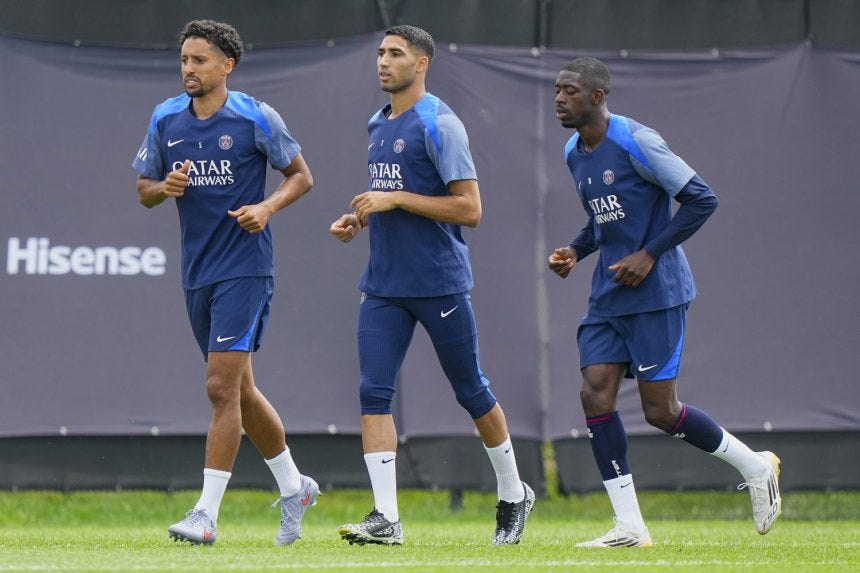
Luis Enrique is also one of the most tactically sophisticated managers in world football. He doesn’t need a press conference about AI to use it. He builds it into how the team trains and moves every single day.
So the final was not low-tech PSG versus high-tech Arsenal. It was two of the most technologically advanced clubs in the world playing elite football, and on the night, one team’s players were simply better.
Now here’s where it gets really interesting, the World Cup ball has a brain
While we were watching the final on Saturday, a different kind of football technology was quietly sitting in a warehouse waiting for its moment.
FIFA has unveiled the Trionda, the official match ball for the 2026 World Cup, designed by Adidas. Each ball is fitted with an AI chip that sends live data to the VAR system to assist with offside and handball calls.
The Trionda contains an internal 500Hz motion sensor chip that continuously transmits live data to the VAR system. The ball must be charged before every match.
Yes, you read that correctly. The football needs to be plugged in before kickoff.
Lenovo is also powering AI-driven 3D avatars that replicate real players for analysis, plus a stabilized referee camera that gives viewers at home a live first-person view of what the referee sees on the pitch.
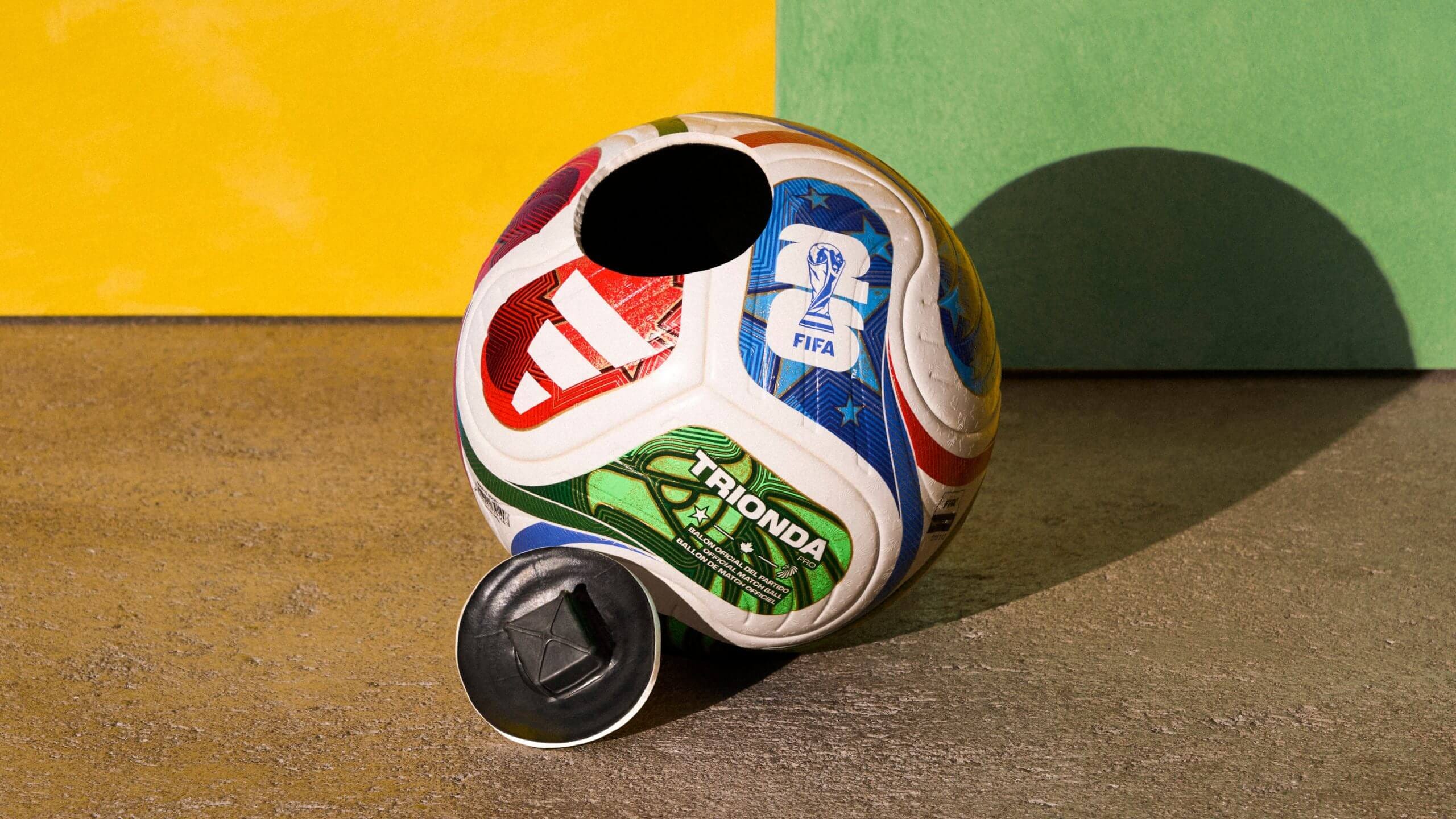
FIFA is also introducing AI systems that can predict match outcomes, track every player’s limb position in real time, and feed all of it into officiating decisions faster than any human official could process.
The 2026 World Cup, hosted across the US, Canada, and Mexico with 48 teams for the first time, will be the most technologically advanced tournament in the history of football.
But here is the question nobody wants to answer honestly
If a ball needs charging, an algorithm is predicting outcomes before kickoff, and AI is tracking every limb of every player 500 times per second, at what point does football stop being football?
The magic of the sport has always lived in its unpredictability. The last-minute goal. The goalkeeper who saves three penalties and becomes a legend. The teenager who comes on as a substitute and decides the final. None of those things were predicted by an algorithm. None of them showed up in the data.
Arsenal’s set-piece technology was extraordinary. But Kai Havertz scoring a scrambled header because a defender slipped, that is not in any model. PSG winning on penalties because one Arsenal player hit the post, no algorithm saw that coming either.
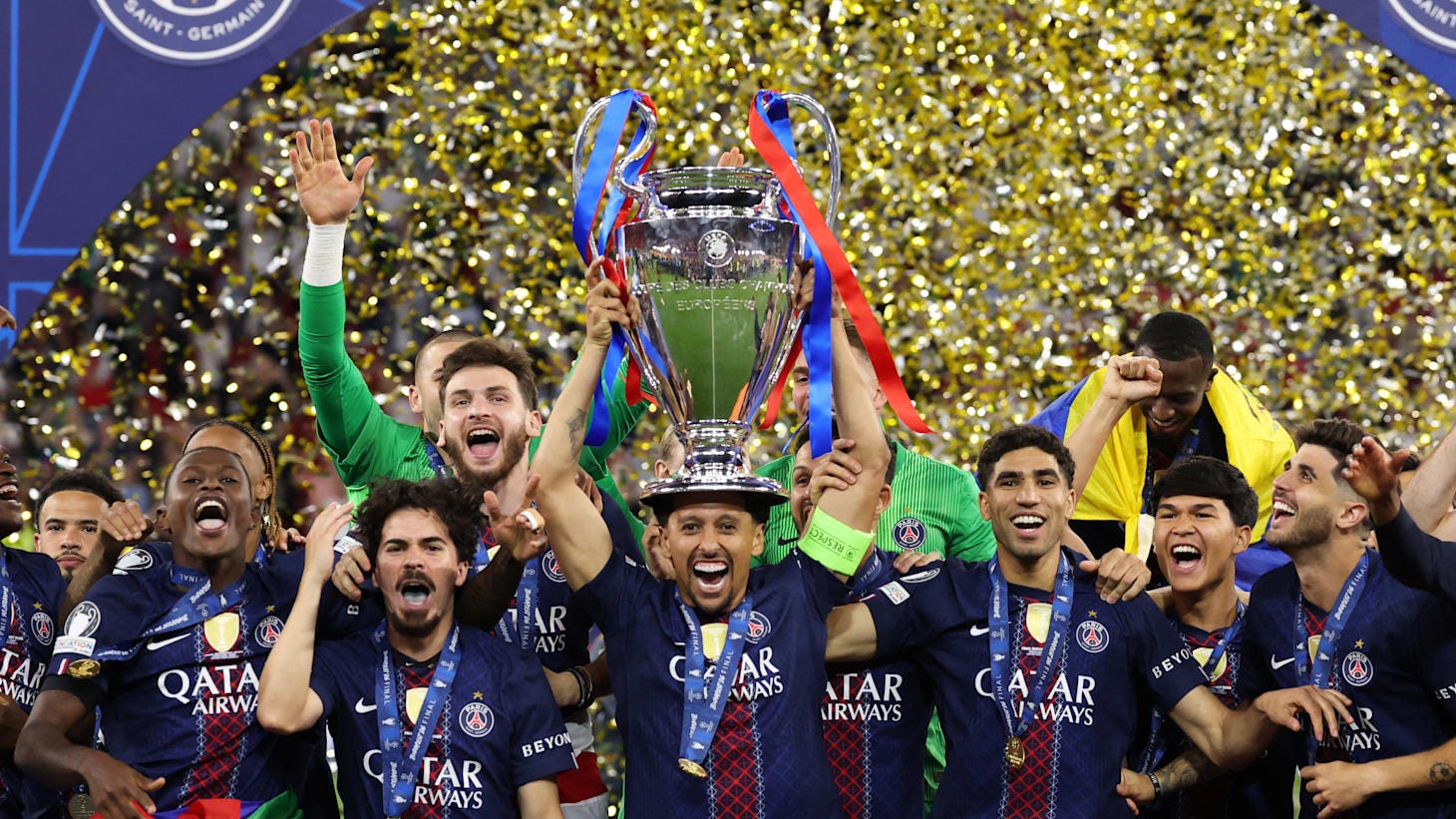
Mikel Arteta himself said it best: “The key is not the numbers themselves but interpreting them correctly. If you rely only on data without understanding the context, you can end up very confused.”
Technology in football is a tool. A very powerful, very expensive, very impressive tool. But the sport is still decided by a 23-year-old with tired legs standing 12 yards from a goalkeeper in the 118th minute of extra time, with everything on the line.
No chip in a ball changes that. No AI model predicts what happens in that moment.
And that is exactly why we still watch.
🤝 Collab Corner
Where does AI end and human creativity begin? That’s the question MarkHack 5.0 is bringing to Lagos this Thursday.
One of Nigeria’s most exciting marketing and tech conference is back for its fifth edition, theme: The Culture Algorithm: AI × Human Experience. Think keynotes, fireside conversations, a live hackathon, startup exhibitions, a content creation lab, film screenings, and the Martech Awards. All in one day, all in one room.

Started as a hackathon in 2022 with 500 participants. By edition four, 141 startups were competing across 4 countries. This is the room where some of Nigeria’s best marketing and tech minds collide, and this year the conversation is about what happens when AI starts shaping culture itself.
📅 Friday, June 5, 2026 · 📍 Oriental Hotel, Victoria Island, Lagos
Join the movement → markhack.tech