

Adebayo Juwon has spent the last eight years working around some of Africa’s fastest-moving fintech and crypto companies, building go-to-market functions, partnerships and operations across distributed teams.

He was Director of Sales at OneRemit, worked in growth and operating roles at FTX Africa and Backpack Exchange, and co-founded the operations side of Finna.
Across those roles, however, he kept noticing the same problem.
Managing a distributed team often meant reconstructing the work after it had already happened. A manager would get updates, read messages, check tickets and follow up with people, then try to piece everything together into a picture of what was actually moving and what was not.
That experience eventually became the starting point for Eodly, an AI productivity tool designed to give founders and team leads a clearer view of what their teams actually got done.
“I kept landing in the same position: responsible for a distributed team’s output without ever really seeing the work as it happened, only the reports about it afterwards,” Juwon says.
“Do that for enough years, and you notice how much of managing a team is really reconstructing what happened from other people’s summaries of it. Eodly came out of that.”
The problem was not a lack of updates
For Juwon, the problem was not that teams were failing to communicate. There were already standups, check-ins, Slack messages and project management tools.
The problem was that most of these systems relied on what people reported.
When he started speaking to other founders and team leads, he found that the problem was much broader. Managers wanted to know whether work was actually moving, but getting that answer often meant following up with people task by task.
That could quickly become micromanagement.
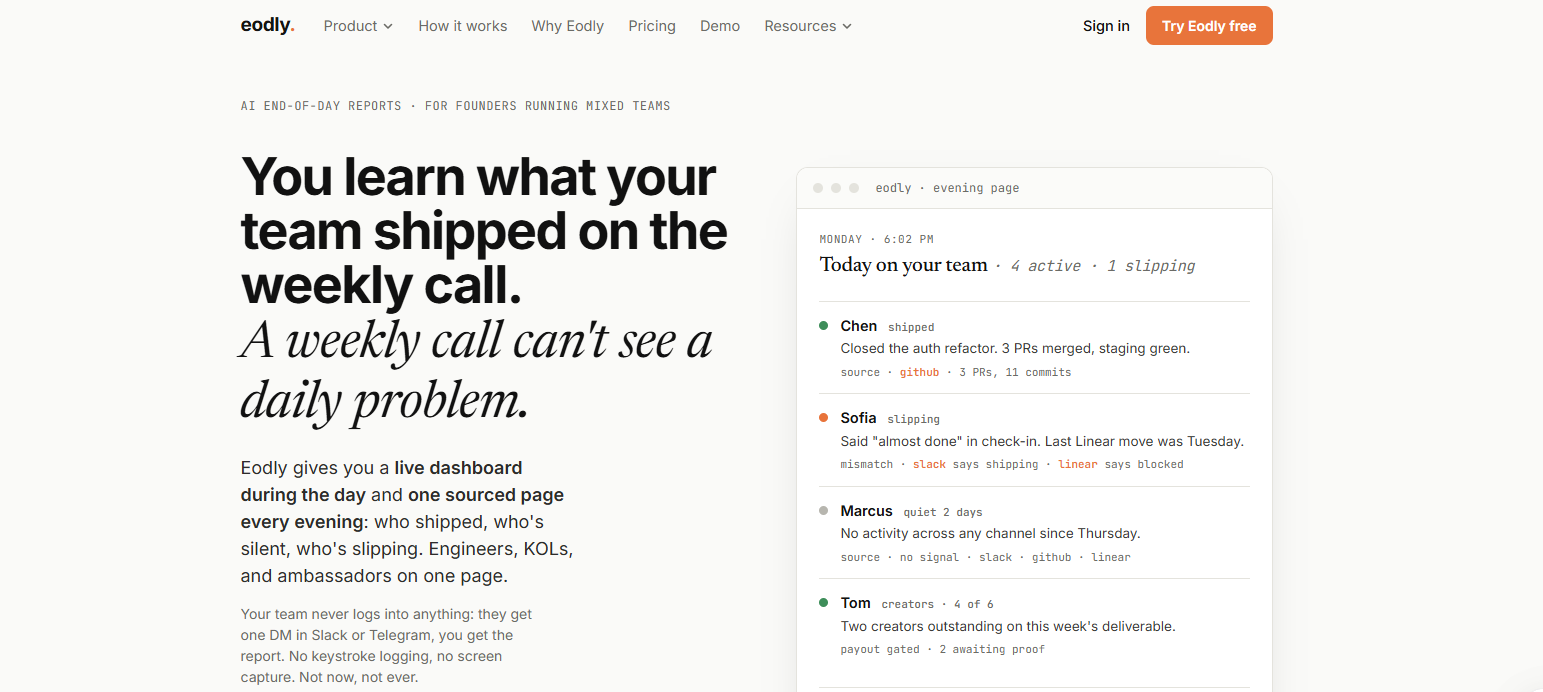
Eodly takes a different approach. A team member sends a short check-in through the communication tool they already use, while Eodly looks at the underlying work in tools such as GitHub and Linear. It then compares the two and produces an end-of-day report showing what was shipped, where someone may be stuck, who has gone quiet and where a status update does not match the available evidence.
The idea is simple: a check-in is a claim, not necessarily proof.
“When they match, you can relax,” Juwon says. “When they don’t, you know exactly where to look, without chasing anyone.”
That distinction is central to how he thinks about productivity.
Juwon does not think busy means productive
One of the biggest mistakes he sees founders and managers make is measuring activity because activity is easy to count.
Hours online, messages sent, response times and green dots can all create the impression that work is happening, but none necessarily tells you whether something was actually built or delivered.
His preferred signal is much simpler: what changed?
On a healthy team, Juwon says, problems should surface early. Someone should be able to say they are stuck on day one rather than waiting until a deadline has already passed.
He also pays attention to whether updates correspond with what actually happened. But that does not mean every quiet employee is a problem.

“Someone can be shipping solidly and saying very little,” he says. “That isn’t a problem to fix. It’s a person to recognize.”
That thinking also shapes what Eodly deliberately does not measure. The product does not track keystrokes, screen activity or time spent online, and Juwon says it will not score or rank employees.
For him, the distinction is important because better visibility should not come at the cost of turning work into surveillance.
The founder wanted to give time back, not take more of it
Interestingly, Juwon says one of the things that surprised him while talking to founders was how little they wanted more management information.
They wanted less management work.
When he asked what founders would do with an extra hour of clarity about their teams, the answers were usually things like raising money, building the business or running other parts of their companies.
Nobody asked for another check-in.
“That told me the job isn’t visibility for its own sake,” he says. “It’s giving the founder a true enough picture that they can stop chasing and get back to the work only they can do.”
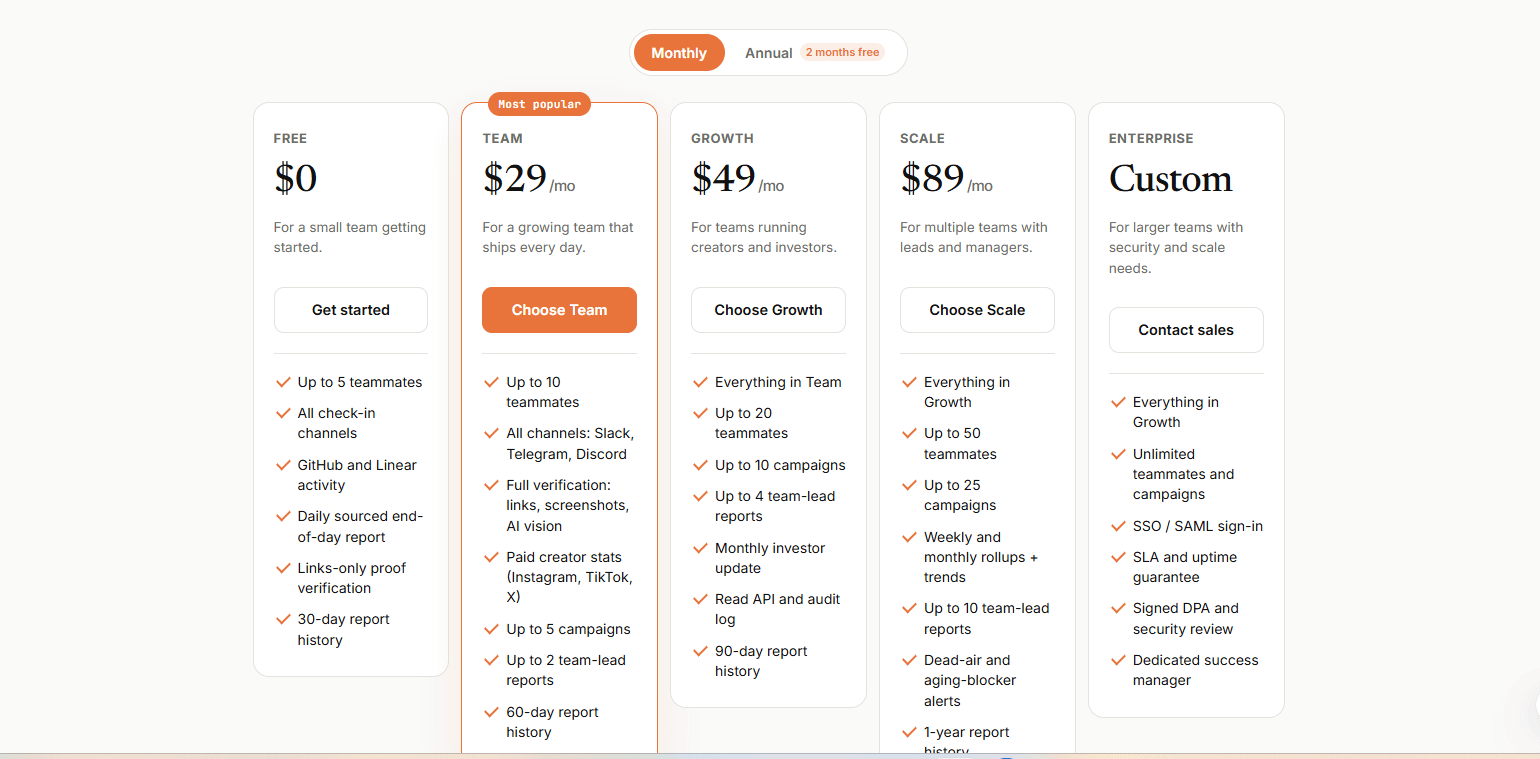
That idea has influenced how Eodly is designed. A team member does not need to learn another dashboard or spend time filling out another form. They send a short message through the communication platform they already use, while the product pulls evidence from the systems where the work already happens.
Building Eodly has also changed Juwon’s view of his own job
Juwon has built and operated companies before, but Eodly has reinforced one principle he learned from those experiences: verify the work rather than simply accepting someone’s description of it.
He does not see that as distrust.
In his view, checking the work can actually be fairer to employees because it gives credit to people who quietly deliver instead of rewarding those who are simply good at reporting what they are doing.
That is especially relevant for African startups, where teams can be spread across different countries, time zones and communication platforms.
The risk, he says, is that managers respond to this complexity by adding more meetings and more check-ins, creating a system that rewards visibility rather than delivery.
He wants Eodly to push companies in the opposite direction.
“I’d want us to judge people on what shipped, not on how visible they are,” Juwon says.
For him, the future of productive teams is not necessarily more monitoring or more meetings. It is having enough clarity about the work to trust people with the rest.
That is ultimately what Eodly is trying to build: not another tool for watching employees, but a simpler way for founders to understand what happened during the day without spending the next one chasing answers.