


Good morning. I want to start this Monday with something uncomfortable.
On July 29, 2026, GoLemon posted its farewell on Medium. They called it “Thank you, Lagos.”
The startup, founded by four former senior Paystack executives, had spent 28 months delivering groceries across Lagos, 40,000 registered customers, tens of thousands of orders, more than ₦2 billion worth of groceries moved across the city.

“We saw clear demand for planned, large-basket grocery shopping,” the team wrote. “What we didn’t reach, within the capital and time available, was making the wider business self-sustaining without further outside capital.”
And just like that, gone.
GoLemon hurts more than most shutdowns because of who built it. Yinka Adewuyi, Gbadegbo Gbade-Oyelakin, Abdulrahman Jogbojogbo, and Abiola Showemimo: all alumni of Paystack, the payments company Stripe acquired for $200 million. These were not first-time founders guessing their way through a business.
These were people who had seen what product-market fit looks like at scale, who knew how to build, who understood Nigerian consumers deeply. They had the pedigree. They had the network. They had the product, with about 20% of their workforce having already secured new roles while efforts continued to help the rest.
They still could not find a path forward.
GoLemon had even integrated with Chowdeck in December 2025, with Chowdeck handling customer acquisition and last-mile logistics while GoLemon managed inventory sourcing and fulfillment. They tried strategic alternatives. They held discussions with external parties about potential buyouts and consolidation.
No transaction closed before their cash reserves ran out.
That is not a story about a bad product or a bad team. That is a story about what the funding climate is actually doing to African startups right now.
Because GoLemon is not alone. Not even close.
In April 2026, FoodCourt, the Y Combinator-backed Nigerian cloud kitchen, paused operations after kitchen workers went on strike over unpaid salaries and the company could no longer pay staff or suppliers. Branches in Lekki, Obanikoro, and Abuja all went dark as management sought fresh funding. A YC-backed startup. Unpaid workers. Doors closed.

In May 2026, Chimoney sent its final email. “As of May 1, 2026, Chimoney has ceased all new transactions and integrations. This is our final operational email.” The company had operated across 41 currencies, secured regulatory approvals in Canada, and spent four years building cross-border payment infrastructure for African freelancers and businesses.

Founded in 2022 by Nigerian-Canadian entrepreneur Uchi Uchibeke, the startup ran out of road before it ran out of vision.
In June 2026, Gigbanc wound down, a fintech that had built cross-border payment services for freelancers, creators, and remote workers. “We built Gigbanc with a simple belief: that Africa’s talent deserves financial infrastructure worthy of its ambition,” said co-founder Paul Omoregie Okundaye. The ambition was there. The funding runway was not.
And then July brought a double blow. On July 29, the same day GoLemon said goodbye, Kulipa, the Paris-based stablecoin card infrastructure startup that had raised $9.2 million and issued over 120,000 cards, shut down due to solvency issues, abruptly killing payment cards for roughly 20 fintech clients including Solflare and Ready.
Vidor Gencel, co-founder of Solflare, posted on X: “Our card issuing partner Kulipa is winding down due to solvency issues and can no longer support Solflare Card, so cards stopped working abruptly today. If your card declined on you at a checkout today, I’m sorry, that’s a lousy way to find out.”
No warning. No wind-down period. 120,000 cards. Dead overnight.
The pattern here is not a coincidence. In the first half of 2026, African startups raised $1.44 billion, slightly more than the same period in 2025. But the number of deals collapsed from 252 to just 146.
The money did not disappear. It concentrated. Investors are writing fewer cheques and placing them on fewer bets, the ones they already believe in, the ones that are already profitable, the ones that do not need convincing.
That leaves everyone else in an impossible position. GoLemon maintained that individual customer orders were profitable. The business simply did not reach the scale required to cover warehousing, fulfilment and distribution expenses. They were not burning money carelessly.
They were waiting to reach the threshold where the model worked, and ran out of time before they got there.
This is the cruelest version of the startup death. Not failure of product. Not failure of team. Failure of timing. The idea works. The execution is right. The capital just does not arrive before the clock runs out.
Eden Life paused its consumer food business in February 2026. FoodCourt paused in March. GoLemon stopped accepting orders in July. That is five major food and delivery players gone or paused in under three years in Nigeria alone. Meanwhile, Nigeria’s online food delivery market hit $1.14 billion in 2025 and is projected to reach $2.73 billion by 2034.
The demand is real. The market is real. The money to reach it just keeps not showing up.
I want to say something to every founder reading this on a Monday morning who is tired and scared and wondering whether to keep going.
These were not weak founders. GoLemon was built by Paystack alumni. FoodCourt had YC backing. Chimoney had regulatory approvals across multiple jurisdictions that most fintechs never get close to. Gigbanc was building something the ecosystem genuinely needed.
They shut down anyway.

That is not a reason to stop. It is a reason to be honest, about your runway, about your burn, about how long you can sustain the gap between where you are and where the model becomes self-sustaining. The founders who survive this climate are not necessarily the ones with the best products.
They are the ones who manage the gap longest, communicate most honestly, and either find capital or find profitability before the clock runs out.
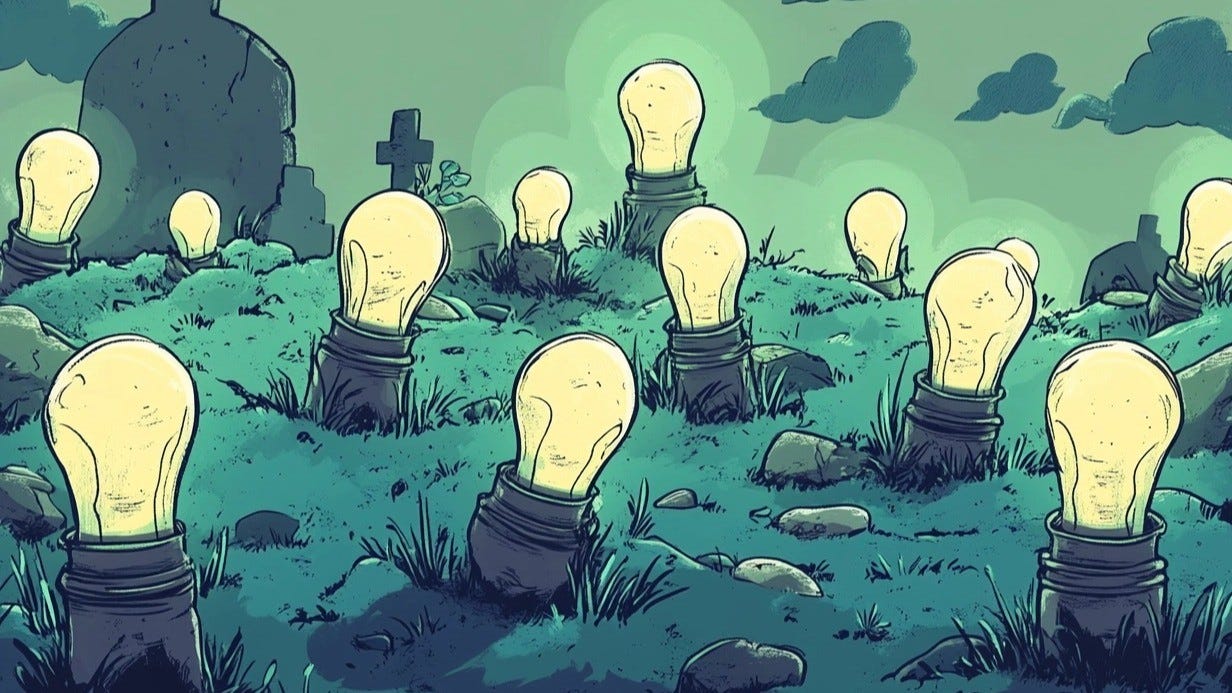
The graveyard is getting crowded. The lesson from each grave is the same: build for survival first, build for scale second, and never let optimism about tomorrow’s funding round replace honesty about today’s cash balance.
Rest well, GoLemon. You fed a lot of people. 🍋
Bankole Mubarak · Head of Newsletter, in60 ·
Telling the stories that matter, even the painful ones.